
Toilet with a Smaller Movable Toilet Inside
"Toilet with a smaller movable toilet inside" generally refers to the small movable toilet products provided by movable toilet enterprises, with the core purpose of providing sanitation solutions for temporary, mobile, or locations lacking fixed sewage disposal facilities.
Material and Structural Features
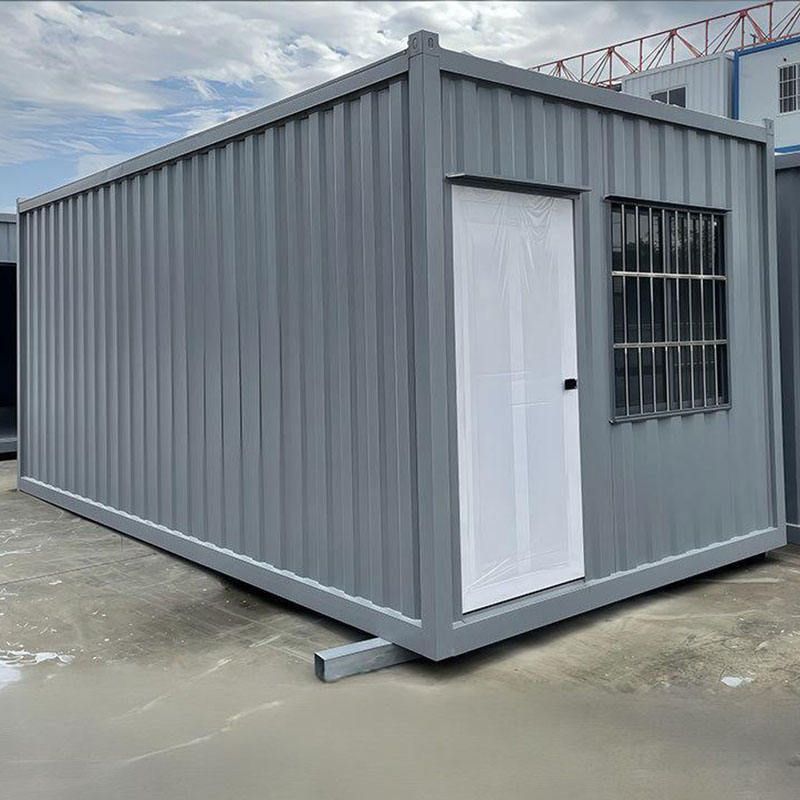
Movable toilets commonly adopt a steel structural main frame to ensure overall stability. The exterior wall materials are mostly galvanized steel sheets, stainless steel sheets, etc., offering both corrosion resistance and aesthetic appeal. The interior undergoes thermal insulation treatment to adapt to different climatic conditions. The floor is laid with anti-slip flooring and paired with a waterproof layer to enhance safety and ease of cleaning. Some products achieve their "movable" attribute through lightweight composite materials and an integrated chassis design: the outer shell uses high-strength, corrosion-resistant, and thermally insulating sandwich materials, while the chassis incorporates a load-bearing frame and standardized towing or lifting interfaces for easy transportation and installation. For example, the small gray movable toilet adopts sheet metal painting and thickened, reinforced multi-silver square steel welding, with an outdoor service life of over 15 years, and features double steel doors for both durability and practicality.
Functional Configuration Differences
Basic movable toilets are equipped with lighting systems, sockets, exhaust fans, and other essential facilities to meet basic usage needs; high-end models can be fitted with inverter air conditioners, handwashing stations, etc., to enhance comfort. For special scenario requirements, barrier-free access, microbial degradation eco-friendly, or luxury movable toilets have also been developed. For instance, microbial degradation models use solid-liquid separation or mixed storage techniques to slow down odor generation and employ active air circulation, physical adsorption, and low-concentration ozone oxidation composite technologies to control odors, achieving a balance between environmental protection and hygiene.
Application Scenarios and Advantages
Movable toilets are widely used in municipal squares, tourist attractions, construction sites, highway service areas, and other temporary event locations. Their core advantage lies in modular assembly and rapid deployment: service networks can be quickly established using standardized components and swiftly dismantled when demand subsides, avoiding resource waste. Some products also incorporate smart management dimensions, using sensors to monitor storage capacity, gas concentration, and other data for remote management and optimized waste removal scheduling, further enhancing operational efficiency.



