
Toilet Portable Fan
Currently, there is no detailed standard product information directly targeting 'toilet portable fans', but their possible forms and key selection points can be inferred by combining the characteristics of toilet exhaust fans and portable ventilators.
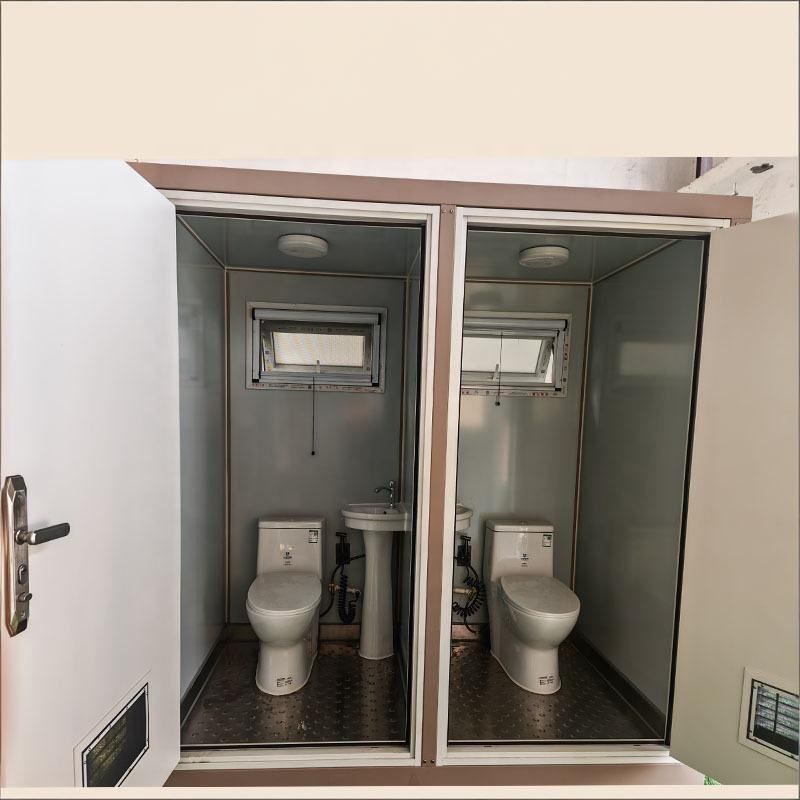
1. Possible Forms of Toilet Portable Fans The requirements for ventilation equipment in toilet scenarios focus on rapid air exchange, moisture and corrosion resistance, and low noise. Combining the features of portable ventilators on the market (such as hand-push models with wheels and dual-voltage designs of 220/380V) and toilet exhaust fans (such as silent models and moisture-resistant motors), it can be inferred that toilet portable fans may be portable exhaust devices with wheels, possessing the following characteristics:
- Portability: Equipped with universal wheels at the bottom, they can be flexibly adjusted to different positions to accommodate various toilet layouts or temporary ventilation needs (such as temporary toilets on construction sites or mobile toilets at event venues).
- Power Adaptability: They support 220V household power or 380V industrial power to meet the voltage requirements of different scenarios.
- Moisture and Corrosion Resistance: The motor housing is coated with a waterproof layer or made of stainless steel to prevent short circuits or corrosion caused by the high-humidity environment in toilets.
- Silent Design: By optimizing the air duct structure or using low-noise motors, noise interference during operation is reduced (especially suitable for toilets in homes or public places).
2. Key Parameters to Consider for Selection When purchasing or customizing a toilet portable fan, the following parameters should be considered:
- Air Volume and Air Pressure: Calculate the requirements based on the toilet area and the number of air exchanges per hour. For example, a 10㎡ toilet requiring 6 air exchanges per hour needs an air volume of at least 60m³/h; if the toilet has odors or significant ventilation resistance (such as long air ducts), a model with higher air pressure should be selected.
- Power and Voltage: For household scenarios, prioritize models with 220V power and a power range of 100-300W; for industrial or large public toilets, devices with 380V power and over 500W can be selected.
- Protection Level: It is recommended that the motor protection level reach IP44 or above to prevent the entry of water droplets and dust.
- Noise Level: Prioritize models with a noise level below 50dB(A) to avoid affecting the user experience.
3. Applicable Scenarios and Limitations Toilet portable fans are suitable for temporary, mobile, or flexibly laid-out toilet scenarios, such as construction sites, exhibitions, and outdoor events. However, for fixed household or commercial toilets, traditional embedded exhaust fans (such as axial fans or centrifugal fans) may have advantages in terms of installation stability and long-term operational stability.
You may also like

Portable Toilet Specifications Size & Area Guide: Finding the Right Fit
Read More
Top Portable Toilet Custom Manufacturers: How to Choose a Factory Partner
Read More
Portable Toilet Reviewed: Best Picks & Tips
Read More