
Installation of Mobile Public Toilets in Tibet
The installation of mobile public toilets in Tibet requires tailored design based on local geographical and climatic conditions, covering aspects such as materials, foundations, pipelines, fixation, and ecological adaptation. The specific key points are as follows:
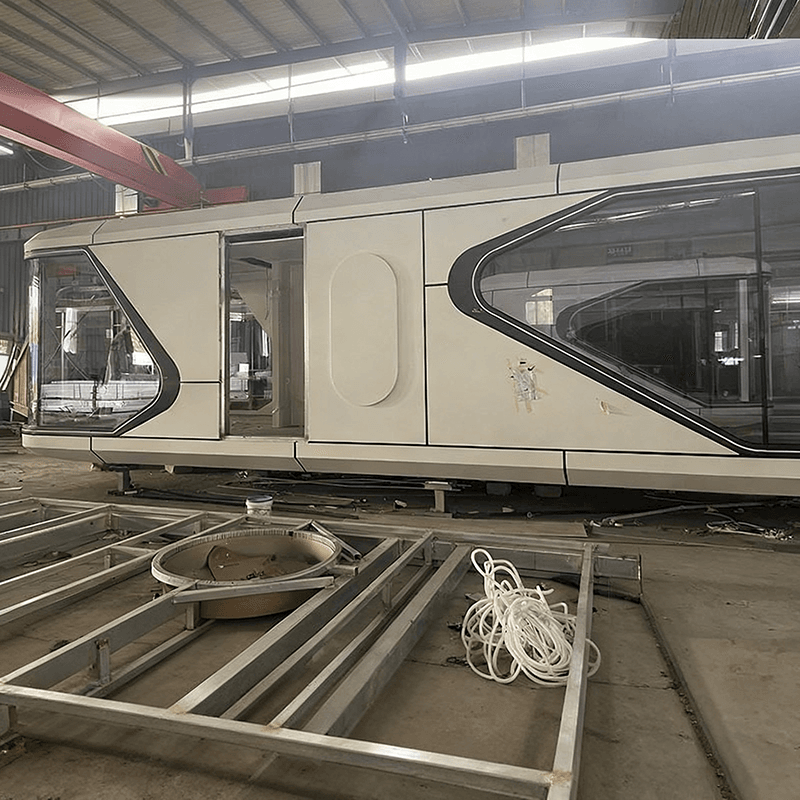
1. Material Selection and Structural Characteristics
The main structure must adapt to the characteristics of strong ultraviolet radiation, low temperatures, and large diurnal temperature variations in the plateau. The main frame often uses a combination of colored coated steel sheets and light steel keels. The coating is treated with anti-corrosion to resist ultraviolet radiation, while the high reflectivity design reduces heat absorption and lowers internal temperature fluctuations. For the outer shell, fiberglass-reinforced plastic or metal alloys are preferred, offering both lightweight and weather resistance. Internal pipelines use flexible polymers like polyethylene to prevent low-temperature brittleness, and the insulation layer is filled with polyurethane foam to effectively isolate external cold and prevent pipeline freezing.
2. Foundation Treatment
Permafrost is widely distributed in Tibet, so foundation design must distinguish between permafrost and non-permafrost areas. In permafrost areas, shallow foundations combined with thermal insulation layers are used to prevent structural deformation caused by freeze-thaw cycles by reducing heat conduction. In non-permafrost areas, prefabricated concrete block foundations are employed to avoid ecological damage from large-scale earth excavation. Before installation, the ground must be leveled, with a slope controlled between 2%-3% to ensure natural drainage of rainwater and sewage and prevent waterlogging.
3. Pipeline and Power Configuration
Sewage pipelines must be equipped with insulation layers and use quick-connect designs for easy winter maintenance and to prevent low-temperature blockages. Power supply primarily relies on solar photovoltaic panels and battery packs, with some models integrating power monitoring devices for real-time energy status tracking. Pipeline layouts should avoid geologically unstable areas and reserve maintenance space to ensure long-term operational reliability.
4. Fixation and Wind Protection Measures
The plateau region experiences strong winds, so fixation devices often use a combination of ground anchors and guy wires to enhance wind resistance through multi-point anchoring. The depth of ground anchors must be adjusted according to soil conditions, and guy wires are made of high-strength alloys to ensure structural stability in strong winds. Additionally, the overall center of gravity of the toilet is designed to be low, further reducing the risk of overturning.
5. Environmental Protection and Ecological Adaptation
Installation sites should avoid wildlife migration paths and buffer zones around water sources to minimize interference with ecosystems. The exterior color should be chosen to harmonize with the surrounding landscape, such as earthy yellow or light gray, to reduce visual intrusion. Meanwhile, the toilet design incorporates Tibetan architectural elements, such as sloped roofs or traditional patterns, to enhance cultural integration.
You may also like

Portable Toilet Used in 2026: Buying Guide & Recommendations
Read More
Portable Toilet Custom Explained: How to Choose the Right One
Read More
Top Portable Toilet Smart Manufacturers: How to Choose a Factory Partner
Read More