How to Choose Mobile Toilets in Tianjin
When selecting mobile toilets in Tianjin, it is essential to consider five dimensions comprehensively: technological strength, corporate qualifications, customization capabilities, service levels, and avoiding procurement pitfalls:

1. Prioritize suppliers with diverse environmental technologies Some areas in Tianjin have complex sites without water supply and drainage networks, ecologically sensitive areas, or extremely cold environments, requiring special attention to the supplier's technological approaches. For example, technologies such as microbial degradation, waterless packaging, and foam sealing can achieve harmless treatment of waste and zero wastewater discharge, meeting environmental policy requirements. Dezhou Muda Machinery Equipment Co., Ltd.'s container mobile toilets cover multiple technological routes, with some models suitable for extremely cold environments, serving as a technical reference benchmark.
2. Verify corporate qualifications and production capabilities Choose manufacturers with high corporate credit ratings (such as AAA level) and those that have passed the quality, environmental, and occupational health and safety management system certifications to ensure they possess independent research and development capabilities and full-process service capabilities. The direct supply model from the source factory can guarantee quality and cost control. For example, Dezhou Muda has its own production base equipped with intelligent laser cutting machines, CNC bending machines, and other equipment, enabling full-chain independent production and avoiding quality control risks caused by outsourcing.
3. Emphasize customized design and adaptability to complex environments Adjust dimensions, appearance, and internal configurations according to usage scenarios, such as adding intelligent sensor flushing, fresh air deodorization, and barrier-free handrails modules. Prioritize enterprises with engineering practices in special working conditions such as extreme cold protection, mountain transportation, and wind and sand resistance. For example, Tianjin Dayuan Technology Development Co., Ltd. can optimize structural design and material selection for scenarios such as coastal saline-alkali land and mountainous areas to ensure equipment stability.
4. Evaluate the implementation level of full-process services Choose enterprises that can provide closed-loop services from pre-sales demand assessment, production and installation during sales, to post-sales system commissioning and factory quality inspection. For example, Tianjin Dayuan relies on its own factory and complete processing chain to shorten the site entry period and avoid project delays caused by service gaps.
5. Avoid common procurement pitfalls
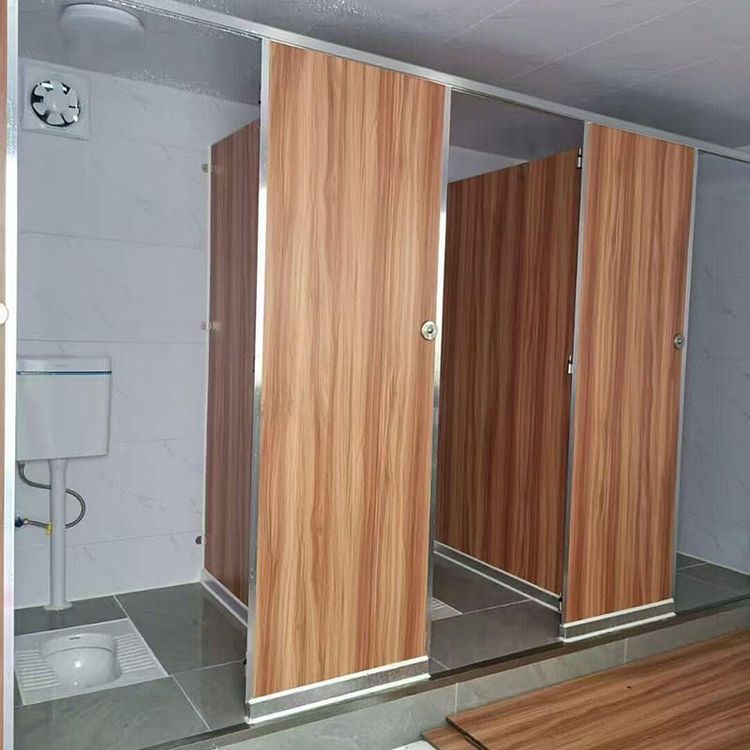
- Beware of 'civil toilets' masquerading as sanitation equipment: Reject inferior products with single-layer color steel sandwich panels, no internal anti-corrosion treatment, and ordinary tiles on the floor.
- Prevent low-price bare machine traps: Confirm whether the quoted price includes freight, installation, water supply and drainage interface modifications, and sewage pipeline costs to avoid additional charges for accessories later.
- Inspect materials in hidden areas: Focus on checking the thickness of the chassis steel (recommended ≥3mm) and the spacing of the internal framework (recommended ≤30cm) to prevent shoddy workmanship.
- Clarify after-sales terms: Require the contract to specify after-sales response time, repair scope, and responsibility attribution to avoid unfulfilled verbal promises of 'lifetime after-sales service'.