Back to blog
Article
The Ultimate Guide to Container House Solution
Admin November 15, 2026
Container houses have become a significant global residential trend by 2026, with their core advantages lying in affordability, sustainability, and adaptability to lifestyle changes. The following analysis is conducted from three dimensions: driving factors, construction methods, and solution providers.

I. Three Core Driving Factors of Container Houses
- Affordability: Global housing price growth continues to outpace income growth, raising the threshold for traditional housing. Container houses offer entry-level housing options at one-fifth to one-third the cost of traditional homes, particularly suitable for young people and low-income families. For example, some prefabricated modular container houses are priced as low as $5,000, significantly reducing the financial burden of home purchases.
- Sustainability: By repurposing retired steel shipping containers, the embodied carbon emissions and construction waste are reduced. Statistics show that a single container house can reduce construction waste by about 80%, aligning with global carbon neutrality goals.
- Lifestyle Changes: The rise of minimalism and remote work cultures is driving demand. Container houses can be quickly reconfigured into remote workspaces, mobile residences, or short-term rental accommodations (such as Airbnb models), meeting flexible living needs. Their modular design supports rapid deployment, suitable for remote areas or temporary living scenarios.
II. Construction Methods of Container Houses
- Repurposing Shipping Containers: Retired containers are directly transformed, retaining their industrial-grade structural strength (such as wind and earthquake resistance) while expanding interior space through cutting and welding processes.
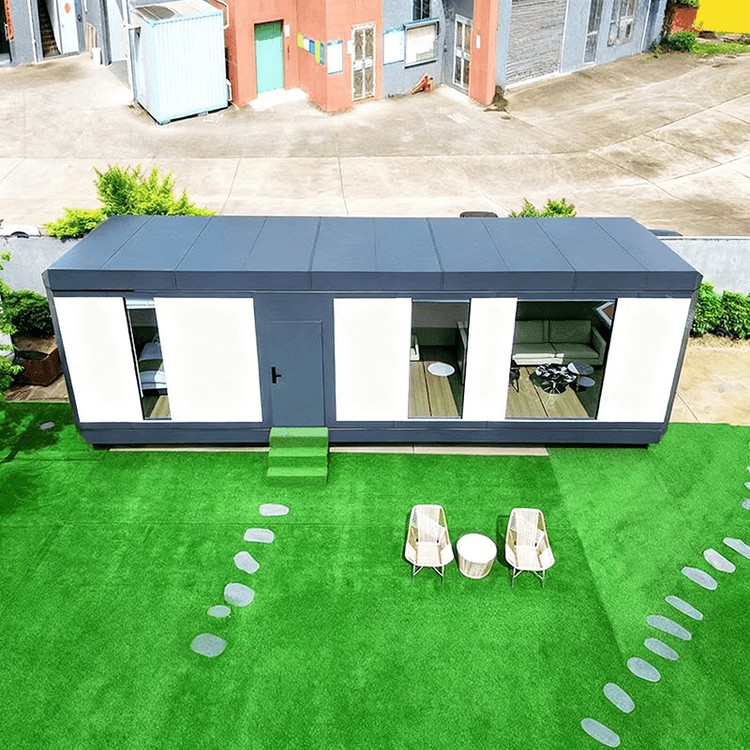
- Prefabricated Modular Design: Prefabricated modules matching container dimensions are used, combined with lightweight materials (such as eco-friendly insulation boards) to enhance energy efficiency. These houses are easy to transport and disassemble, supporting multiple reuse cycles.
- Functional Integration: Modern container houses are generally equipped with earthquake protection, thermal insulation, and eco-friendly systems (such as solar panels and rainwater harvesting devices). Some high-end models also integrate smart home technologies.
III. Mainstream Solution Providers
- DreamMaker: Offers six standard models, including expandable, flat-pack, Z-type, detachable, wing-type, and foldable designs, supporting highly customized solutions. Its services include free visualization design tools, professional planning support, and cost optimization plans, helping clients launch projects without financial risk.
- Other Manufacturers: Provide prefabricated modular houses priced between $5,000 and $30,000, emphasizing earthquake resistance, mobility, eco-friendliness, and thermal insulation. These cater to a wide range of needs, from budget-friendly to luxury options.
Conclusion: Container houses redefine modern living through low cost, high flexibility, and environmental friendliness. Their standardized and customized solutions offer innovative paths for individuals, businesses, and governments to address housing crises and climate challenges.
Related