Thailand Container House Facilities
Thailand's container house facilities are characterized by diversity, innovation, and practicality, covering multiple fields such as residential, leisure, and commercial areas.

Residential Facilities
In rural areas of Thailand, architects have utilized containers to build vacation homes. For example, in the rural area of Nakhon Nayok, architects used two 20-foot containers connected to create a main public lounge. Full-length floor-to-ceiling windows were added at both ends to allow ample light to enter, while the original loading doors provide shelter during storms. An open-air courtyard is accommodated by another container, connecting the living room with the dining and storage areas. The top-level container houses a private bedroom, with an A-frame forming a balcony and open-air lounge area around the sleeping zone. The roof section uses translucent materials to allow natural light into the middle deck, while steel plate shutters can divert rainfall while ensuring ventilation. The interior space is painted a fresh white, giving a clean and airy feel, while the exterior is treated in earthy brown to blend harmoniously with the natural environment.
Leisure Facilities
Some container houses focus on creating leisure amenities. For instance, some vacation homes feature outdoor cooking areas connected to in-ground swimming pools, enhancing the rural vacation and leisure experience. They also include wooden playgrounds and sandbox structures suitable for traveling families. Some container houses have tire swings installed on the roof for young vacationers to enjoy. Others have created open-air lounging areas with chairs and cushions scattered throughout the courtyard for people to stroll around in tropical temperatures.
Commercial Facilities
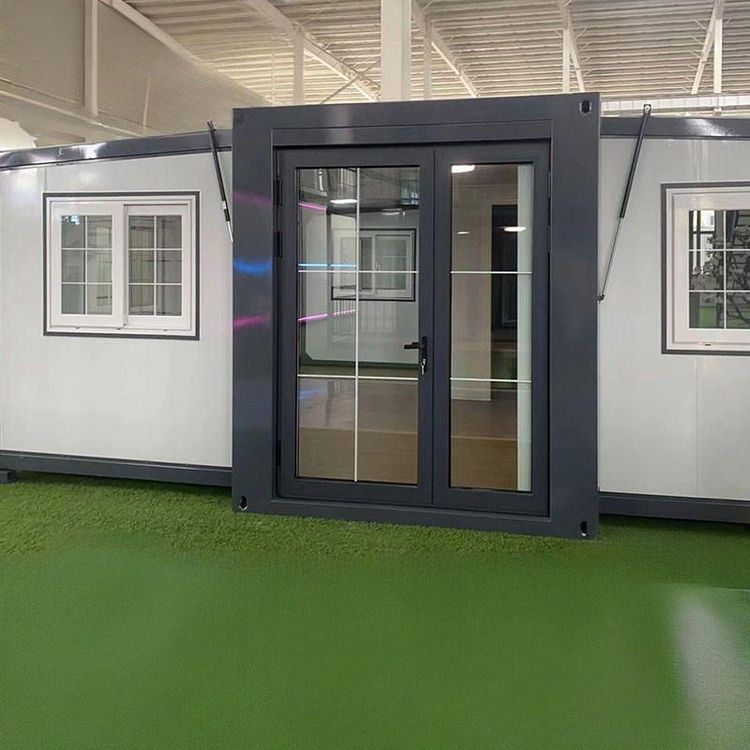
Around Bangkok, Thailand, there are professional retail and wholesale markets for container houses. The market covers an area of approximately 2,000 square meters and adopts an open-plan zoning layout, displaying a wide variety of container houses. There are practical foldable container houses that can be set up in just 15 minutes and reduce in volume by 60% when stored, suitable for temporary storage, emergency shops, and on-site temporary offices. There are also flexible expandable container houses that can be extended horizontally or vertically, increasing the usable area by 1.5 times compared to the original container when maximally expanded, fitting scenarios such as medium-sized retail shops and community service stations that require flexible expansion. Additionally, there are cost-effective and modular folding packing containers that use standardized components, can be stacked 20 units high during transportation, and improve installation efficiency by 50%, commonly used for batch deployment in chain stalls and pop-up markets.