Back to blog
Article
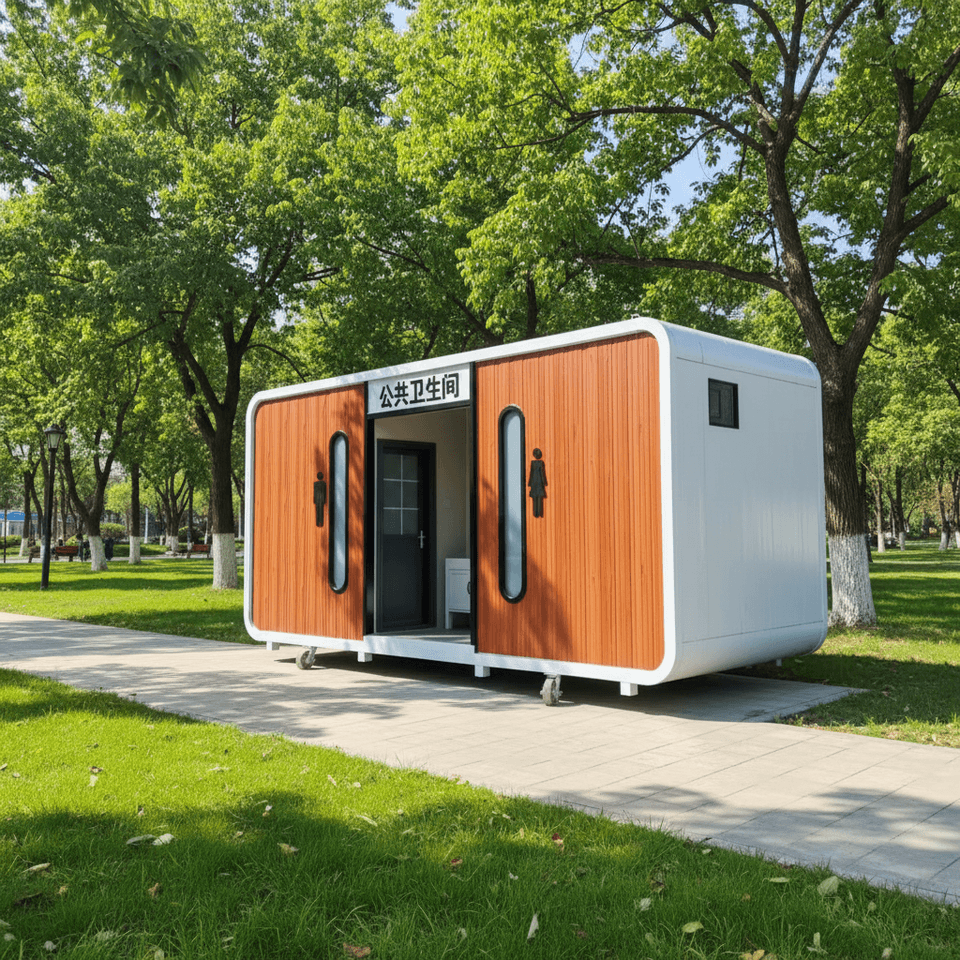
Terrace Mobile Toilet Installation
Admin September 21, 2026
The installation of a mobile toilet on a terrace must follow standardized procedures to ensure safety and proper functionality. Below are the specific steps and precautions:
I. Pre-installation Preparation
Site Survey
- Ensure the terrace surface is level, avoiding low-lying areas prone to water accumulation or obstacles that could cause equipment tilt or poor drainage.
- Measure the site dimensions to ensure the toilet access aisle is at least 1.2 meters wide, with reserved operational space (e.g., at least 0.5 meters clearance around the unit).
- If the terrace lacks a sewer system, plan the location of a waste collection tank or septic tank in advance and reserve a path for connecting the sewage pipe.
Material and Tool Inspection
- Verify the mobile toilet model and parts list, including sinks, flushing mechanisms, sewage pipes, door locks, etc., ensuring nothing is missing or damaged.
- Check the equipment for cracks or deformation and confirm internal facilities (e.g., water tanks, toilet bowls) are functioning properly.
- Prepare installation tools: wrenches, screwdrivers, spirit levels, sealant, etc. If the equipment is heavy (e.g., over 200 kg), coordinate with a crane for lifting assistance.
Personnel and Safety Planning
- Assign 2-3 professional personnel for the operation, with clear division of labor (e.g., one person for securing the unit, another for connecting utilities).
- For high-altitude work, construction personnel must wear safety harnesses and set up guardrails along the terrace edge. Prohibit construction in wind speeds ≥5 or near open flames.
II. On-site Installation Steps
Foundation Fixing
- Use a crane to lift the toilet unit to the designated position and adjust its levelness with a spirit level (deviation ≤3 mm).
- Secure the unit's base with expansion bolts (for concrete terraces) or counterweights (for wooden/composite terraces) to prevent tipping.
Utility Connections
- Sewage Pipe Connection: If connecting to the terrace sewer system, ensure the pipe slope is ≥2% to prevent backflow. If using a waste collection tank, seal the sewage pipe connection to prevent leaks.
- Water Supply Connection: Connect a pipe ≥DN20 to the flushing mechanism and test water pressure stability (recommended 0.2-0.4 MPa).
- Function Testing: Press the flush button three times to confirm smooth drainage without odors. Check the sink faucet water flow and floor drain drainage speed.
Detail Refinement
- Install door curtains and anti-slip mats. Check the flexibility of door locks and flush buttons to ensure no jamming.
- Clean and disinfect the interior, place consumables like toilet paper and trash bins, and post usage instructions and safety warnings.
III. Safety and Acceptance
Safety Regulations
- Set up warning signs in the construction area and prohibit unauthorized personnel from entering. If high-altitude work is involved, notify the property management in advance.
- For temporary events, adjust toilet positions based on foot traffic density (e.g., distribute them evenly) to avoid congestion.
Acceptance Criteria
- Continuously test flushing and drainage functions to confirm no blockages or leaks.
- Step on the unit's top to check structural stability, ensuring no unusual noises or shaking.
- Fill out an Equipment Installation Acceptance Form, noting the installation date, warranty period, and supplier contact information.
Tip: When renting a mobile toilet, plan 1-2 weeks in advance, choose a qualified supplier, and clarify the number of users, duration, and site conditions (e.g., utility access requirements) to ensure installation efficiency and user experience.
Related