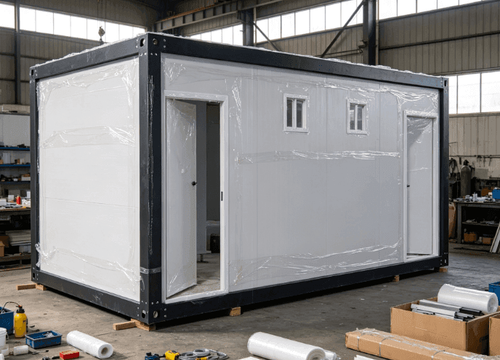
Temporary Toilet and Mobile Restroom
Temporary toilets and mobile restrooms are two different but related facilities, primarily differing in usage scenarios, structural design, and functional characteristics.

Temporary Toilet
Temporary toilets are mainly used in renovation scenarios or for short-term temporary needs. For example, when the bathroom is unavailable during home renovations, a temporary and simple toilet specifically designed for renovation purposes will be used. There are various types, including odor-proof flushable types, disposable plastic squatting pans for construction sites, and bedpans. These toilets usually have a simple structure, are primarily intended for one-time or short-term use, and are mostly made of plastic for easy installation and removal. For instance, a disposable plastic squatting pan for construction sites can be placed directly at the designated location and, after use, can be cleaned or discarded as needed, primarily meeting temporary excretion needs without the stability and comfort for long-term use.
Mobile Restroom
A mobile restroom (Portable toilet) is a facility that can be moved as a whole, suitable for places with fixed or temporary needs such as stations, docks, tourist attractions, and large event venues. Its structure is relatively complex, generally consisting of a fecal sewage storage tank (or fecal sewage disposal device), flooring, sanitary ware, etc. It can be classified by structural form into single-structure mobile restrooms and composite-structure mobile restrooms; by mobility method into hoisting and handling mobile restrooms, powered and towed mobile restrooms; and by sewage treatment method into water-flush and waterless suction mobile restrooms, circulating water-flush mobile restrooms, and dry-packing mobile restrooms. For example, a water-flush mobile restroom is equipped with a water tank and flushing system, providing an experience close to that of a traditional fixed restroom; a dry-packing mobile restroom collects feces through special materials without the need for a water source, making it suitable for water-scarce areas or temporary events.
Core Differences
Temporary toilets focus on short-term, low-cost solutions for excretion problems, usually designed for one-time or simple reusable use; mobile restrooms emphasize mobility, functional completeness, and multiple uses, providing a relatively comfortable restroom environment for the public and can be flexibly deployed and adjusted according to needs.