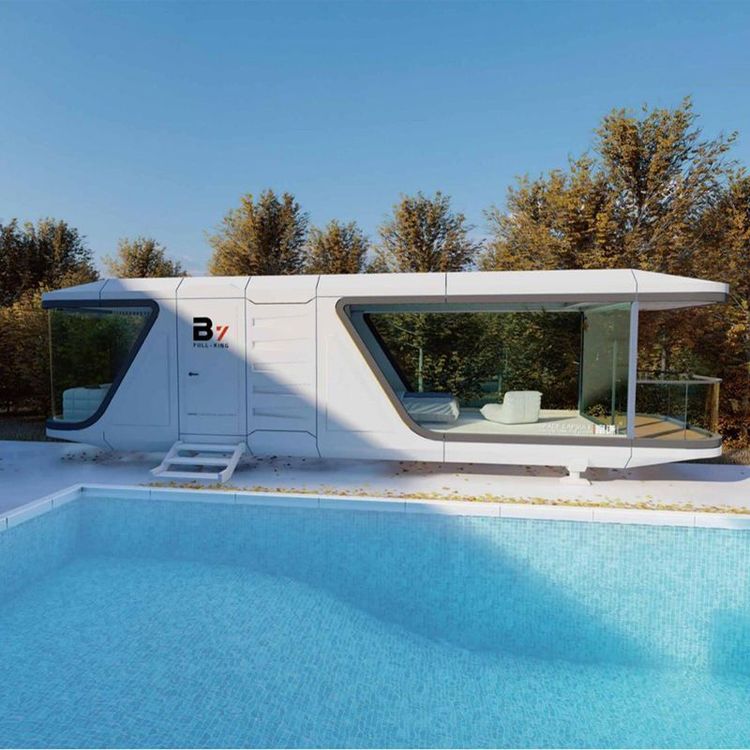
Temporary Prefabricated Housing
Temporary prefabricated housing is a type of temporary building constructed using materials such as light steel and sandwich panels, which can be quickly assembled and disassembled. Common types include movable panel houses and quick-assembly container houses, with prices influenced by materials, specifications, and region.

Movable Panel Houses: Standardized Design and Flexible Application
Movable panel houses use light steel as the framework and sandwich panels as the enclosure material, adopting a standard modular design. Components are prefabricated in factories and assembled on-site using bolts, ensuring standardized construction. Their core advantages lie in rapid setup and terrain adaptability:
- Structural Features: The framework is made of lightweight steel, while the enclosure material is often 5 cm-thick EPS sandwich panels (approximately 35 yuan per meter), offering both thermal insulation and fire resistance. Roof styles include single-slope flat tops, with single-slope flat-top color-steel houses priced at around 230 yuan per square meter.
- Size and Customization: Individual units can be customized in sizes ranging from 15 to 160 square meters, suitable for construction site dormitories, temporary offices, post-disaster relief, and other scenarios, particularly in areas with complex terrain or requiring rapid deployment.
- Cost Factors: Prices are influenced by material type (e.g., rock wool sandwich panels are more expensive than EPS) and regional differences. For example, cross-border exported K-type movable panel houses are priced at approximately 79.2 yuan per square meter (with monthly sales of 2 square meters), though this data may reflect specific market conditions or bulk purchases.
Quick-Assembly Container Houses: Efficient Assembly and Structural Stability
Quick-assembly container houses emphasize installation efficiency and structural stability, focusing on modular design and customization capabilities:
- Assembly Speed: Taking Suzhou Zhongnan Steel Structure products as an example, a single 3*6-meter standard module can be assembled by two workers in just 4 hours, significantly shortening construction time.
- Structural Advantages: Utilizing high-strength steel frames and integrated enclosure systems, they offer superior wind and earthquake resistance compared to traditional movable panel houses, making them suitable for long-term repeated use or scenarios requiring high stability (e.g., wilderness research stations, temporary medical facilities).
- Customized Design: They support internal space division, adjustments to door and window positions, and integration of additional functional modules (e.g., bathrooms, kitchens) to meet diverse needs.
Price Differences and Selection Advice
The prices of temporary prefabricated housing are significantly influenced by materials, specifications, and region:
- Material Costs: EPS sandwich panels are cheaper than rock wool or glass wool sandwich panels but offer weaker fire resistance. Increasing the thickness of color-steel plates raises costs.
- Specification Requirements: Smaller individual units (e.g., 15 square meters) typically have higher unit costs than larger combined buildings due to fewer fixed expenses (e.g., transportation, assembly) being spread out.
- Regional Factors: Labor costs, logistics fees, and local policies (e.g., environmental requirements) can cause price fluctuations for the same product across different regions.
When selecting, consider usage duration, terrain conditions, functional requirements, and budget comprehensively: For short-term emergency scenarios, movable panel houses are preferable; for long-term use or scenarios requiring high stability, quick-assembly container houses offer greater advantages.