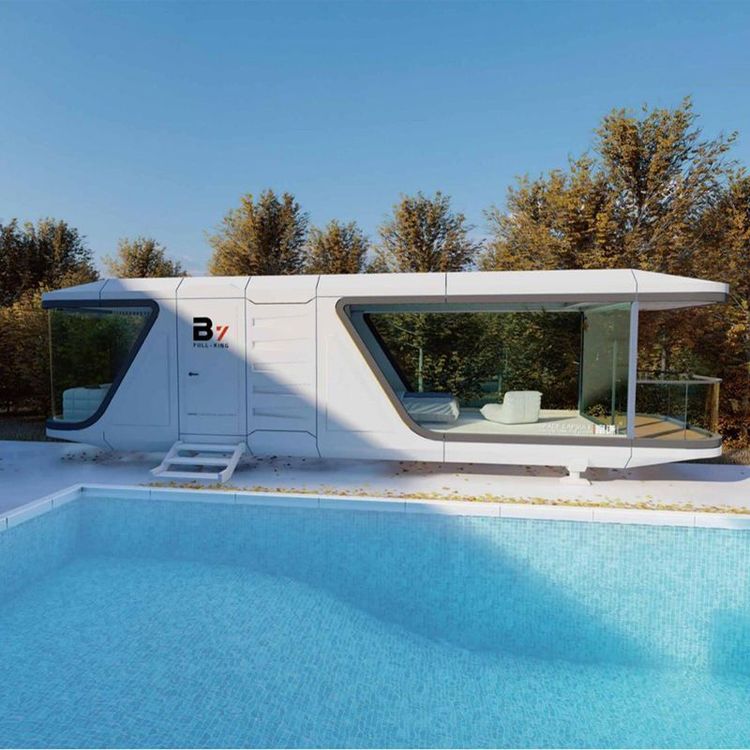
Temporary Panel House Mobile Toilet
A temporary panel house mobile toilet is a facility that can be moved as a whole and provides public toilet services, suitable for fixed or temporary demand locations.
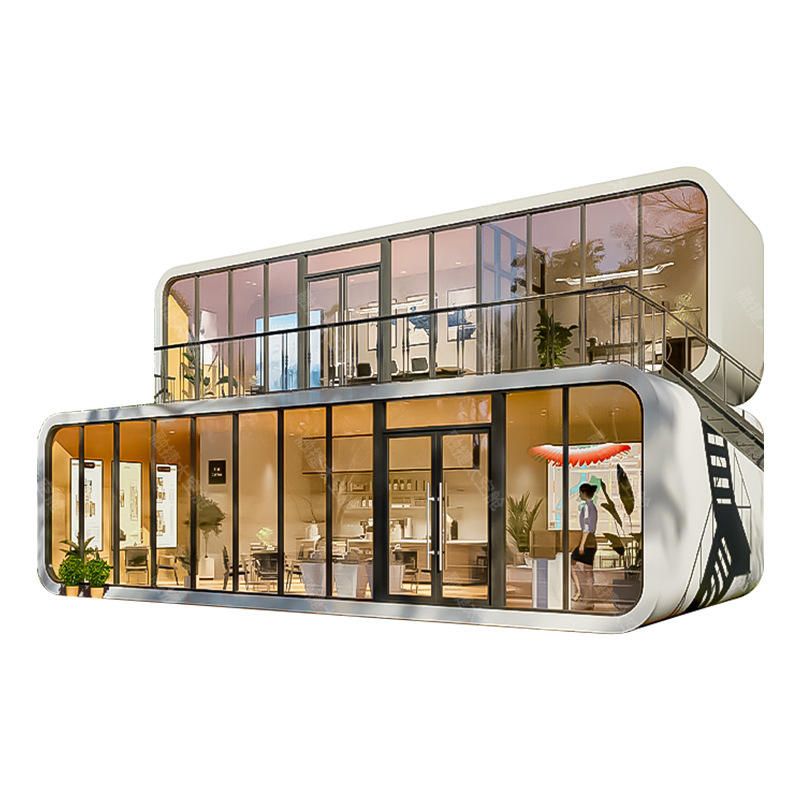
I. Basic Composition A temporary panel house mobile toilet typically consists of core components such as a fecal sewage storage tank (or disposal device), flooring, sanitary ware, walls, washing equipment, a water tank, a roof, and a mobile device. Among them, the fecal sewage storage tank is used to collect excreta. Some models are equipped with waterless flushing suction or circulating water flushing systems, which can reduce water consumption. The walls and roof are made of lightweight materials (such as color-coated steel plates and aluminum alloys), balancing structural strength and portability. The mobile device, depending on design requirements, may include axles, towing interfaces, or lifting structures for easy transportation and redeployment.
II. Classification Methods
- By structural form: It is divided into single-unit structures (independent units suitable for small-scale scenarios) and composite structures (multi-unit combinations that can be expanded into shower rooms, management rooms, etc.).
- By mobility method: It is divided into lifting types (requiring lifting equipment for handling), handling types (moved manually or with small machinery), powered types (with built-in engines or electric drives), and towing types (connectable to vehicles for towing).
- By sewage treatment method: It is divided into water-flushing types (relying on water tank supply and requiring regular cleaning of the sewage tank), waterless flushing suction types (using vacuum or negative pressure technology to collect excreta), circulating water flushing types (reusing water resources through filtration and disinfection systems), and dry packing types (using biodegradable bags to directly package excreta without water).
III. Core Advantages Its greatest feature is mobility, allowing for rapid deployment to temporary event venues (such as music festivals, construction sites), disaster relief sites, or remote areas to meet short-term toilet needs. In addition, its modular design supports flexible combinations, such as integrating toilets with shower rooms and dormitories to form multi-functional mobile houses. Its reusability reduces long-term costs, aligning with the concepts of environmental protection and efficient resource utilization.
IV. Application Scenarios and Product Expansions On platforms like Alibaba, related products have evolved into diverse forms. For example, the "mobile toilet container house" integrates toilet and shower functions, suitable for construction sites. The "exportable detachable toilet container with shower" optimizes transportation efficiency through a detachable structure, and some models also add dormitory functions to meet complex scenario needs. These products usually use thickened steel plates or fireproof materials to enhance durability and safety.