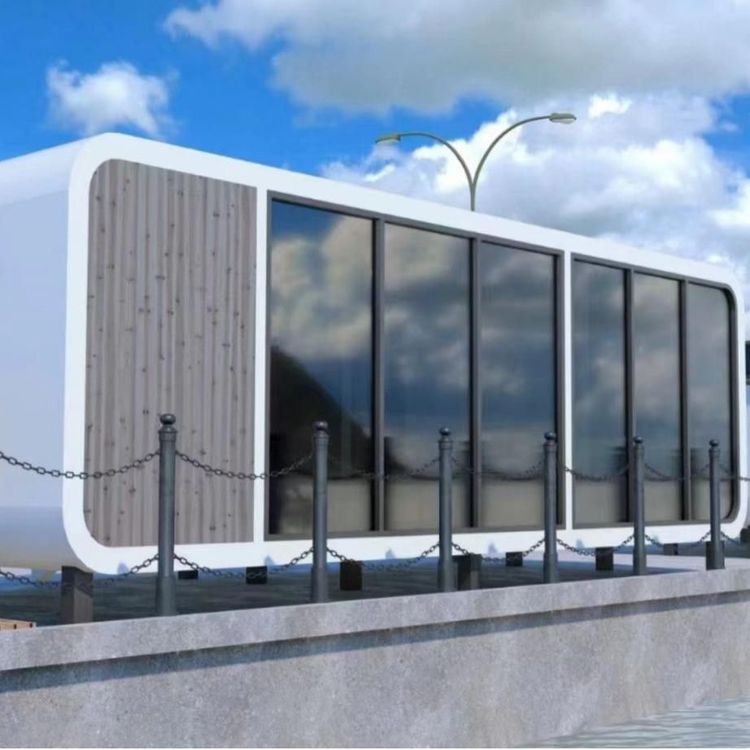
Temporary Mobile Toilet
A temporary mobile toilet is a facility that can be moved as a whole and provides toilet services to the public, featuring mobility, modularity, and ease of transportation.

I. Basic Composition
A temporary mobile toilet typically consists of a fecal sewage storage tank (or disposal unit), flooring, sanitary ware, walls, washing facilities, a water tank, a roof, and a mobile unit. Its core functional modules include:
- Sewage Treatment System: Depending on the treatment method, it can be classified into flush-type (requiring a water connection), waterless suction-type (relying on vacuum or negative pressure for fecal suction), recirculating flush-type (achieving water reuse through filtration and purification), and dry-packing type (using biodegradable bags to directly collect feces without water).
- Structural Framework: Lightweight materials (such as aluminum alloy and steel structures) are used to construct walls and roofs, ensuring strength while reducing weight for easy transportation; flooring must be slip-resistant and waterproof.
- Mobile Unit: Equipped with wheels or slide rails at the bottom, some high-end models integrate a power system (such as electric drive) to support towing or self-propelled movement.
II. Classification and Characteristics
- By Structural Form:
- Single-unit structure: Designed as an independent unit, suitable for space-constrained scenarios (such as small construction sites and temporary events).
- Composite structure: Modular combination, can be assembled into large facilities with multiple toilet stalls to meet high foot traffic demands (such as music festivals and exhibitions).
- By Mobility Method:
- Lifting/handling type: Relies on forklifts or cranes for loading and unloading, suitable for short-term fixed use.
- Powered/towing type: Equipped with an engine or towing device, can be rapidly deployed to remote areas (such as disaster zones and field exploration sites).
- Core Advantages:
- Flexibility: No civil construction required; the entire process from transportation to commissioning can be completed within 48 hours.
- Environmental Friendliness: The dry-packing and recirculating flush types significantly reduce water consumption, complying with green building standards.
- Cost-Effectiveness: Long-term operating costs are lower than those of traditional public toilets (no demolition costs, can be relocated multiple times).
III. Application Scenarios and Prices
Temporary mobile toilets are widely deployed in stations, docks, tourist attractions, large construction sites, and other locations, particularly suitable for the following scenarios:
- Emergency Support: Temporary settlement points after natural disasters and quarantine areas during epidemics.
- Short-term Events: Sports events, concerts, and farmers' markets.
- Seasonal Demands: Ski resorts, beach bathing areas, and other regions with fluctuating visitor numbers.
Prices vary significantly depending on specifications and configurations:
- Basic Model: For example, a steel-structured single-stall toilet from Jiangsu Jimaoyuan at 50 yuan per unit, suitable for simple construction sites.
- High-end Model: A composite-structure public toilet from Dezhou Guanxu at 184 yuan per unit, equipped with air conditioning and smart sensor flushing systems, suitable for scenic spots or commercial streets.
IV. Purchase Recommendations
Comprehensive consideration should be given to the usage scenario, foot traffic, budget, and environmental requirements. For example, the dry-packing type should be prioritized in water-scarce areas; models with heating functions should be selected in cold regions. It is recommended to purchase from reputable manufacturers to ensure compliance with the Urban Public Toilet Design Standard (CJJ14-2016) and local environmental regulations.