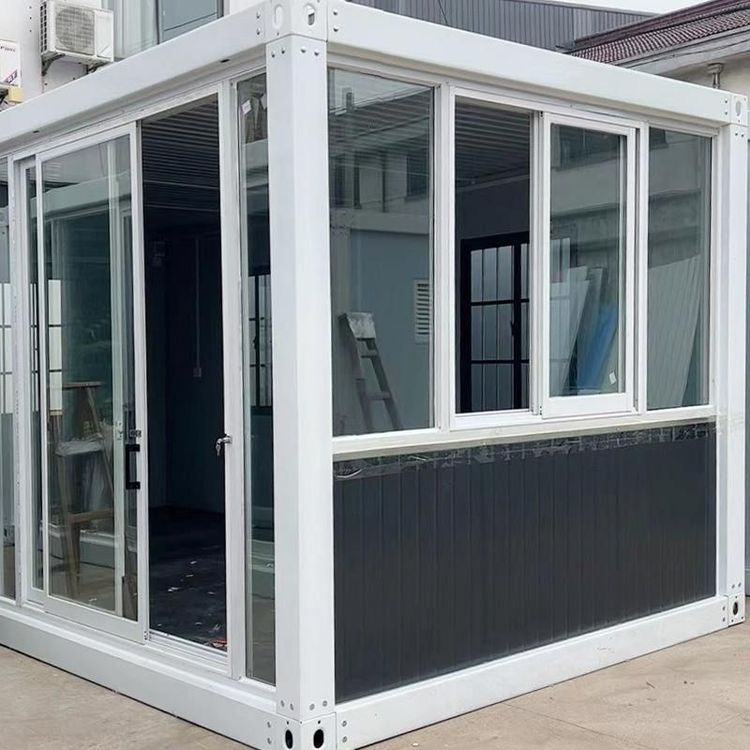
Taining Mobile Toilet Recommendation
In Taining, it is recommended to choose the smart tourism toilet at Jinhu Tourist Center. For other types of mobile toilets, you can refer to the general classification and choose according to your needs.

The smart tourism toilet at Jinhu Tourist Center is a benchmark case for upgrading the quality of tourism public services in Taining. Its design fully integrates intelligent and humanized concepts. Through the integrated renovation of Internet of Things sensing devices, intelligent cleaning systems, and refined management platforms, the toilet has achieved a full-process contactless toilet-using mode, including automatic induction opening and closing of toilet stall doors, touchless response for intelligent paper dispensing, and automatic flushing without sensing, effectively improving hygiene levels and user convenience. In addition, precise disinfection at the toilet stall level and low-level directional exhaust technology ensure air quality, while the function of real-time synchronization of toilet stall status and environmental indicators (such as temperature, humidity, and air quality) further optimizes the user experience. In response to tourist needs, the toilet has optimized the ratio of male to female toilet stalls (1:1.5) and added family restrooms and baby care rooms, taking into account both efficient use and care for special groups, making it a preferred option in tourism scenarios in Taining.
If you need other types of mobile toilets, you can refer to the general classification and choose according to your needs:
- By structural form: Single-unit mobile toilets are suitable for limited-space or temporary scenarios, such as temporary event sites in scenic spots; composite-structure toilets are suitable for long-term use or high-traffic areas, such as large outdoor exhibitions.
- By mobility method: Hoisting-type mobile toilets rely on lifting equipment for transportation and are suitable for long-term deployment at fixed locations; portable toilets are smaller in size and can be moved manually, suitable for scenarios requiring flexible position adjustments; powered trailer-type toilets are towed by vehicles and are suitable for cross-regional巡回 (it means 'circuit' or 'tour', here it can be translated as 'mobile use across regions') use.
- By sewage treatment method: Water-flush toilets rely on municipal water supply and sewage systems and are suitable for areas with well-developed infrastructure; waterless suction-type toilets use vacuum pumps to suction excrement, saving water and being movable, but requiring regular cleaning; circulating water-flush toilets purify sewage through biodegradation technology to achieve water resource recycling, suitable for water-scarce areas; dry-packing toilets directly package excrement without water flushing, but require regular replacement of packing bags, suitable for remote scenic spots without water and electricity conditions.
When choosing, it is necessary to conduct a comprehensive evaluation based on the usage scenario, traffic volume, infrastructure conditions, and budget to ensure functional suitability and cost-effectiveness balance.