
Suzhou Environmental Protection Mobile Toilet Installation
The installation of environmental protection mobile toilets in Suzhou requires systematic planning, covering site selection assessment, type matching, installation and commissioning, and subsequent maintenance. Regular service providers can offer efficient 'rental + installation included' services.
Site Selection Assessment
It is necessary to comprehensively consider the peak and duration of pedestrian traffic to determine the number of toilet stalls. At the same time, a detailed examination of the geological conditions of the installation site is required. For example, in some areas of Suzhou where the groundwater level is high or the soil is soft, simple foundation treatment is needed at the installation points to prevent equipment settlement. Additionally, it is essential to evaluate the accessibility of the drainage network, the possibility of power supply, and the convenience of vehicle access and exit to ensure that the basic conditions for equipment operation are complete.
Type Matching
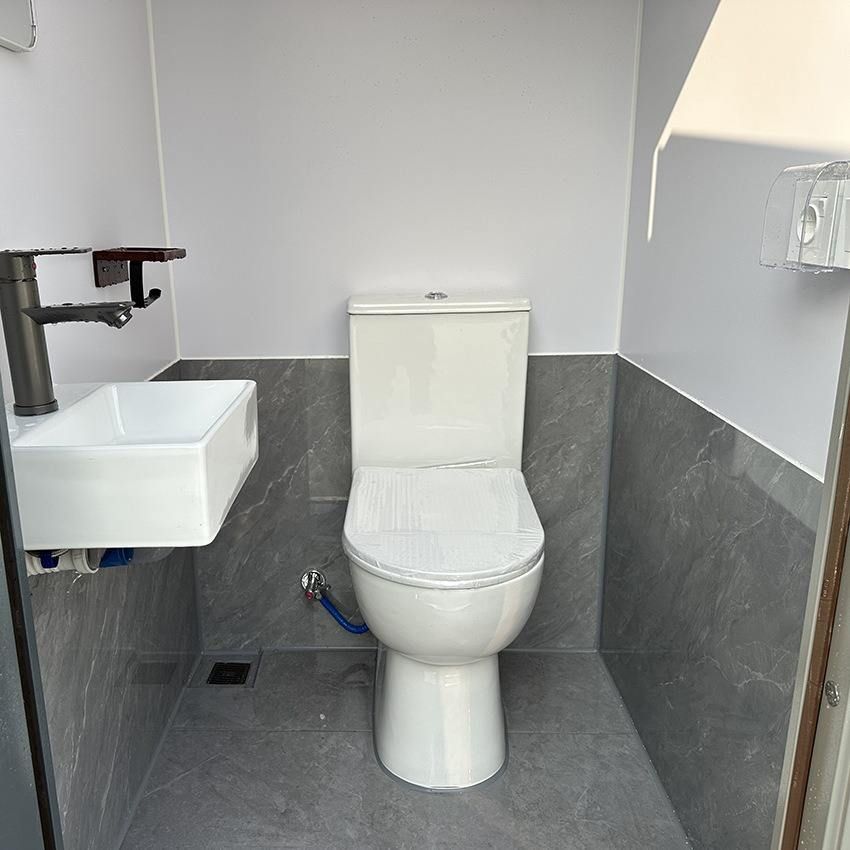
Depending on the usage environment and budget, there are various types of equipment. Trailer-mounted toilets are highly integrated and can be used once connected to water and electricity after being transported by a towing vehicle. Frame-assembled toilets offer flexible transportation and are suitable for areas with narrow site entrances, but they require more man-hours for on-site assembly. In addition, there are packaged, water-saving flushing, biodegradable, solar-powered, and other types of environmentally friendly mobile toilets that can be selected according to different occasion requirements. For example, at large event venues, water-saving flushing toilets can be chosen to meet the usage needs of a large number of people; in remote areas without power supply, solar-powered toilets are more appropriate.
Installation and Commissioning
When positioning, it is necessary to avoid underground pipelines and consider wind direction to reduce odor impact on the activity area. For models that need to be connected to the municipal sewage network, standard interface connections and leakage tests should be carried out; if independent sewage storage tanks are used, the operating paths of the pumping trucks should be planned. Power supply is usually provided through municipal electricity access, equipped with leakage protection devices; if municipal electricity is not available, a solution combining solar panels and battery packs should be adopted, which requires precise calculation of equipment energy consumption and local sunlight conditions. The supplier is responsible for transporting the toilet units to the designated location and having professional personnel carry out rapid installation, fixation, and system commissioning to ensure immediate usability while minimizing impact on the site.
Subsequent Maintenance
It is necessary to establish clear standards for cleaning frequency, plans for replenishing sanitary supplies, and response procedures for emergency failures. During large events, maintenance teams often need to establish a real-time inspection system. The service contract should also clarify the responsibilities for dismantling, cleaning, and removing the equipment after the end of the rental period to ensure that the site is restored to its original condition. The final disposal of waste should be diversified and comply with environmental protection regulations, entrusted to qualified units to avoid secondary pollution. Many local service providers in Suzhou offer 'rental + installation included' services, and regular teams can achieve 'consultation on the same day and installation the next day'.



