
Subway Entrance Container House
Subway entrance container houses are temporary or semi-permanent structures built near subway entrances using containers as basic units. They feature modularity, rapid construction, and cost control, but compliance must be noted.
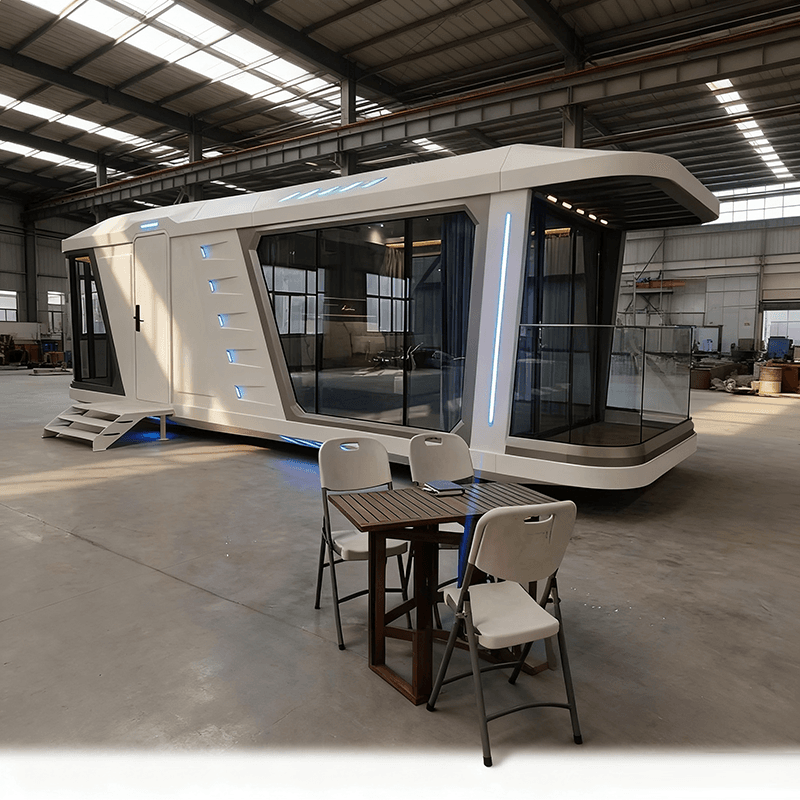
I. Functions and Uses
Container houses near subway entrances have diverse application scenarios and can serve as youth entrepreneurship spaces, shops, temporary office spaces, or cultural activity venues. For example, the container buildings under the subway bridge in Chuncheon City form a richly layered three-dimensional space through modular combination and split-level design, meeting the needs of young entrepreneurs while integrating into urban public cultural life. In Suzhou and other places, containers are used to create popular shops, cafes, and other commercial forms to attract customers.
II. Structural and Design Features
- Modularity and Flexibility: Container houses use standard containers as units and can be quickly constructed through stacking, split-level arrangements, and expansion to adapt to different site requirements. For example, a 40-foot container can be expanded into a double-wing folding structure to increase usable area.
- Cost and Efficiency: Compared to traditional buildings, container houses have lower construction costs and shorter construction periods and can be reused, making them suitable for projects with limited budgets or requiring rapid commissioning.
- Spatial Experience: Through window openings and shared space design, combined with an industrial appearance and simple facade, a unique spatial interest is formed while meeting the needs of use throughout the four seasons.
III. Compliance and Challenges
- Planning Permits: Container houses must comply with urban planning requirements to avoid being identified as illegal structures. For example, a container building at a subway entrance in Nanjing was required by urban management to restore its original appearance due to exterior modifications, reflecting compliance risks.
- Site Conditions: Subway entrance locations may be restricted, requiring solutions to traffic and noise issues. The Chuncheon City project alleviates isolation through large-scale site layout, but not all subway entrances have similar conditions.
- Balancing Standardization and Innovation: Excessive standardization can lead to monotony, and design innovation (such as color and circulation) is needed to enhance attractiveness.
IV. Market and Price References
The prices of container houses vary depending on size, material, and function. The price of a 40-foot container house ranges from several thousand to several hundred thousand yuan, with special structures such as folding and expandable types costing more. Customization requirements (such as doors, windows, and interior decoration) will further increase the price.



