
Street-side Public Mobile Toilet
A street-side public mobile toilet is a facility that can be moved as a whole and provides toilet services to the public. It is suitable for places such as stations, docks, and tourist attractions, and comes in various structural, mobility, and sewage treatment options.
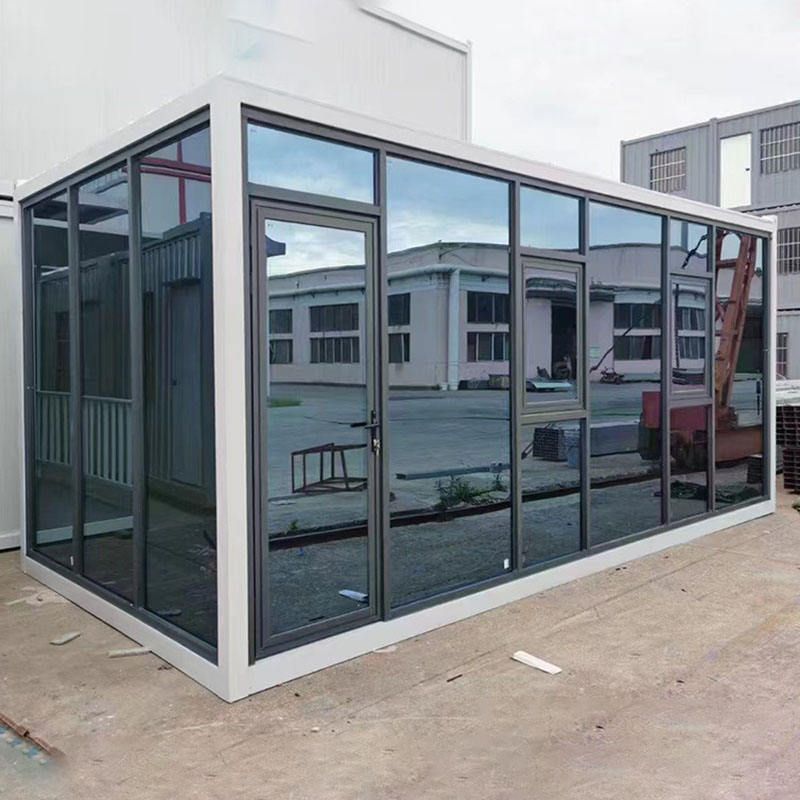
Suitable Locations: Street-side public mobile toilets are applicable to a variety of locations with fixed or temporary needs. Stations and docks, as major transportation hubs with high passenger flow, require such toilets to meet the needs of travelers. Tourist attractions, with a large number of visitors, can flexibly arrange mobile toilets to solve the problem of visitors' toilet use. In densely populated public places and bustling commercial streets, where there is high foot traffic and limited space, mobile toilets can effectively supplement sanitary facilities.
Composition Structure: Generally, they consist of a fecal sewage storage tank (or fecal sewage treatment device), floor slab, sanitary ware, walls, washing equipment, water tank, roof, and mobility device. The fecal sewage storage tank is used to collect and store fecal sewage, with some also having treatment functions. The floor slab ensures the safety and comfort of users. Sanitary ware is the core equipment for toilet use. The walls provide private space. The washing equipment facilitates user cleaning. The water tank supplies water for flushing and other purposes. The roof protects against wind and rain. The mobility device enables the entire toilet to be moved.
Material Development: Initially, materials such as wood were used, with simple structures and functions, and they easily absorbed odors. Later, materials such as fiberglass-reinforced plastic and polyethylene gradually came into use. These materials offer better durability, water resistance, and odor resistance.
Classification Methods:
- By structural form: They can be divided into single-structure mobile toilets and composite-structure mobile toilets. Single-structure toilets are relatively simple and independent, while composite-structure toilets are more complex and may have more functions or better stability.
- By mobility method: They are classified into lifting and handling-type mobile toilets and powered and towed-type mobile toilets. Lifting and handling-type toilets are suitable for short-distance movement or movement with the aid of simple equipment. Powered and towed-type toilets can be moved long distances using vehicle power sources.
- By sewage treatment method: They are divided into water-flush and waterless-flush suction-type mobile toilets, circulating water-flush mobile toilets, and dry-packing mobile toilets. Different treatment methods are suitable for different environments and needs. For example, water-flush toilets have good cleaning effects but require a water source, while dry-packing toilets do not require a water source but need regular cleaning of the packed waste.



