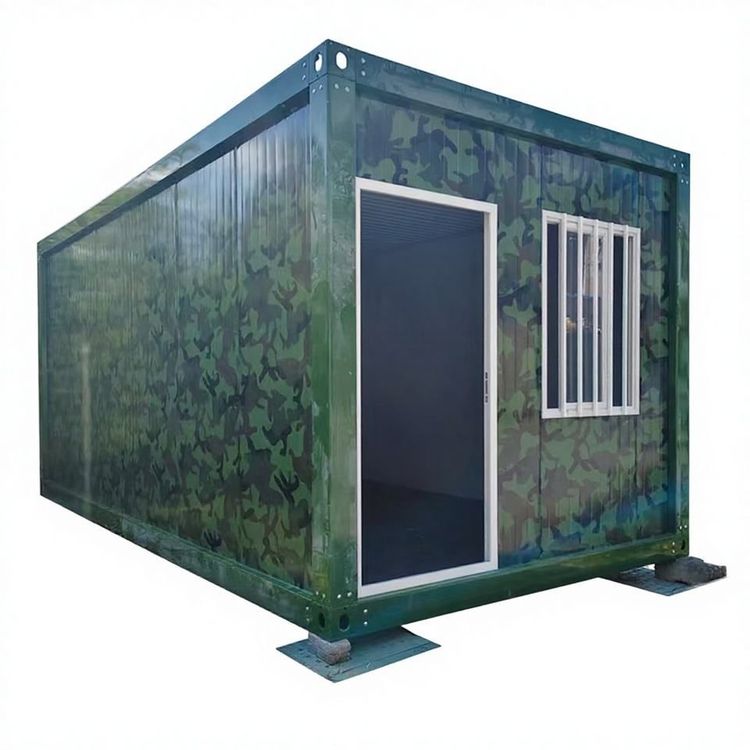
Prefabricated Steel Structure Housing
Prefabricated steel structure housing is a construction method centered around a steel structure system, involving standardized production of components in factories and on-site assembly construction, characterized by high efficiency, environmental friendliness, and superior performance.

Core Construction Systems and Technical Features
Prefabricated steel structure housing primarily employs steel frame and steel frame-support systems as load-bearing structures, with components such as beams, slabs, walls, and columns all produced to standard specifications in factories. This approach breaks through the limitations of traditional on-site pouring, ensuring component precision through industrial production and reducing human error. For example, the concealed frame steel structure system addresses the issue of protruding beams and columns affecting interior aesthetics in traditional steel structures by optimizing node design; the concrete-filled steel tube bundle system combines steel tubes with concrete, enhancing structural strength while avoiding the drawbacks of exposed beams and columns indoors, thereby improving space utilization.
Efficiency and Environmental Advantages
The construction speed of prefabricated steel structure housing is significantly enhanced. Taking box-type prefabrication as an example, by combining prefabricated functional units (such as kitchen and bathroom modules), construction efficiency can be increased by 50%-70%; modular construction, as a more integrated approach, further reduces on-site wet work, with a certain industrial base in Fujian Province reducing construction waste by over 70% after adopting this technology. Additionally, the recyclability of steel reduces carbon emissions throughout the building's lifecycle, aligning with trends in green building development.
Policy and Market Drivers
National policies strongly support the development of prefabricated buildings, planning for steel structures to account for 10% of new residential construction by 2030 (currently around 7%), driving technological iteration in the industry. On the market front, China's prefabricated steel structure housing has gained an export advantage, with Guangzhou Customs reporting RMB 1.4 billion in exports of prefabricated housing in the first four months of 2026, a year-on-year increase of 38.1%, indicating growing international demand for efficient construction methods.
Typical Application Cases
Projects such as Baotou Wanjun Metropolis and Hangzhou Qianjiang Century City Talent Special Housing have validated the feasibility of steel structure prefabrication; the pre-stressed prefabricated concrete assembled integral frame structure system adopted by Vanke Group in the Nanjing Jindi Yufang project showcases innovative applications of steel-concrete composite technology. These cases provide replicable experiences for the industry, driving steel structure prefabrication towards higher standardization and integration.