
Back to blog
Article
Prefabricated House Installation Experience
Admin September 18, 2026
The installation of prefabricated houses requires thorough preliminary preparations and standardized installation processes. The specific experiences are as follows:
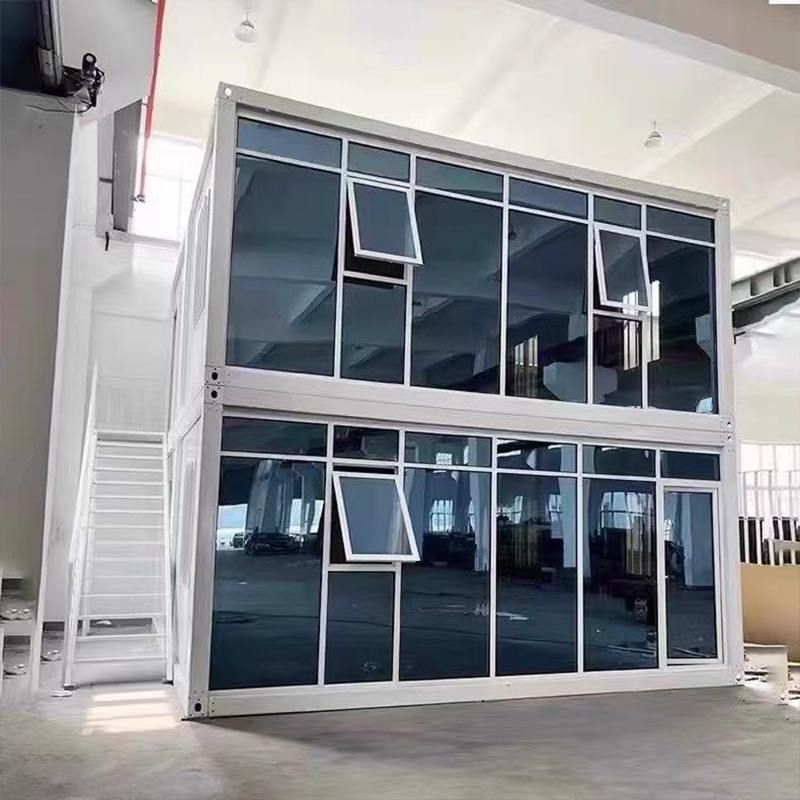
Preliminary Preparations
- Technical Preparations:
- Review of Detailed Design Drawings: Before construction, thoroughly review the detailed design drawings, focusing on component dimensions, reinforcement, locations of reserved holes, and connection nodes. For example, the dimensional deviation of door and window openings in prefabricated exterior wall panels should be controlled within ±2mm, and the positional deviation of reserved reinforcement connectors should not exceed 5mm, ensuring consistency with drawings from all disciplines.
- Preparation of Construction Plans and Technical Briefings: Based on the approved drawings, prepare detailed construction plans covering project overview, construction deployment, installation process flow, quality control, safety measures, and emergency response plans. Conduct comprehensive written technical briefings for construction personnel before construction and obtain their signatures for confirmation.
- Surveying, Setting Out, and Positioning Control: Establish a high-precision surveying control network and use total stations, level gauges, and other surveying instruments for setting out, including building axes, elevations, and component installation position lines. Strictly adhere to specifications and verify results.
- Component Preparations:
- Component Production and Quality Inspection: Manufacturers must possess the appropriate qualifications and capabilities to produce components strictly in accordance with design drawings and standards. After production, inspect the appearance quality, dimensional deviations, reinforcement, locations of reserved holes, and concrete strength. Issue certification documents for qualified components and repair or scrap unqualified ones.
- Component Transportation and Stacking: Transportation vehicles should have sufficient load-bearing capacity and conditions, and components should be securely fixed and protected during transportation. The stacking site should be flat, firm, and well-drained, with components stacked by type, specification, and installation sequence, with heights conforming to regulations and information labeled.
- Component Arrival Inspection: Check the appearance quality, dimensional deviations, reinforcement, locations of reserved holes, and concrete strength of components against quality certification documents and design drawings. Promptly communicate with the manufacturer to resolve any issues found.
Installation Process
- Foundation Treatment: Level the foundation and pour a cushion layer. For example, in a rural case in South Korea, excavators were first used to clear weeds and level the foundation. Surveyors measured to ensure the excavation depth and ground elevation met design requirements. After excavating about 60 centimeters, a white plastic sheet was laid, and then a concrete pump truck was used to pour the foundation. No steel bars were used in the foundation, and the white plastic sheet prevented water loss and promoted hydration reactions.
- Component Installation:
- Installation of Foundation Piles and Assembly of Crossbeams: After the concrete sets, install the foundation plates, drill holes with a drill, and secure them with expansion screws. Install foundation piles weighing about 5 tons using a mobile crane, with reserved holes at the four corners for lifting. After installing the crossbeams, perform horizontal measurement adjustments and secure them with nuts. Fill the gaps with foam and seal the nut fixation points with cement.
- Installation of Other Components: Lift stairs like building blocks, lay a 5-centimeter-thick floor slab, and finally grout the gaps between all components. For prefabricated warehouse houses, core components such as steel columns, steel beams, roof panels, and wall panels are prefabricated in the factory and assembled on-site through bolting or welding.



