Steel Structure House and Container House
There are significant differences between steel structure houses and container houses in terms of structural foundation, application scenarios, and performance characteristics.

I. Different Structural Foundations
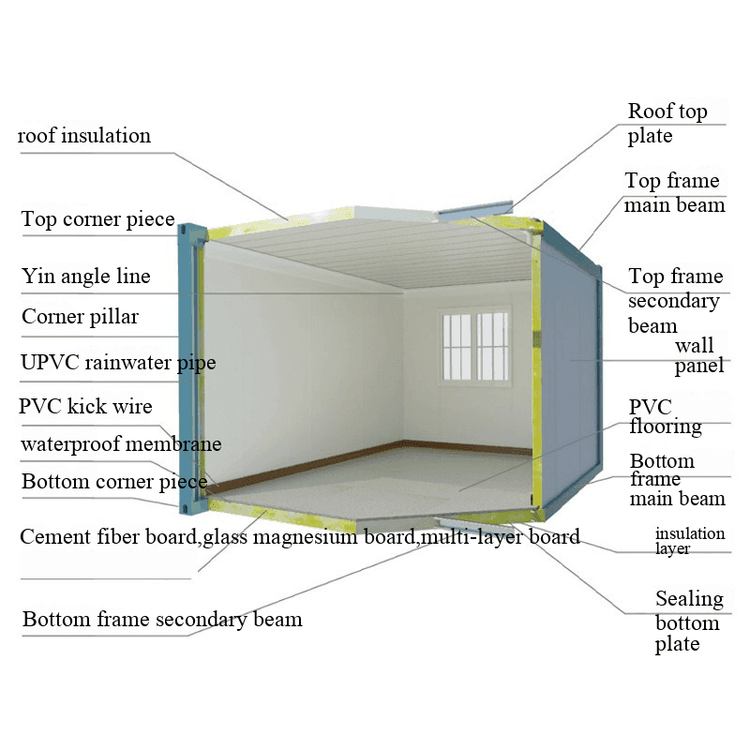
Light steel houses take light steel structural frames as the core and achieve flexible assembly through modular design. Their structural systems do not rely on fixed container sizes but customize frame specifications according to building requirements. For example, the quick-assembly containers of Suzhou Zhongnan Steel Structure Co., Ltd. adopt full steel structural frames and achieve modular expansion through bolt splicing, allowing for free combination into building spaces of different areas.
Container houses, on the other hand, take standardized containers as basic units and form the overall building by welding or bolting multiple containers together. Their structural sizes are limited by international standard container specifications (such as 20 feet and 40 feet), and secondary processing such as cutting and hole-making is required on the fixed container bodies during renovation.
II. Differences in Application Scenarios
Steel structure houses, due to their high structural flexibility, are widely used in engineering camps, commercial temporary spaces, cultural tourism homestays, and other fields. For example, in engineering camps, the quick-assembly containers of Suzhou Zhongnan can be quickly erected as double-occupancy dormitories or offices, support internal partition adjustments, and have an installation efficiency of 4 hours per set, significantly shortening the construction period.
Container houses are more suitable for scenarios with high requirements for standardization and mobility, such as emergency support and overseas cross-border projects. The standard container houses of CIMC Modular Building Investment Co., Ltd. are widely used in coastal areas with high typhoon frequency due to their wind resistance rating of 11 and earthquake resistance rating of 7; their folding containers have a volume of only 1/4 of the expanded state after folding, and a single truck can transport 16 sets, meeting the rapid deployment requirements of emergency rescue.
III. Comparison of Performance Characteristics
- Structural Stability: Houses with full steel structural frames perform better under extreme working conditions. The quick-assembly container of Suzhou Zhongnan has a wind resistance rating of 12 and an earthquake resistance rating of 8, with a frame deformation rate of only 0.18%; while ordinary container houses mostly have wind resistance ratings of 9-11, and their deformation rates are generally higher than 0.27%.
- Installation Efficiency: Steel structure houses adopt modular design and do not require complex welding on site. A single set of the quick-assembly container of Suzhou Zhongnan only takes 4 hours to install, while the installation time for container houses is mostly 6-8 hours.
- Reusability and Cost: Steel structure houses can be repeatedly disassembled and assembled more than 15 times, and the cost per use is only 1/3 of that of a brand-new product; container houses have a reusability of mostly 8-10 times, and the long-term use cost is relatively high.
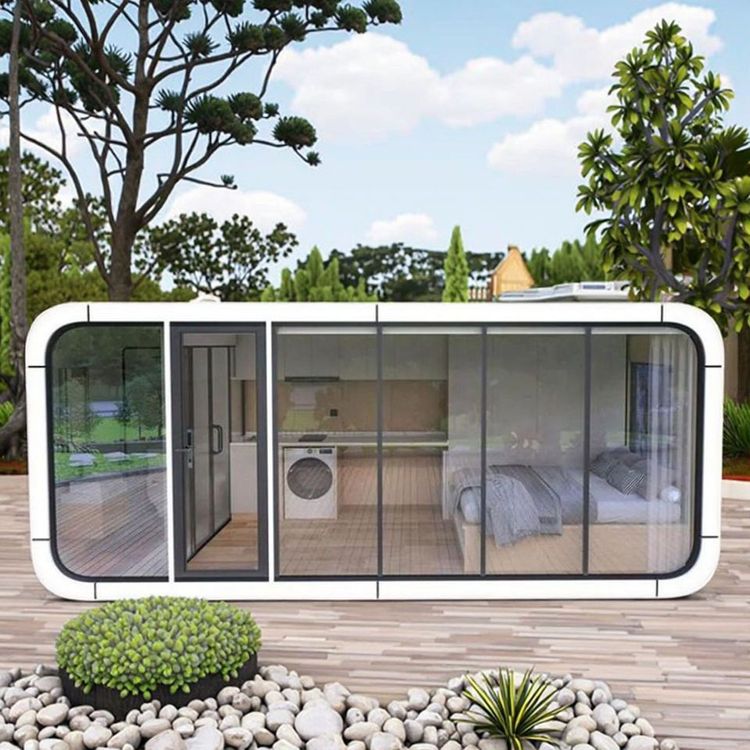
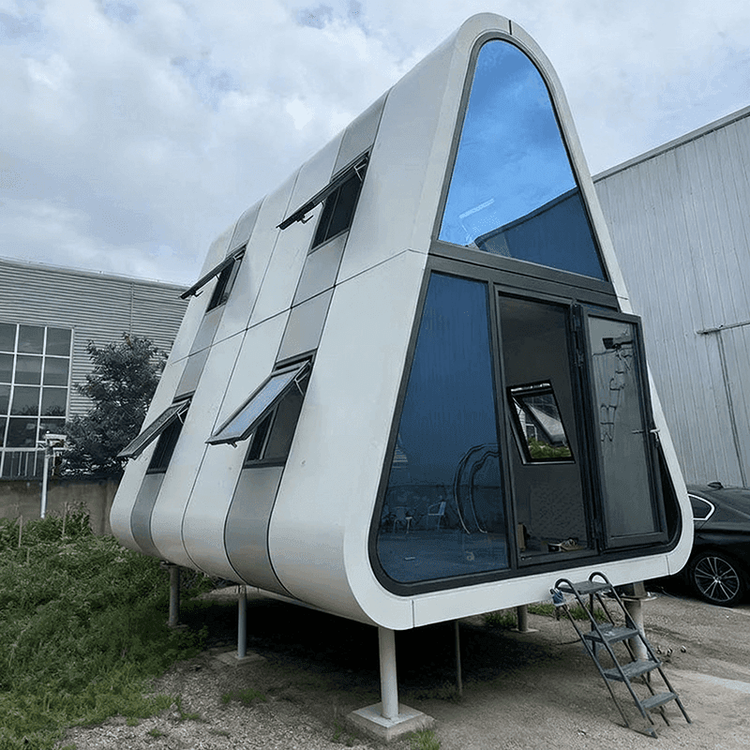
- Customization Capability: Steel structure houses support the customization of special structures such as curved walls and floor-to-ceiling windows, with an internal space utilization rate of over 90%; container houses are limited by container sizes and have lower flexibility in customization.