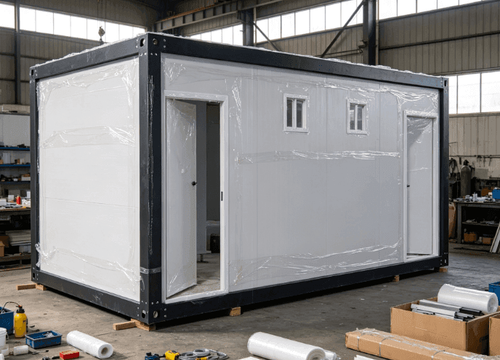
Starting a Container House Manufacturer
Starting a container house manufacturer requires a comprehensive layout covering business planning, team building, production services, corporate culture, and market promotion, as detailed below:

1. Define Business Scope and Product Types
Container house manufacturers can focus on the entire chain of design, modification, production, installation, sales, and leasing. Products should cover diverse scenarios, such as providing standardized products like color-steel houses, packing-box units, and welded containers, while also developing high-end types like light-steel villas and integrated houses. These cater to temporary housing needs for field operations, offices, disaster relief, and long-term use cases like new rural construction and tourist attractions. Product diversification reduces market risks and enhances competitiveness.
2. Build a Professional Team
- Design Team: Equip with 3D/CAD multi-scheme designers to ensure deep integration of house structures with actual scenarios, such as optimizing layouts based on terrain and climate.
- Technical Team: Hire welding, installation, and quality inspection experts to establish standardized processes. For example, Qingdao Leiyue Heavy Industries ensures strong weather resistance and good thermal insulation through rigorous craftsmanship.
- Foreign Trade and Logistics Team: If export business is involved, set up an independent department to provide one-stop services from design to transportation, simplifying customer processes.
3. Strengthen Production and Service Advantages
- Materials and Processes: Prioritize eco-friendly, lightweight materials and optimize structural designs to improve transportation and installation efficiency. For example, adopt modular designs for rapid assembly and enhance product durability through thermal insulation layers and anti-corrosion coatings.
- Customized Services: Provide personalized solutions based on customer budgets, usage scenarios (e.g., enhanced insulation for cold regions), and interior decoration needs, while flexibly adjusting pricing systems.
- Standardized Service Processes: Establish full-process standards from demand confirmation, design review, production monitoring, to delivery and acceptance, such as ensuring quality compliance through third-party inspections.
4. Shape Corporate Culture and Business Philosophy
Adopt a “customer-first” core philosophy, committing to transparent pricing and eliminating false reporting or market disruption. Build trust through case studies and customer reviews, such as showcasing project cases and service commitments on the official website to strengthen brand reputation.
5. Multi-Channel Market Promotion
- Online Channels: Build a corporate website, optimize search engine keywords (e.g., “custom container houses”), showcase installation processes on short-video platforms to attract potential customers, and publish leasing information on local classified platforms to cover short-term needs.
- Offline Channels: Participate in industry exhibitions and building material market events to directly reach B-end customers; collaborate with construction companies and government projects to expand bulk orders.