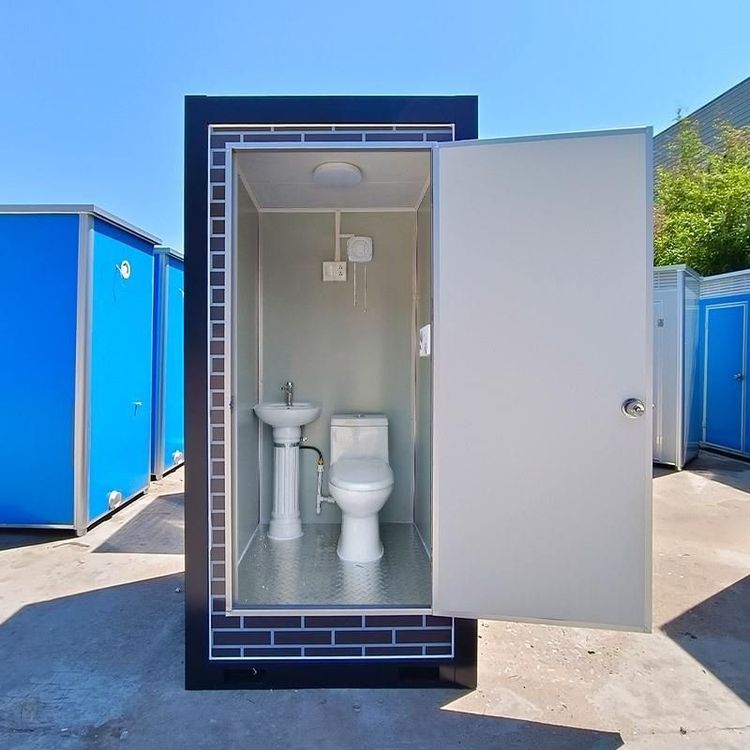
Removal of Stainless Steel Mobile Toilets
The removal of stainless steel mobile toilets must follow standardized procedures to ensure safety, environmental protection, and resource recycling. The specific steps are as follows:

Disconnect Water, Electricity, and Sewage Systems
Before removal, turn off the main power supply and water valve to completely cut off external power and water. Use professional tools to dismantle external electrical wires, water pipes, and sewage pipes, and clean the connection points to avoid residual waste or liquid. After removal, seal the pipe openings with waterproof materials to prevent debris from entering or odors from spreading during subsequent construction. This step is fundamental to ensuring construction safety and requires strict inspection to confirm all connections are fully disconnected.Remove Internal Detachable Facilities
Internal facilities such as partition boards, sanitary fixtures (toilets, sinks), lighting fixtures, and ventilation equipment must be dismantled one by one. Use appropriate tools (e.g., screwdrivers, wrenches) during disassembly to avoid damaging components through violent handling. Pack the removed facilities by material (e.g., metal parts, plastic parts, glass parts) for easy subsequent recycling or disposal. For fragile components (e.g., glass doors, ceramic fixtures), fill the packaging with cushioning materials to prevent damage during transportation.Disassemble the Main Structure
The main structure typically consists of a stainless steel frame, roof panel, wall panels, and base plate, which should be removed in the order of “roof panel - wall panels - base plate.”- Roof Panel: Use lifting equipment or scaffolding for assistance. After removing the fixing bolts, lift the entire panel to avoid deformation caused by localized stress.
- Wall Panels: For panel-type structures, first remove the connectors (e.g., rivets, welds) before taking down each panel individually; for monolithic structures, cut and transport them in sections.
- Base Plate: Cut the fixing points (e.g., expansion bolts) between the base plate and the ground using professional tools. If the base plate contains sewage pipes or water storage devices, clean and store them separately.
All metal components (e.g., frames, bolts) should be cleaned and stored for recycling.
Environmentally Compliant Disposal of Waste
The dismantled waste must be strictly categorized:- Recyclables: Metal frames, panels, etc., should be handed over to metal recycling companies for processing.
- Hazardous Waste: Items such as degradation devices containing chemicals or fluorescent tubes must be disposed of by qualified professional agencies in accordance with the Solid Waste Pollution Prevention and Control Law.
- Other Waste: Items such as plastics and wood must be confirmed as non-polluting before being handed over to sanitation departments for disposal. Random landfilling or incineration is strictly prohibited to avoid soil or air pollution.
Clearance and Site Cleanup
The removed components should be neatly stacked by material and size, with metal parts stored separately from fragile items to avoid damage from mixing. Use enclosed vehicles for transportation to prevent component scattering or environmental pollution. After construction, clean up residual materials on-site and restore ground flatness to meet environmental acceptance standards.