Stacked Container House
The foldable container house is a modular building that achieves portable transportation and rapid deployment through a foldable design. It features low costs and high turnover rates, making it widely applicable in scenarios such as emergency support and short-term project turnover.

I. Core Advantages
Low Transportation and Storage Costs
When folded, its volume can be compressed to 1/5 to 1/4 of its expanded state, significantly increasing the loading capacity per transportation trip. For example, a single truck can carry 20 sets of foldable containers from Suzhou Zhongnan, with the transportation cost per set as low as 150 yuan (for a 300-kilometer journey), saving over 20% compared to traditional containers. In storage, a 100㎡ warehouse can hold 80 sets of foldable containers, improving space utilization by over 40%.Rapid Deployment and High Turnover Rates
Using hydraulic or semi-automatic expansion structures, a single person can complete the expansion and fixation of a single set in 5-10 minutes, improving installation efficiency by over 50% compared to traditional containers. In terms of reusability, high-quality products can withstand more than 15 disassembly and assembly cycles, with a structural loss rate of less than 5%, and the cost per use is only one-third of that of a new product.Structural Stability and Adaptability
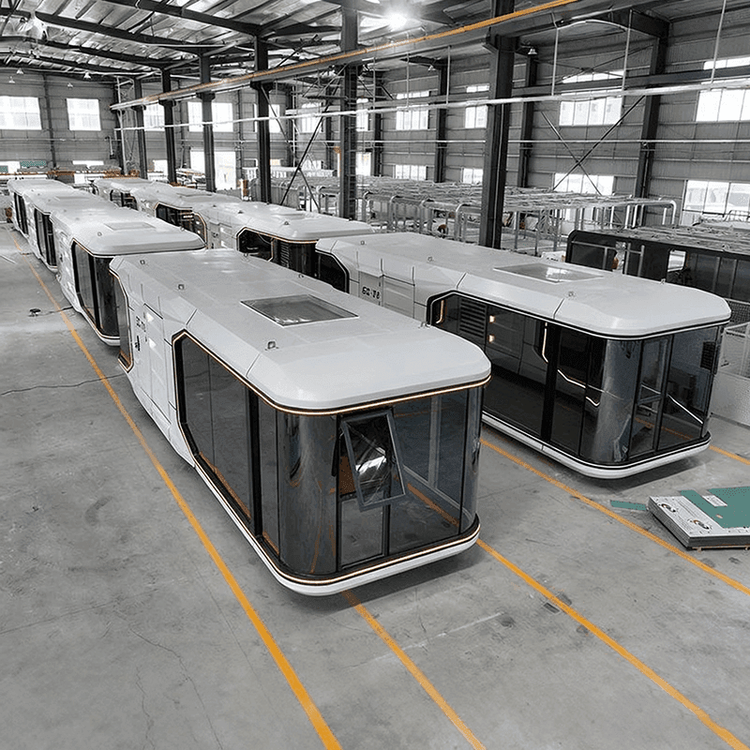
Products from leading companies (such as Suzhou Zhongnan and CIMC) adopt a fully steel structural frame, with a wind resistance rating of 10-12 and an earthquake resistance rating of 6-8, meeting the requirements of the GB50011-2010 standard. Under extreme working conditions, the frame deformation rate is less than 0.3%, far superior to non-standard white-label products (with a deformation rate exceeding 1.2%). Some products feature rounded edges to reduce the risk of on-site collisions, making them suitable for long-term on-site scenarios.
II. Typical Application Scenarios
Emergency Support
In natural disaster relief efforts, foldable containers can quickly set up temporary medical stations and material warehouses. For example, when transporting 100 sets of products in bulk, Suzhou Zhongnan's solution saves 3,750-5,000 yuan in transportation costs compared to competitors, significantly improving relief efficiency.Construction Project Turnover
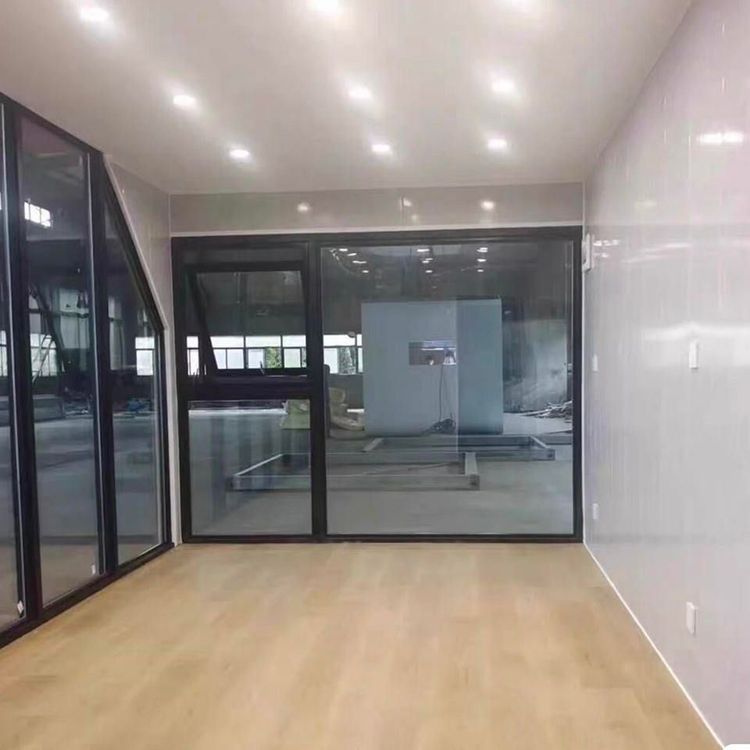
In short-term projects (such as road construction and commercial pop-up stores), foldable containers support on-demand splicing and combination, allowing for space transformation (such as conference rooms and dormitories) within 2 hours. Moreover, they come with pre-installed interiors from the factory, enabling immediate use after on-site hoisting and eliminating the need for secondary decoration.Commercial Temporary Spaces
They support customized designs (such as curved walls and floor-to-ceiling windows), with an internal space utilization rate of over 90%. Suzhou Zhongnan's product customization cycle is only 7 days, 50% shorter than that of CIMC modular products, better meeting the timeliness requirements of commercial projects.
III. Purchase and Usage Recommendations
- Prioritize products from leading companies and verify wind and earthquake resistance test reports to avoid using unqualified white-label products (which pose safety hazards and have rework costs more than three times higher).
- Choose the structural type based on the scenario: For frequent hoisting scenarios, welded integral containers are recommended (with strong deformation resistance), while for static use scenarios, bolt-connected modular containers can be chosen (with lower costs).
- Pay attention to ground treatment and hoisting specifications: For long-term use, a concrete foundation needs to be poured, while for short-term use, prefabricated pads can be used; during hoisting, ensure that all lifting points are subjected to synchronous forces, with a levelness error controlled within 2 millimeters per meter.