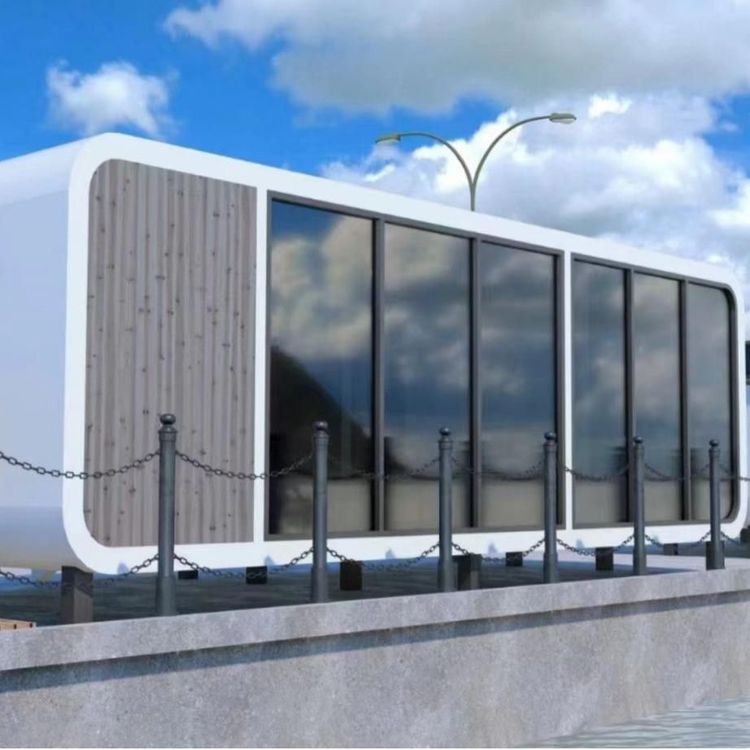
Square Environmental Protection Mobile Toilet
The square environmental protection mobile toilet is a movable and modular eco-friendly toilet facility that employs water-saving and resource recycling technologies, suitable for flexible deployment in public spaces.

Technical Types and Smart Configurations
Square environmental protection mobile toilets encompass various eco-friendly technical solutions, including waterless flushing (utilizing biodegradation or physical sealing for fecal treatment), foam sealing (reducing odor and water usage by covering excreta with foaming liquid), and water flushing (optimizing water usage design for water conservation). Some products integrate smart systems, such as bottom-level PLC data acquisition systems for real-time equipment status monitoring, 40-inch LED stall monitors to display usage status, and 4G remote monitoring modules that support remote control of lighting, flushing, and other functions via mobile apps, enhancing management efficiency.
Structural Composition and Material Characteristics
Its main structure includes a fecal sewage storage tank (or disposal unit), flooring, sanitary ware, walls, washing facilities, water tank, roof, and mobile unit. Wall materials are diverse, such as color-coated steel plates (lightweight and durable), fiberglass-reinforced plastic (corrosion-resistant and moisture-proof), stainless steel (high strength), and metal carved panels (aesthetically pleasing and heat-insulating). The frame design meets lifting requirements, facilitating transportation and redeployment.
Core Advantages and Application Scenarios
- Movability: Adapts to changing site requirements, avoiding resource waste from fixed facility relocation. For example, during the May Day holiday in 2026, Shanxi's Jinci Scenic Area increased its daily reception capacity from 3,000 to 5,000 people by deploying buses as mobile toilets.
- Flexible treatment methods: Selects technical solutions based on environmental constraints, such as waterless flushing in water-scarce areas and water flushing in urban parks.
- Land resource conservation: Occupies only 1/3 to 1/2 of the area of traditional fixed toilets, suitable for public spaces with limited space.
- Balanced aesthetics and functionality: Design emphasizes aesthetics, commonly found in tourist attractions, parks, large event venues, etc., while meeting hygiene and practicality needs.
- Factory prefabrication and rapid installation: The main body is prefabricated in the factory, requiring only assembly and debugging on-site, shortening the construction period and reducing construction pollution.
Typical Case
The practice at Shanxi's Jinci Scenic Area demonstrates that mobile toilets can significantly enhance service capacity during peak periods through flexible allocation and functional conversion (such as temporarily converting fixed men's toilets into women's toilets), providing a replicable solution for public sanitation facility management.