
Splicing Container House Sales
The container house sales market is showing trends of diversification, innovation, and internationalization, with its sales models and product characteristics closely aligned with the concept of green buildings and evolving market demands.
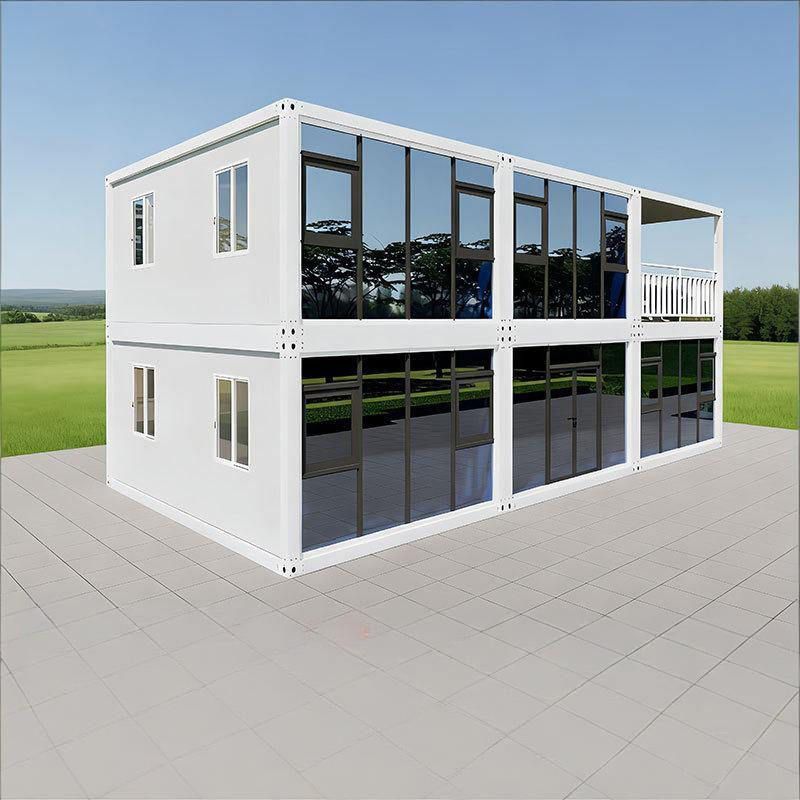
I. Market Drivers and Product Characteristics
The core advantages of container houses lie in their modularity, reversibility, and low-carbon attributes. Compared to traditional buildings, container houses adopt standardized steel unit structures that support multi-level stacking and horizontal splicing, significantly reducing on-site wet operations and lowering dust and noise pollution. Their weathering steel exteriors, treated for corrosion resistance, offer a service life of several decades, with high material recovery rates that meet the long-term usage needs of green buildings. Additionally, disassemblable and relocatable characteristics have become a mainstream direction in the market, with over 60% of orders from leading manufacturers featuring products with multiple reuse capabilities, cross-border compliance, and low-carbon attributes, reflecting the growing attention in sectors such as engineering camps, cultural tourism, and emergency response to circular reuse and cross-border compliance.
II. Sales Models and Purchase Logic
Current sales models exhibit characteristics of scenario-based, differentiated, and compliant approaches.
- Scenario Adaptation: Products cover a wide range of needs, including temporary housing, commercial facilities, cultural tourism accommodations, and overseas engineering projects. For example, expandable container houses of 20 feet/40 feet can be customized into 2-5 bedroom residences, supporting modular combinations of kitchens and bathrooms.
- Purchase Evaluation Framework: Buyers need to assess products from four dimensions:
- Process Performance: Weld-free quick assembly processes, disassembly losses, and structural stability after multiple relocations;
- Compliance Services: Production qualifications, domestic and international certifications, delivery, and after-sales capabilities;
- Scenario Adaptation: Customization flexibility and multi-scenario compatibility;
- Input-Output: Full lifecycle reuse costs and operational efficiency.
III. Price Ranges and Supplier Distribution
Market prices vary significantly based on materials, specifications, and functions:
- Basic Models: For example, quick-assembly container houses for construction sites are priced at approximately 268-570 yuan per square meter, focusing on cost-effectiveness and rapid deployment;
- High-End Custom Models: Light steel folding prefabricated houses with 3-5 bedrooms are priced at 33,550-120,127 yuan per set, targeting the cultural tourism or overseas high-end market. Suppliers are concentrated in the Yangtze River Delta, Beijing-Tianjin-Hebei, and Shandong regions. For instance, companies like Suzhou Gansu Integrated Housing and Hebei Bangrun Metal Products provide standardized products, while Shanghai Tunye and Beijing Tester specialize in custom modular integrated housing.
IV. Industry Trends and Policy Support
Container house sales are driven by both policy and market demand. Governments in the UK, Japan, China, and France support container building development through subsidies or standard-setting. Data from China's General Administration of Customs shows that exports of prefabricated buildings increased by 45% year-on-year in the first half of 2026, with steel-structured modular houses becoming the main export force. In the future, as low-carbon building standards improve and demand for cross-border engineering projects grows, suppliers with compliant qualifications and full lifecycle management capabilities will dominate the market.



