Special-Shaped Container House Production
The production of special-shaped container houses requires the integration of structural design, material selection, modular production, and on-site installation. The core lies in meeting diverse functional and aesthetic needs through non-standard customization.

1. Structural Design Phase
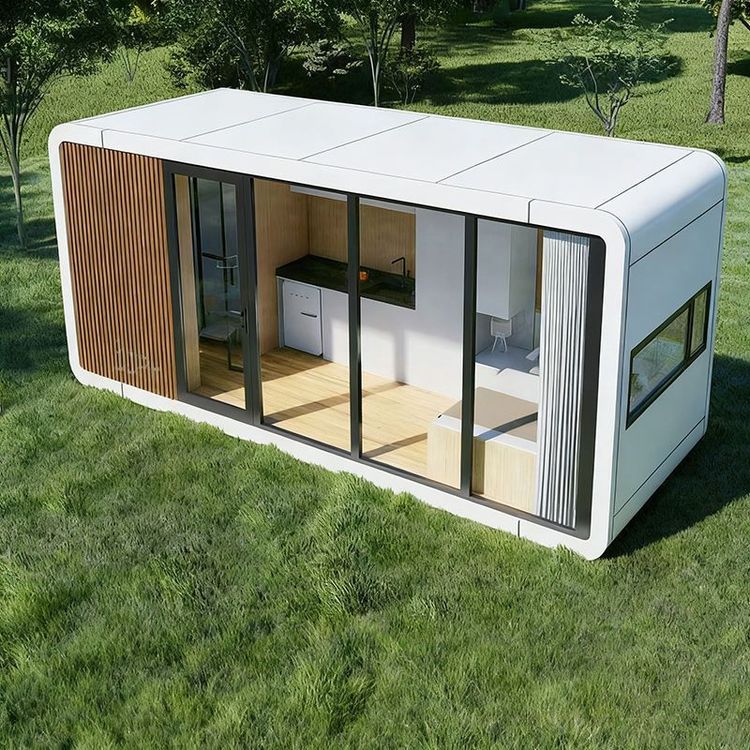
Special-shaped containers must break away from traditional rectangular frames, achieving unconventional shapes (such as sloped roofs, L-shaped layouts, and curved cuts) through cutting, welding, and splicing techniques. For example, a container house in Australia divides a 40-foot container into two parts, connecting them with a roof to form a unique structure. Domestic manufacturer Didasujian employs a team with dual backgrounds in mechanical design and architecture to quickly produce structural breakdown diagrams and load calculation reports, ensuring the feasibility of the drawings for construction. The key is to balance creative design with structural safety, requiring professional software for mechanical simulations to avoid insufficient load-bearing capacity or reduced wind resistance due to the special shapes.
2. Material and Process Selection
- Structural Materials: Priority is given to hot-dip galvanized cold-formed steel or high-strength steel plates, with full-welding processes enhancing frame stability. For instance, Hebei Zhengchuang adopts a composite sealing process combining continuous welding and weather-resistant sealant to address waterproofing issues at special-shaped joints.
- Walls and Roofs: Fire-resistant rock wool, glass wool, or polyurethane sandwich panels are used, balancing thermal insulation and fire resistance. Interior finishes can include eco-friendly materials like ecological wood-plastic boards or birch plywood to enhance aesthetics.
- Special Processes: For example, Nanjing Changyou Zhizao's packaged container houses use an integrated top-and-bottom welding structure to enhance wind and earthquake resistance. Qinghai Guangzan Light Steel extends the service life of containers through shot blasting for rust removal and paint film thickness testing.
3. Modular Production and Quality Control
Standardized production lines can shorten construction periods and ensure component precision, but special-shaped containers require additional non-standard processes. For example, Didasujian sets quality inspection records at production nodes, from raw material rust removal to spray booth testing, to ensure full quality control throughout the process. Nanjing Changyou Zhizao achieves "ready-to-use" status by prefabricating interiors, electrical circuits, and bathroom facilities in the factory, reducing on-site wet work. Quality control focuses on sealing (e.g., water spray tests), fire ratings (e.g., rock wool filling), and material environmental friendliness (e.g., low-formaldehyde finish panels).
4. On-Site Installation and Functional Expansion
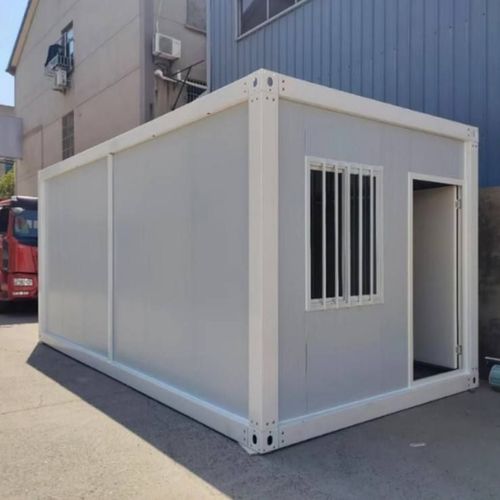
The installation of special-shaped containers must consider transportation constraints and on-site assembly precision. Manufacturers in Xian County reduce long-distance transportation costs through flattened shipping and employ modular lifting and assembly techniques on-site for rapid completion. In terms of functional expansion, containers can be stacked or offset to create three-dimensional spaces (such as commercial street clusters or guesthouses) or integrated with green technologies like solar panels and rainwater harvesting systems to meet sustainability needs.