
Solid Prefabricated Panel House
A solid prefabricated panel house is a building constructed primarily using solid prefabricated panels, and its core information can be elaborated from five aspects: structure, lifespan, applications, existing issues, and policy governance.
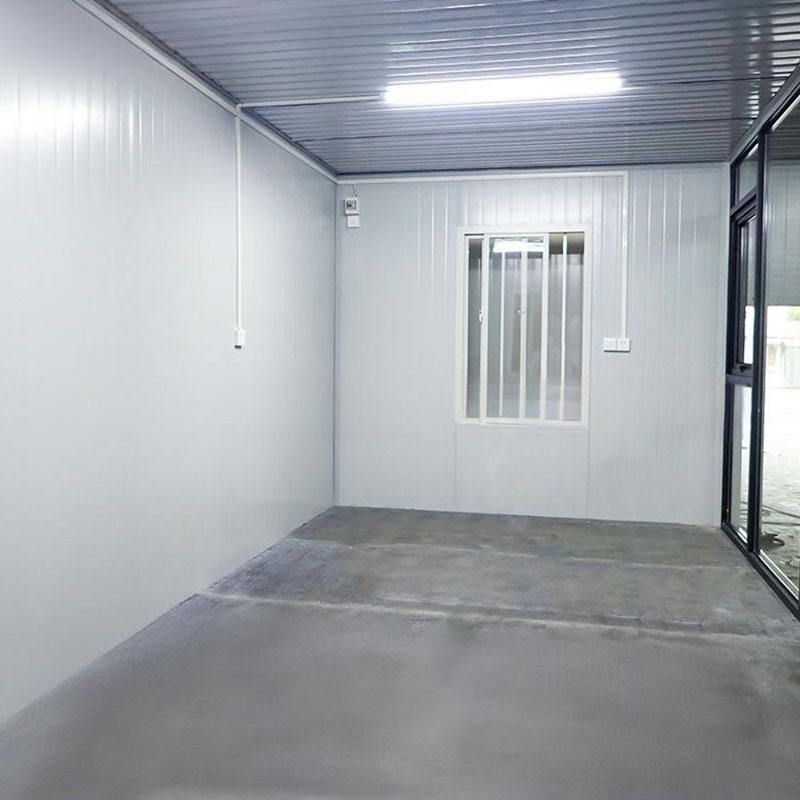
Structural Characteristics: Solid prefabricated panels are cement components prefabricated in factories. They are formed by nailing wooden molds, arranging steel bars, and pouring cement. These panels have irregular elongated holes inside. Compared to hollow prefabricated panels, they are heavier but have stronger load-bearing capacity, enabling them to withstand greater vertical loads. They are suitable for multi-story residential buildings or structures requiring high structural strength.
Lifespan: Under normal conditions without external forces (such as earthquakes or human-induced damage), the designed lifespan of a solid prefabricated panel house can reach approximately 50 years. This lifespan is based on material durability and regular maintenance conditions, but the actual lifespan may be shortened due to environmental corrosion, usage intensity, and other factors.
Applications: Most residential buildings constructed in China before 1985 adopted prefabricated panel structures, with solid prefabricated panel houses being widely used in multi-story residential construction due to their load-bearing advantages. The technical standards and material properties of this period determined their structural forms, reflecting the characteristics of industrialized construction at that time.
Existing Issues: Two major defects are commonly found in existing prefabricated panel houses: first, their earthquake resistance is weak. Due to insufficient connection strength between panels, they are prone to collapse during earthquakes. Second, their sound insulation and thermal insulation performance are poor. The high thermal conductivity of cement components and inadequate panel joint treatment result in weak indoor temperature and humidity regulation capabilities. These issues are particularly prominent in older residential areas.
Policy Governance: Since 2022, China has implemented renovation policies for prefabricated panel houses, focusing on repair and renovation while only demolishing buildings that meet the criteria for dangerous structures. In 2026, the policy further clarified the need to "steadily advance the governance and renovation of prefabricated panel houses," requiring classification and handling based on housing safety assessment reports: Class C dangerous houses (partially dangerous) can be repaired and reinforced, while Class D dangerous houses (overall dangerous) should be demolished as much as possible. This policy reflects the governance principle of "ensuring basic needs and preventing risks," ensuring residential safety while avoiding resource waste caused by excessive demolition.



