
Small Mobile Toilet
There are smaller-sized mobile toilets available to meet the needs of narrow spaces.
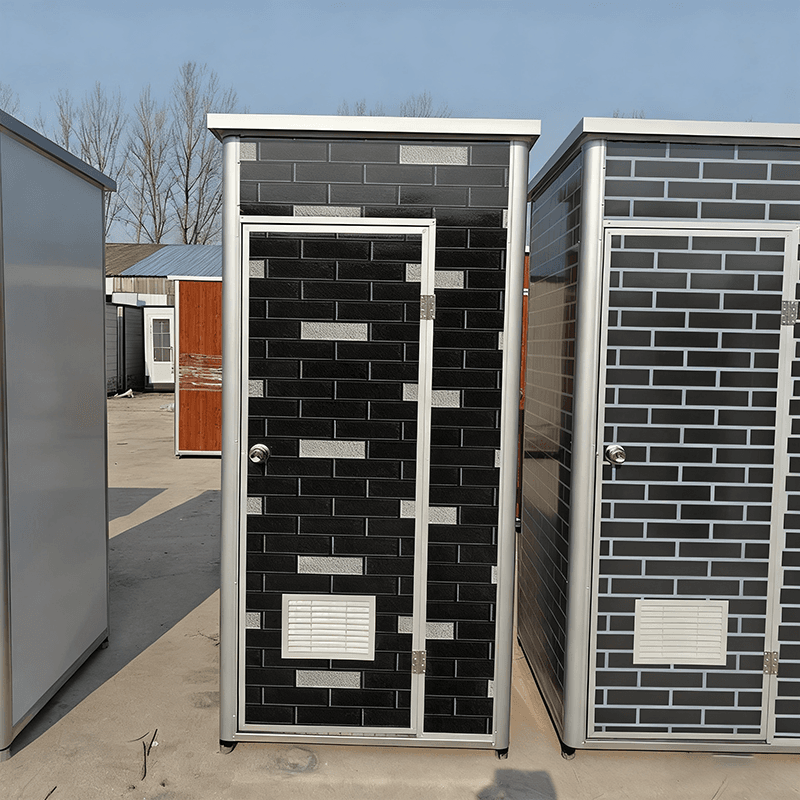
In terms of specific products, the small mobile toilet launched by Sichuan Xinbaiting Integrated Housing measures 4 meters in length and 2 meters in width, and supports customization of dimensions according to actual needs. This design retains basic functions while controlling the floor area through a modular structure, making it suitable for temporary events, construction sites, and other scenarios. The product from Yuanting Smart Environmental Protection Public Toilet Station is even more compact, with a width of only 1.5 meters and a height of 2 meters. It can be flexibly deployed in narrow spaces such as street corners and scenic trails, especially suitable for areas with high space utilization requirements.
Size differences are related to structural forms. Mobile toilets can be divided into single-unit structures and composite structures based on their structure: single-unit structures are usually independent units with small sizes and concentrated functions, suitable for single-user or low-traffic scenarios; composite structures are composed of multiple units, with expandable sizes, but some designs can still control the overall volume through optimized layouts. For example, some composite-structure products adopt a layered design, vertically distributing the sewage storage tank and the usage area to reduce the floor area.
The mode of movement also affects size design. Hoisting and handling mobile toilets rely on lifting equipment for transportation, allowing for a more compact structure as there is no need to reserve space for power devices; powered towed mobile toilets need to integrate components such as wheels and towing frames, which may result in slightly larger sizes. However, the use of lightweight materials (such as high-strength aluminum alloys and fiberglass-reinforced plastics) can reduce the overall weight, indirectly improving space utilization. For example, some towed products adopt a foldable design, contracting in volume during transportation and expanding for use after deployment.
Lightweight design further optimizes space. Modern mobile toilets widely use new materials such as carbon fiber-reinforced plastics and honeycomb aluminum panels, which reduce weight while ensuring structural strength, making the interior space more spacious for the same size or achieving smaller basic sizes through weight reduction. In addition, some products reduce the space occupied by additional components through integrated designs (such as embedding lighting and ventilation systems into walls), improving usage efficiency.
In conclusion, the selection of mobile toilet sizes should be comprehensively considered in combination with usage scenarios, structural forms, and movement modes. Small-sized products have been able to efficiently meet the deployment needs of narrow spaces through customized designs, structural optimizations, and material innovations.



