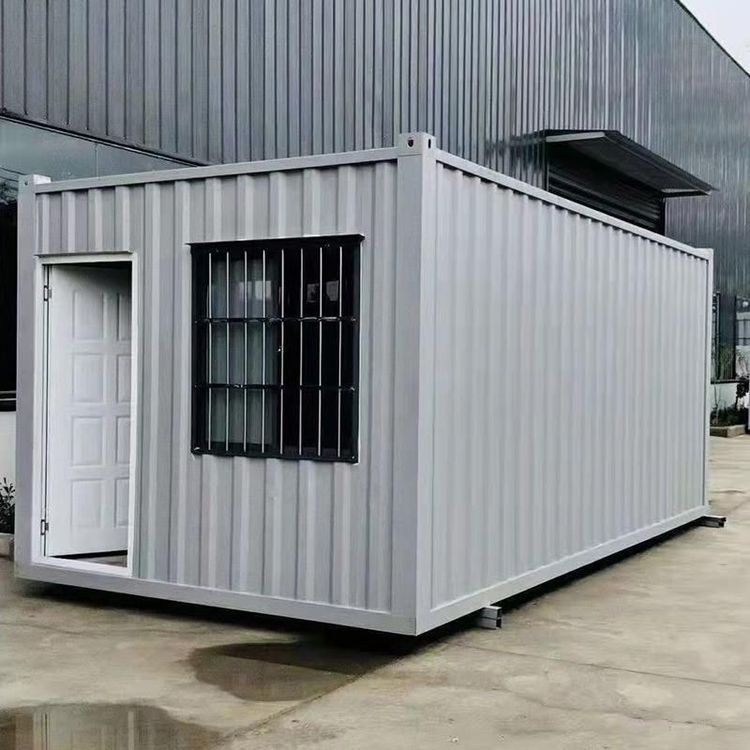
Single-Room Portable Toilet
A single-room portable toilet is a facility that can be moved as a whole and flexibly placed in fixed or temporary locations to provide public restroom services. Its core components and characteristics are as follows:

I. Basic Structure and Classification
A single-room portable toilet consists of modules such as a fecal sewage storage tank (or disposal unit), flooring, sanitary fixtures, walls, washing equipment, a water tank, a roof, and a mobile unit. Based on structural form, it can be classified into single-unit structures (independent single rooms) and composite structures (multi-room combinations). According to mobility methods, it can be divided into lifting/handling types (requiring external equipment for movement) and powered/trailer types (with built-in power or towable by vehicles). In terms of sewage treatment methods, it includes flush types (requiring a water connection), non-flush suction types (relying on vacuum suction), recirculating flush types (with sewage purification and reuse), and dry-pack types (with feces collected in biodegradable bags, requiring no flushing).
II. Customized Design Features
Some customized single-room portable toilets break through the limitations of traditional single rooms. For example, the double-roof connected model achieves functional expansion through modular design: it can be equipped with three squatting positions and one third restroom (for special groups such as the disabled and mothers with infants), using a thickened galvanized square steel welded frame to ensure structural stability. The exterior wall is made of metal carved panels, which provide both thermal insulation and corrosion resistance, adapting to extreme climates. Another model, the grille-style independent single room, features a pointed roof design with partitions and a rain-proof corridor, enabling universal use by both genders and improving usage efficiency. Its interior is finely decorated to meet both restroom and shower needs, suitable for construction sites, campsites, and other scenarios.
III. Core Advantages and Application Scenarios
Its core advantages lie in mobility (overall lifting or towing), combinability (single rooms can be joined to form multi-restroom facilities), and transport convenience (can be transported by truck after disassembly). These characteristics make it an ideal choice for crowded areas such as stations, docks, and tourist attractions, especially for temporary events (e.g., music festivals, sports events) or newly built residential areas and large construction sites lacking fixed sewage systems. The dry-pack type, requiring no water or electricity connection, is widely used in arid regions or emergency relief scenarios.
IV. Technological Development Trends
With increasing environmental protection demands, the proportion of recirculating flush and dry-pack portable toilets is gradually increasing. Some products integrate technologies such as solar power supply and smart sensor flushing, further reducing operational costs and environmental impact. In the future, the application of modular design and lightweight materials will drive their development toward greater efficiency and cost-effectiveness.