
Shuyang Rural Prefabricated House Assembly
Currently, there are no direct cases of prefabricated house assembly in rural areas of Shuyang, but general models and considerations can be referenced. Prefabricated house assembly typically involves factory-prefabricated components and on-site assembly, offering advantages such as short construction periods and environmental friendliness. However, it requires comprehensive consideration of local policies, supplier qualifications, and actual needs.
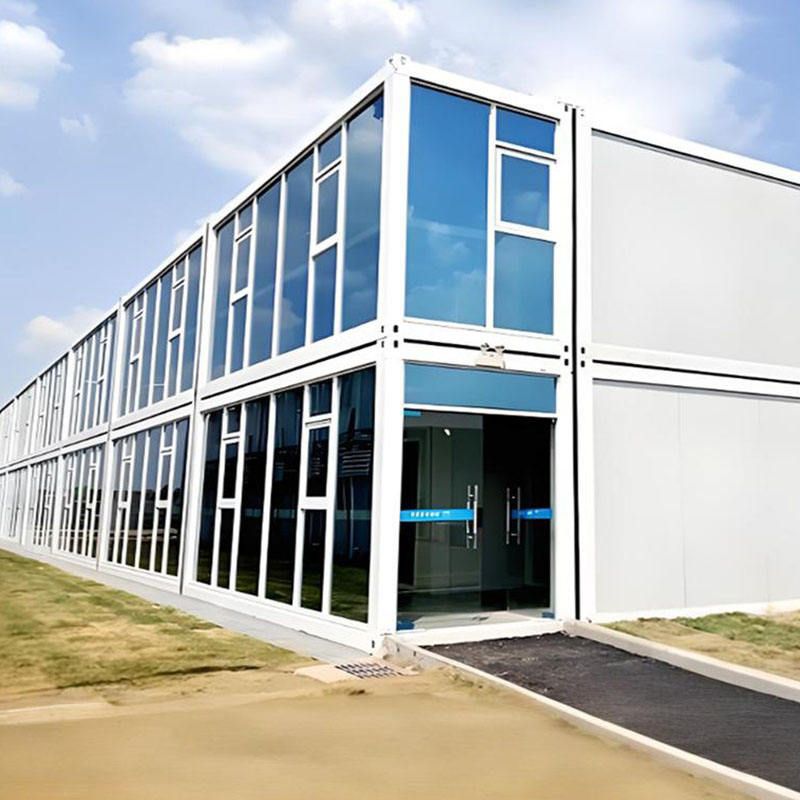
Assembly Models and Advantages
The core of prefabricated house assembly is 'standardized factory production + rapid on-site assembly'. Components are prefabricated in the factory (such as walls, floors, and roofs) and then transported to the site for connection through bolts, welding, or plug-in methods to form a complete building. Taking a project in Beijing as an example, after adopting modular construction technology, the main structure lifting took only 46 days, reducing the construction period by 75% compared to traditional methods, while also reducing construction waste by 75%, significantly mitigating the environmental impact of construction. This model is particularly suitable for rural areas, as it reduces on-site wet operations (such as concrete pouring) and decreases reliance on weather and site conditions.
Costs and Potential Issues
It should be noted that the initial quote for prefabricated houses may not include all costs. Some cases indicate that additional investments are required for foundation construction (such as ground treatment), component transportation (especially in remote rural areas), and interior decoration (such as water and electricity pipelines, wall decoration), resulting in a final total price that may be significantly higher than the initial quote. Furthermore, if the supplier lacks qualifications or the component quality is substandard, it may lead to poor connection reliability and high maintenance costs in the later stages (such as water leakage and structural deformation).
Key Selection Recommendations
- Type Selection: Prioritize modular homes or light steel assembly houses that meet local seismic and thermal insulation standards. Light steel structures are lightweight and have good seismic performance, suitable for rural geological conditions; modular homes can achieve a higher degree of standardization and shorten the construction period.
- Supplier Qualifications: Verify whether the supplier has relevant qualifications (such as general contracting qualifications for construction engineering) and request component quality inspection reports and references to successful cases.
- Connection and Maintenance: Pay special attention to component connection methods (such as regular inspection of bolt tightness for bolt connections), waterproofing (such as roof and exterior wall joints), and the convenience of later maintenance (such as detachable wall designs).
It is recommended that rural areas in Shuyang consult local housing and construction departments in advance to understand policy requirements and conduct on-site inspections of suppliers' production bases and completed projects to ensure the feasibility and economic efficiency of the plan.



