Dimensions of Mobile Toilets in Shuozhou
The dimensions of mobile toilets in Shuozhou vary significantly depending on the type, with common types and their size ranges as follows:

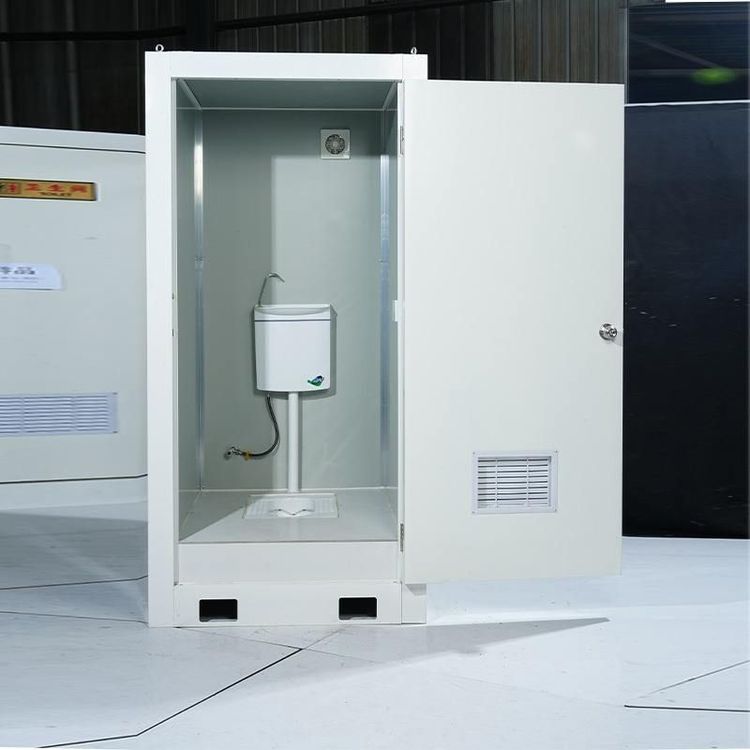
Single-Person Mobile Toilets
The standard model typically measures 110cm in length, 110cm in width, and 230cm in height (i.e., 1.1m×1.1m×2.3m), suitable for ordinary single-person use scenarios with a compact layout that meets basic needs. The mini single-person model is further reduced to 100cm in length, 100cm in width, and 220cm in height (1m×1m×2.2m), ideal for space-constrained or temporary event settings. Some sources mention that the small portable folding model can be reduced to 1m×1m×2m, emphasizing portability and suitable for short-term outdoor activities or emergency scenarios.
Double-Person Mobile Toilets
The standard double-person model typically measures 180cm in length, 110cm in width, and 230cm in height (1.8m×1.1m×2.3m), allowing two people to use it simultaneously by extending the length while maintaining the same width as the single-person model and slightly increasing the height to optimize internal space. Another claim suggests that the double-occupancy model can reach around 2.5m in length, with a width of 1.1m and a height of about 2.3m. Such designs may enhance usage efficiency through optimized internal layouts, but it's important to note that size variations may exist among different manufacturers.
Barrier-Free Mobile Toilets
Barrier-free models are significantly larger, with standard dimensions of 180cm in length, 150cm in width, and 240cm in height (1.8m×1.5m×2.4m), with some sources mentioning dimensions of up to 1.5m×1.8m×2.4m. These designs must accommodate wheelchair turning space and are typically equipped with handrails, low-level sinks, and other barrier-free facilities. The door width must be ≥90cm to facilitate wheelchair access, and the increased height facilitates use by individuals with mobility impairments.
Explanation of Size Variations
Subtle differences in size data from various sources primarily stem from the following factors:
- Design Standard Differences: Some manufacturers may optimize dimensions based on usage scenarios, such as emphasizing the folded volume for portable models or adhering to national barrier-free design standards for barrier-free models.
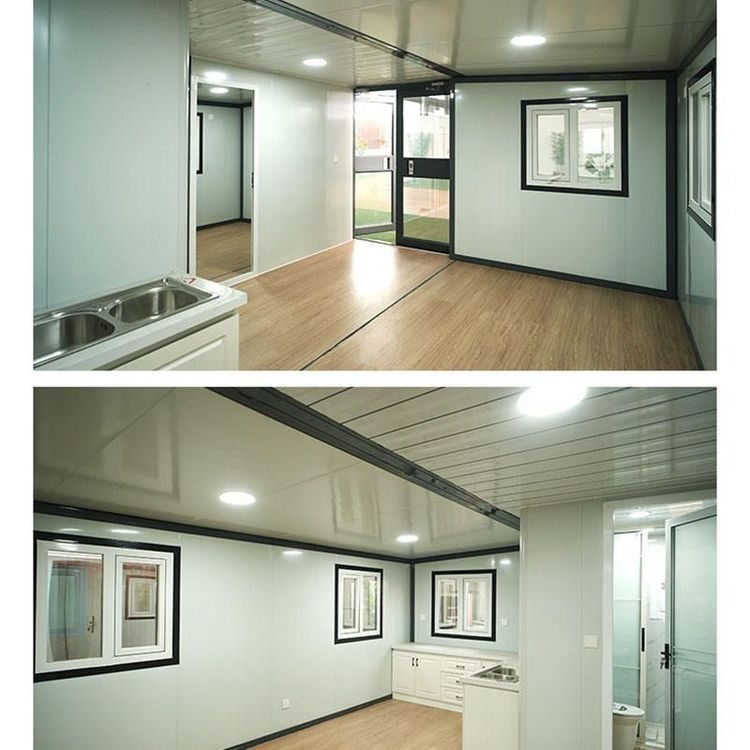
- Structural Type Differences: The size calculation methods differ between frame-type mobile toilets and container-type mobile toilets, with the latter possibly including the thickness of the external frame.
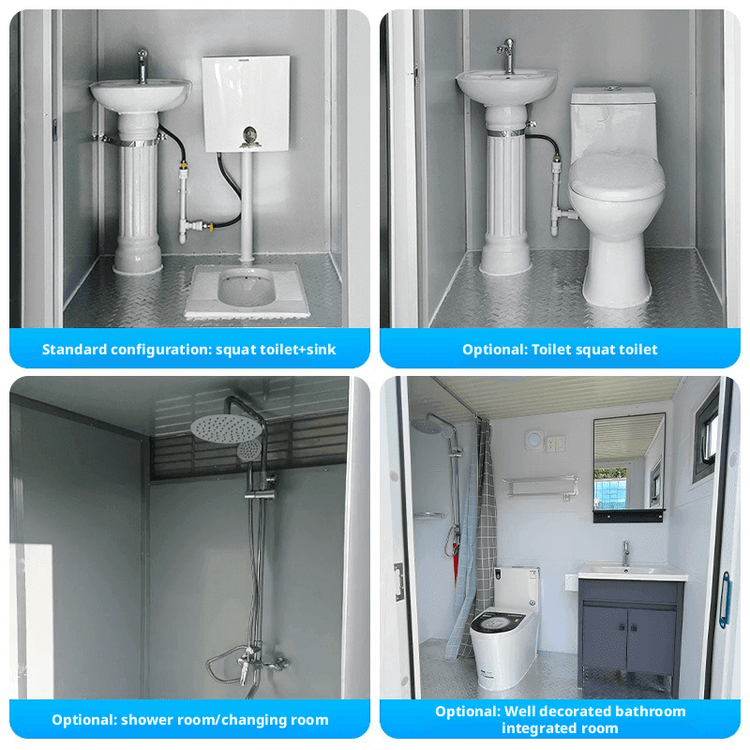
- Impact of Additional Features: Mobile toilets equipped with air conditioning, fresh air systems, or smart devices require additional space for equipment installation, potentially leading to an overall increase in size.
When making a purchase, it is advisable to comprehensively evaluate size parameters based on the usage scenario, foot traffic density, and special needs (such as barrier-free facilities).