
Shifang Intelligent Mobile Toilet
Shifang has already carried out relevant practices in the construction of intelligent mobile toilets and possesses mature implementation capabilities.
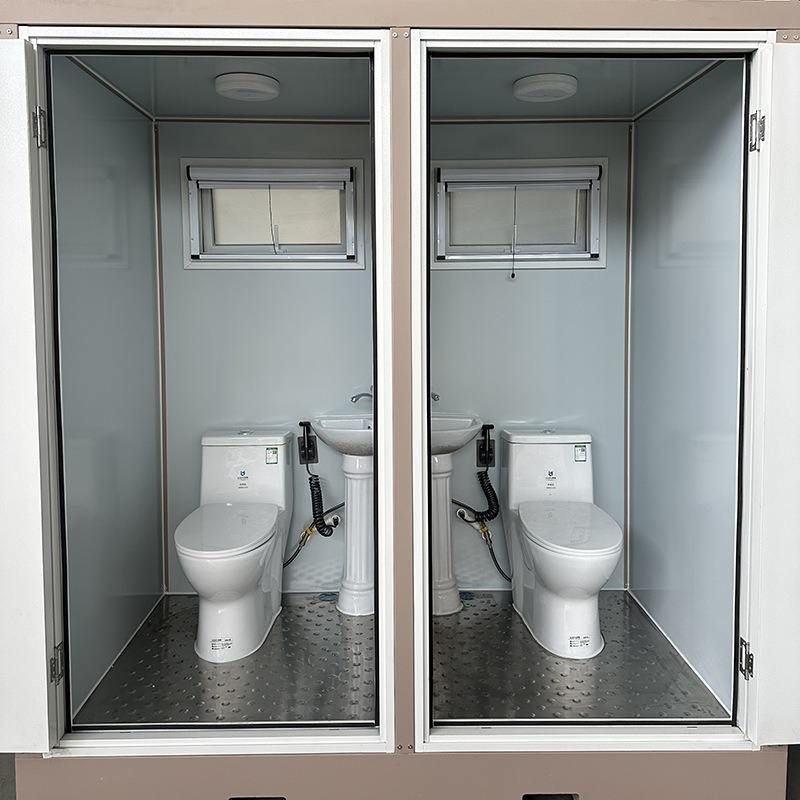
As a county-level city under the jurisdiction of Deyang City, Shifang has made certain progress in the intelligent upgrading of public toilets. For example, the newly built public toilet outside the central street market in Shifang, although not explicitly labeled as a "mobile toilet", has incorporated intelligent design elements. The toilet stall doors display real-time "occupied" or "unoccupied" status via electronic screens, and the hand-washing sinks are equipped with sensor-activated faucets, significantly enhancing user convenience and hygiene levels. Although these facilities are not traditional mobile toilets, they provide technical validation and user feedback for the subsequent promotion of intelligent mobile toilets.
In terms of the supply and implementation capabilities of mobile toilets, Deyang City, where Shifang is located, falls within the core service area of Sichuan Zhongshun Jiaye Environmental Protection Engineering Co., Ltd. Relying on its standardized manufacturing base in Xindu District, Chengdu, the company specializes in producing mobile environmental protection toilets that require no civil engineering work and can be hoisted and used immediately. These toilets are equipped with environmental sensing and cloud operation and maintenance systems to achieve intelligent management of public toilets. The company's products have covered major city clusters in Sichuan, including Chengdu, Mianyang, Deyang (including Shifang), Guangyuan, and Nanchong, indicating that Shifang has the technical conditions and supply chain support to introduce such intelligent mobile toilets.
The core advantages of intelligent mobile toilets are reflected in two aspects: First, flexibility. They require no civil engineering construction and can be rapidly deployed in scenarios such as temporary events, tourist attractions, and disaster areas. Second, intelligent management. By using environmental sensors to monitor data such as temperature, humidity, and air quality, and combining with cloud platforms for remote operation and maintenance, labor inspection costs are reduced. For example, real-time display of toilet stall occupancy status can reduce user waiting times, and sensor-activated faucets and automatic flushing systems can significantly enhance water conservation.
Shifang has significant potential for promoting intelligent mobile toilets in the future. With the advancement of refined urban management, Shifang can prioritize pilot projects for such facilities in the renovation of old urban areas, the upgrading of tourist attractions, or the support for large-scale events. By combining with the technical solutions of local environmental protection enterprises, the public toilet service experience can be further optimized.



