
Shenyang Vehicle-mounted Mobile Toilet Customization
There are enterprises in Shenyang with the capability to provide full-process customization of vehicle-mounted mobile toilets, offering non-standard customized products according to specific needs. The key points and processes of customization are as follows:
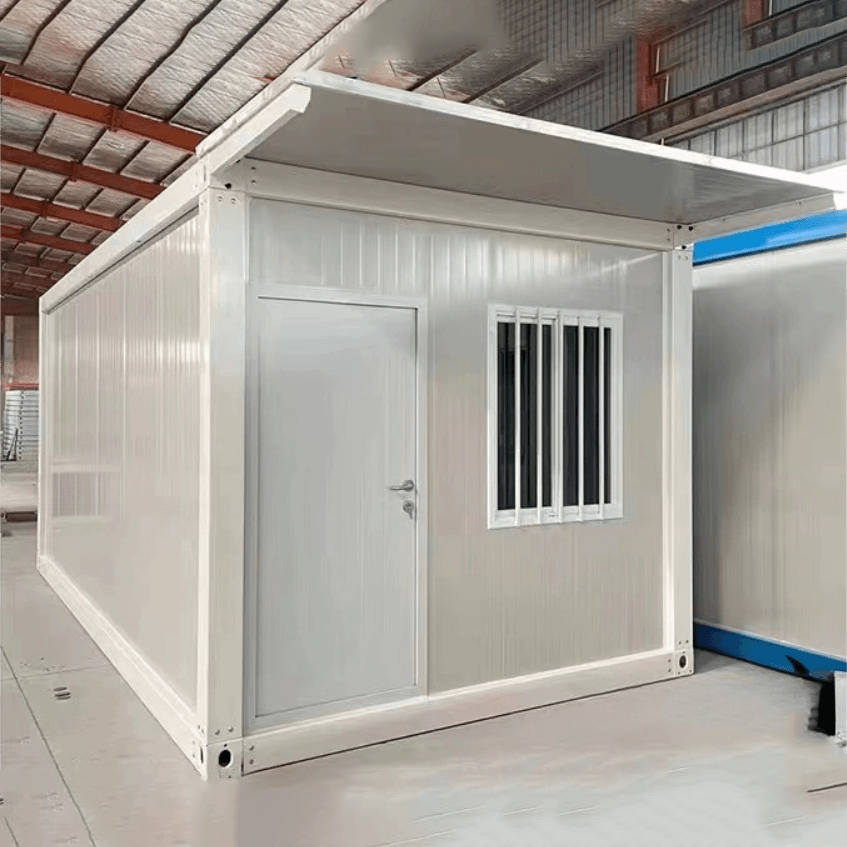
I. Selection of Structural Form
Trailer-mounted mobile toilets are the core choice for vehicle-mounted scenarios. Their modular design facilitates vehicle transportation and rapid relocation, and the adaptability between the chassis and the towing device ensures driving stability. Monolithic toilets are suitable for space-constrained scenarios, while modular toilets can meet larger capacity requirements through assembly, but trailer-mounted toilets have more advantages in vehicle-mounted scenarios.
II. Key Customization Dimensions
Structural Design
It is necessary to focus on the impact resistance and usage stability during vehicle movement. Optimize the frame structure through finite element analysis, and use high-strength steel or aluminum alloy to reduce self-weight while improving load-bearing capacity. Install shock absorbers and anti-slip fixing brackets at the bottom to ensure that the toilet body does not shift during driving and that the ground load is evenly distributed during use.Internal Configuration
- Toilet System: Water-flush toilets require the configuration of miniaturized water tanks and sewage tanks, or the adoption of foam sealing technology (saving more than 90% of water); waterless-flush toilets use degradable bags for automatic packaging, suitable for scenarios without water and electricity supply.
- Environmental Control: Inductive foam generators enable contactless flushing, reducing the spread of germs; forced ventilation systems need to meet an air exchange standard of 8-10 times per hour, combined with activated carbon filtration to eliminate odors.
- Auxiliary Facilities: LED lighting needs to meet an illuminance of over 300 lux, freeze-proof faucets and electric tracing pipes ensure normal use in winter, and intelligent control systems can monitor temperature, humidity, and usage status in real-time.
- Material and Process
- Main Body Material: The fiberglass reinforced plastic integral molding process has strong corrosion resistance, suitable for northern saline-alkali environments; stainless steel materials need to be of grade 304 or above to prevent low-temperature embrittlement.
- Thermal Insulation Treatment: Use polyurethane foam layers of more than 50mm, combined with double-layer vacuum glass windows, to ensure that the internal temperature is no less than 5℃ in an environment of -30℃.
- Anti-freezing Measures: Wrap pipes with self-regulating electric tracing tapes, select low-temperature ball valves for valves, and install heating coils in sewage tanks to prevent freezing.
III. Customization Process
- Requirement Confirmation: Clarify parameters such as the number of users, power supply method (mains power/solar power), and water supply conditions (water tank capacity/municipal water connection).
- Scheme Design: Use 3D modeling to display the spatial layout, and provide structural strength calculation reports and wind resistance level reports (usually requiring a level of no less than 8).
- Production and Manufacturing: Core components are prefabricated in the factory, using laser cutting and automated welding to ensure precision, and internal facilities undergo 1000 hours of continuous operation testing.
- Installation and Commissioning: After on-site hoisting, conduct water and electricity connections, test indicators such as flushing pressure (no less than 0.15MPa) and ventilation efficiency, and provide operation training and emergency maintenance guidelines.
IV. Acceptance Standards
Reputable manufacturers will provide a detailed list of parameters, including but not limited to: toilet flushing time of no more than 3 seconds, lighting brightness deviation of no more than 10%, ventilation noise of no more than 55dB, and structural deformation of no more than L/500 (L is the span), etc. All data needs to be certified by a third-party testing agency.



