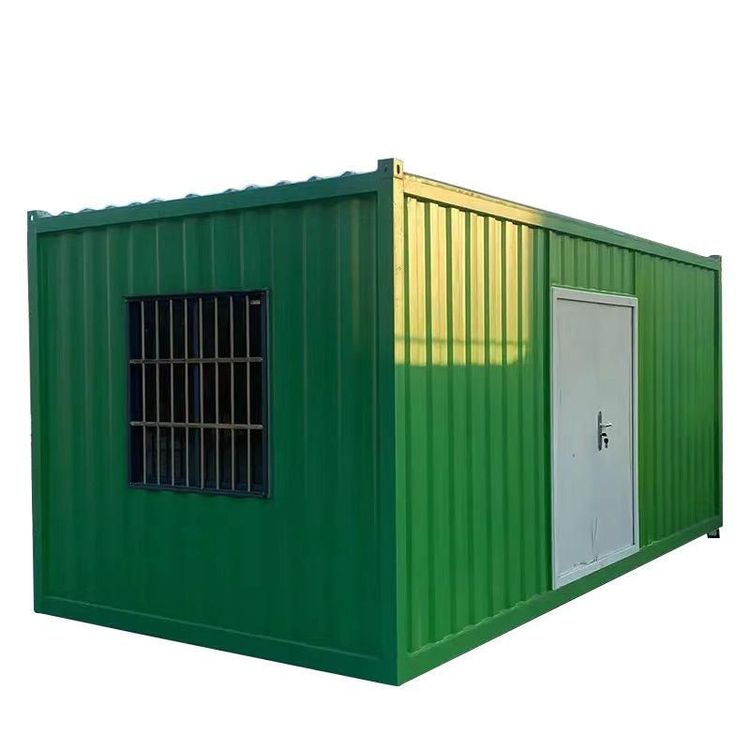
Dismantling of Shenmu Mobile Toilet
The dismantling process of Shenmu mobile toilets generally adheres to the design principles of simplicity and efficiency, with the following specific steps:

Disconnect Water, Electricity, and Sewage Before dismantling, safety must be prioritized. First, turn off the main power and water valve of the mobile toilet to prevent electric shock or water leakage during the operation. Subsequently, remove the external water and electricity lines and sewage pipes, ensuring thorough cleaning of the connection points to avoid residual waste affecting subsequent use. After cleaning, seal the pipe interfaces with specialized blocking materials to prevent foreign objects from entering or odors from spreading. This step is fundamental to the dismantling process and must be carried out strictly according to regulations to avoid omissions.
Remove Internal Facilities If the internal facilities of the mobile toilet (such as partitions, handrails, sanitary ware, etc.) are to be reused, they must be carefully dismantled using professional tools. For example, partitions are usually fixed with screws or clips and must be removed in reverse order to avoid damaging the structure; the connecting pipes of sanitary ware should be loosened with a wrench, and matching parts should be collected. The dismantled parts should be packaged according to material or function, such as storing metal parts separately from plastic parts, and labeled with names and positions for easy subsequent assembly or transportation.
Disassemble the Main Structure For modular mobile toilets, the main structure usually consists of a roof panel, wall panels, and a chassis. Dismantling should be carried out in a 'top-down' order:
- Roof Panel: First, remove the screws or hinges fixing the roof panel, and slowly lift it with the assistance of two people to avoid bumping into the wall panels;
- Wall Panels: The wall panels may be connected by slots or bolts and should be dismantled one by one and marked with serial numbers to prevent misalignment during installation;
- Chassis: The chassis is usually heavy and requires lifting equipment for assistance. Check for fixed ground anchors or connectors underneath to ensure complete separation. During the operation, care should be taken to protect the edges of the panels to avoid scratches or deformation, which could affect reuse.
- Clearance and Storage After all parts have been dismantled, the panels, accessories, and tools should be neatly stacked in a designated area. Panels should be stored flat or upright to avoid deformation due to long-term pressure; metal parts should be protected from moisture to prevent rusting; small parts (such as screws and washers) should be collected in sealed boxes to prevent loss. If long-distance transportation is required, the edges of the panels should be wrapped with foam boards or bubble wrap and secured in the vehicle to reduce damage caused by bumps.
A skilled team can usually dismantle a standard modular mobile toilet in just 1-3 hours, depending on the complexity of the equipment and the on-site environment. During the operation, strict adherence to safety regulations is essential to ensure the safety of personnel and equipment.