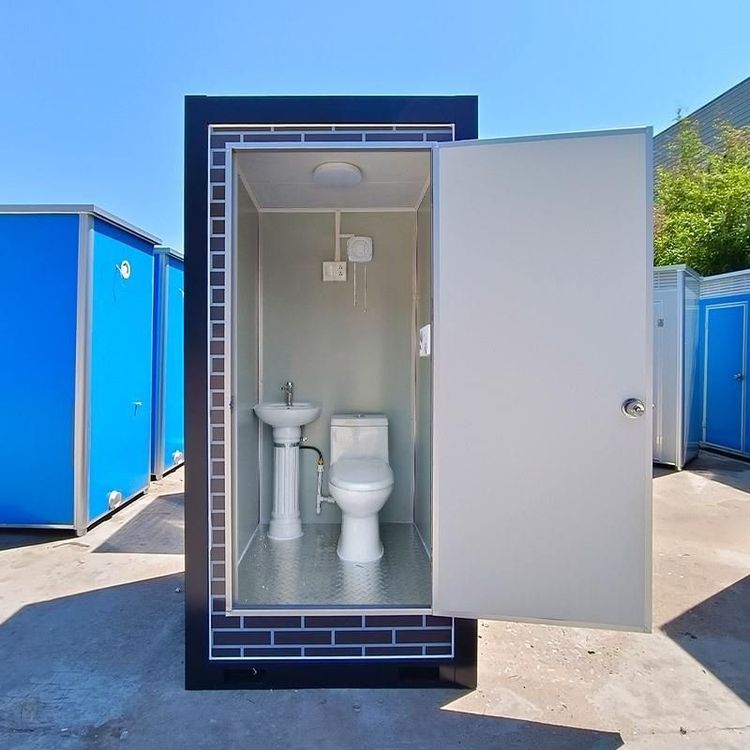
Shanghai Mobile Toilet Operation and Management
The operation and management of mobile toilets in Shanghai cover construction sites, urban public areas, and multiple application scenarios, requiring a combination of configuration standards, sanitation management, convenience design, and dynamic adjustment strategies to achieve efficient service and compliant operation.

Operation and Management of Mobile Toilets at Construction Sites
1. Configuration and Installation: According to the requirements of the Shanghai Housing and Urban-Rural Development Commission, mobile toilets at construction sites should be configured with at least one squat toilet per 50 people, with a male-to-female toilet ratio of 1:1.5. Installation should be away from the construction area to reduce the impact of dust and noise, and proper drainage and ventilation design should be implemented.
2. Daily Maintenance: Dedicated personnel are required to clean the toilets at least twice a day, using environmentally friendly cleaning agents. Regular inspections of water and electricity facilities should be conducted to prevent blockages or leaks.
3. Compliance and Emergency Response: Operation should comply with environmental noise emission standards, avoiding use at night. In extreme weather conditions, the toilets should be reinforced, and usage instructions and emergency contact information should be posted.
4. Problem Solving: For issues such as insufficient quantity, it is recommended to dynamically adjust the number of toilets. Odor problems can be improved by installing deodorization devices or placing air fresheners.
Operation and Management of Mobile Toilets in Urban Areas (Taking Pudong New Area as an Example)
1. Appearance and Environmental Integration: Soft colors such as light beige and light brown are used, paired with dark blue borders, to harmonize with the surrounding environment. Accessible ramps and handrails are added to show care for special groups.
2. Convenience Design: The toilet facilities are complete, creating an "age-friendly and child-friendly" space, such as adding auxiliary handrails and child-specific designs. Electronic screens display the real-time status of toilet stalls to avoid awkward queuing.
3. Sanitation Worker Care: Some toilets are equipped with "sanitation worker stations" featuring facilities such as refrigerators, shower rooms, and microwaves to provide rest and supplies for sanitation workers.
Key Points for Operation and Management in Multiple Scenarios
1. Large-Scale Event Support: For exhibitions, sports events, etc., plan the layout of mobile toilets in advance to form a temporary service network, divert crowds, and maintain sanitation order.
2. Public Space Supplementation: In areas where public toilet distribution is insufficient or supporting facilities are incomplete, mobile toilets serve as transitional facilities, with their locations dynamically adjusted according to pedestrian flow.
3. Emergency Response at Transportation Hubs and Scenic Spots: During peak holiday passenger flow, additional mobile toilets are set up around train stations and scenic spots to alleviate queuing pressure and improve service levels.
4. Support for Work Areas: Mobile toilets are deployed at municipal engineering and road construction sites to provide convenient and sanitary toilet facilities for workers.