
Seismic Performance of Prefabricated Panel Houses
The seismic performance of prefabricated panel houses is relatively weak. The specific reasons are as follows:
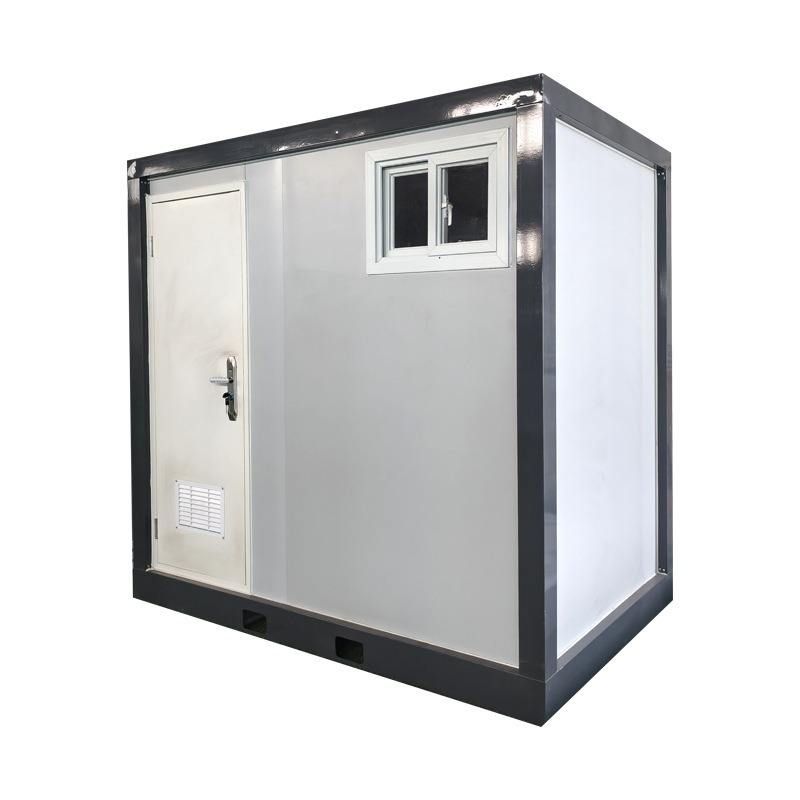
Firstly, the splicing method leads to insufficient toughness. The floor slabs, walls, and other components of prefabricated panel houses are usually prefabricated in factories and then transported to the site for splicing and installation. Their connection methods are mostly bolts, welding, or reserved steel bar overlapping followed by pouring a small amount of concrete. Compared with cast-in-place reinforced concrete structures, this splicing method has poorer integrity and continuity. Cast-in-place reinforced concrete forms a continuous and uniform stress system through the anchoring of steel bars and the encapsulation of concrete, which can better disperse the energy generated by earthquakes. However, there are gaps and weak links at the splicing joints of prefabricated panels, which are prone to stress concentration under earthquake action, causing cracking and dislocation at the splicing parts and thus affecting the seismic performance of the entire structure.
Secondly, hollow design reduces steel bar density. To reduce the weight of prefabricated panels and lower costs, many prefabricated panels adopt a hollow design. Although this design reduces the amount of materials to a certain extent, it also results in a much lower steel bar density inside the prefabricated panels compared to cast-in-place structures. Steel bars are the main materials that bear tensile forces in concrete structures, and their density directly affects the seismic capacity of the structure. Under earthquake action, the structure generates large horizontal and vertical forces. Prefabricated panels with insufficient steel bar density cannot effectively resist these forces and are prone to serious damage such as fracture and collapse. For example, in strong earthquakes, hollow prefabricated panels may lose their load-bearing capacity due to steel bar fracture, leading to house collapse or serious cracks.
Finally, differences in structural characteristics affect seismic performance. There are fundamental differences in seismic performance between prefabricated structures and cast-in-place structures. Although some prefabricated panel houses may not completely collapse in earthquakes due to factors such as structural redundancy or connection methods, their overall seismic performance is still weaker than that of cast-in-place structures. For example, some prefabricated panel houses may tilt but not collapse in earthquakes, possibly due to the certain lateral force resistance of their foundations or walls. However, the damage at the splicing parts can still lead to a loss of structural integrity; while cast-in-place structures, due to their good integrity, can usually maintain a more stable stress state during earthquakes. Existing prefabricated panel houses generally have weak seismic performance and need to be reinforced and renovated to improve safety.



