
Installation of Mobile Toilets on the Second Floor
The installation of mobile toilets on the second floor requires comprehensive consideration from multiple aspects, including site selection, assembly, system connection, facility installation, safety protection, and post-installation maintenance. The specific precautions are as follows:
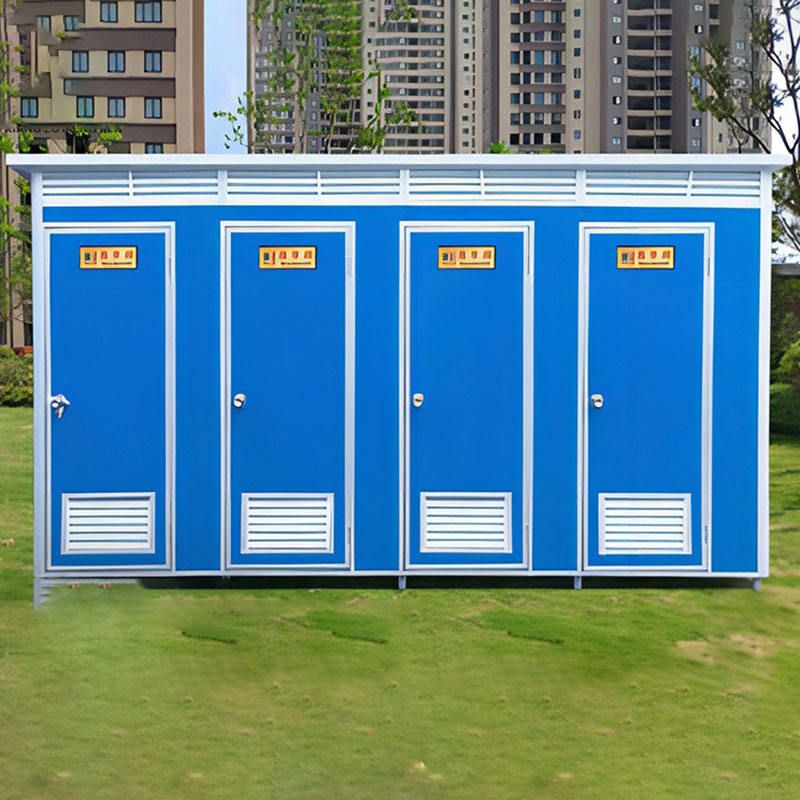
1. Site Selection and Ground Preparation
Choose a flat and solid foundation, avoiding slopes, low-lying areas, or soft soil regions to prevent toilet tilting or damage due to ground settlement. The ground should be simply leveled, and if possible, a gravel or concrete foundation can be laid to enhance load-bearing capacity and improve drainage. Sufficient space should be reserved to ensure easy passage for users and avoid being too close to surrounding buildings or facilities.
2. Main Structure Assembly
Mobile toilets are usually transported to the site in prefabricated components. During installation, strictly follow the instructions to assemble the floor, wall panels, roof cover, and other parts in sequence. Pay special attention to checking whether the buckles or bolts at each connection are securely fastened, ensuring the roof is well-sealed to prevent rainwater infiltration and internal moisture or damage.
3. Sewage System Connection
- Flush toilets: Connect to the sewage pipeline, maintaining a pipeline slope (usually ≥2%) to facilitate the natural flow of waste. A sealing ring should be installed at the connection between the sewage outlet and the external pipeline to prevent leakage.
- Waterless or biodegradable toilets: Install a waste storage tank, ensuring the tank is stable and tightly sealed to prevent odor diffusion or waste spillage.
4. Water Supply and Flush Device Installation
If equipped with a flushing function, connect the water supply hose and tighten the joints. After installation, open the valve to check for leaks. The flush water tank should be fixed in the designed position, and the water output and response speed of the flush valve should be adjusted. In cold regions, insulation measures should be taken, such as wrapping with insulation cotton or draining the stored water, to prevent pipe freezing and cracking.
5. Ventilation System Setup
Install an exhaust fan or ventilation duct, with the ventilation opening generally located on the roof or the upper part of the side wall to ensure air circulation. During installation, install insect screens and waterproof covers to prevent mosquitoes from entering or rainwater from flowing backward. The power cord should be properly fixed to avoid exposure or entanglement, ensuring electrical safety.
6. Internal Facility Installation
When installing accessories such as toilet seats and hand basins, pay attention to sealing and waterproofing to prevent water accumulation in the interlayer, which could lead to mold or structural damage. The drainage pipe of the hand basin should be connected to the designated pipeline to maintain smooth drainage. All hardware components (such as screws and hinges) should be firmly tightened to prevent shaking or detachment during use.
7. Anti-slip and Safety Measures
The interior floor of the toilet should be laid with anti-slip mats or selected with a concave-convex patterned floor to reduce the risk of slipping. Warning strips should be pasted on steps and thresholds. Waterproof lighting fixtures should be selected, with the wiring protected by sleeves and the switches installed in positions less prone to moisture to avoid electric shock accidents.
8. Final Inspection and Debugging
After installation, conduct a comprehensive test: check whether the flushing device works properly, whether the sewage pipeline is unobstructed, whether the doors and windows open and close smoothly, and whether the ventilation equipment can start normally. Clean up installation debris and thoroughly clean the inside and outside of the toilet to ensure no residual garbage or dust.
9. Usage and Maintenance Instructions
The installation personnel should explain the daily maintenance points to the management, such as regularly cleaning the waste storage tank, adding degrading agents (if applicable), checking the airtightness of the water pipes, and cleaning the ventilation filters. Neutral cleaning agents should be used for cleaning to avoid corroding the materials and extend the service life of the toilet.
10. Handling of Special Situations
- Installation on slopes: Build a platform to level it, ensuring the toilet is placed horizontally.
- Multi-unit combination: Maintain a reasonable distance between units to avoid blocking ventilation or lighting.
- Windy areas: Install ground anchors to prevent the toilet from being blown over.
- Low-frequency usage places in winter: Drain the stored water to prevent pipe or tank freezing damage.



