
Customization of Light Steel Mobile Toilets for Scenic Areas
The customization of light steel mobile toilets for scenic areas involves manufacturing companies designing, producing, and delivering movable toilets tailored to the specific needs of scenic areas based on their usage conditions, and configuring them according to site, visitor flow, climate, and operational and maintenance requirements.
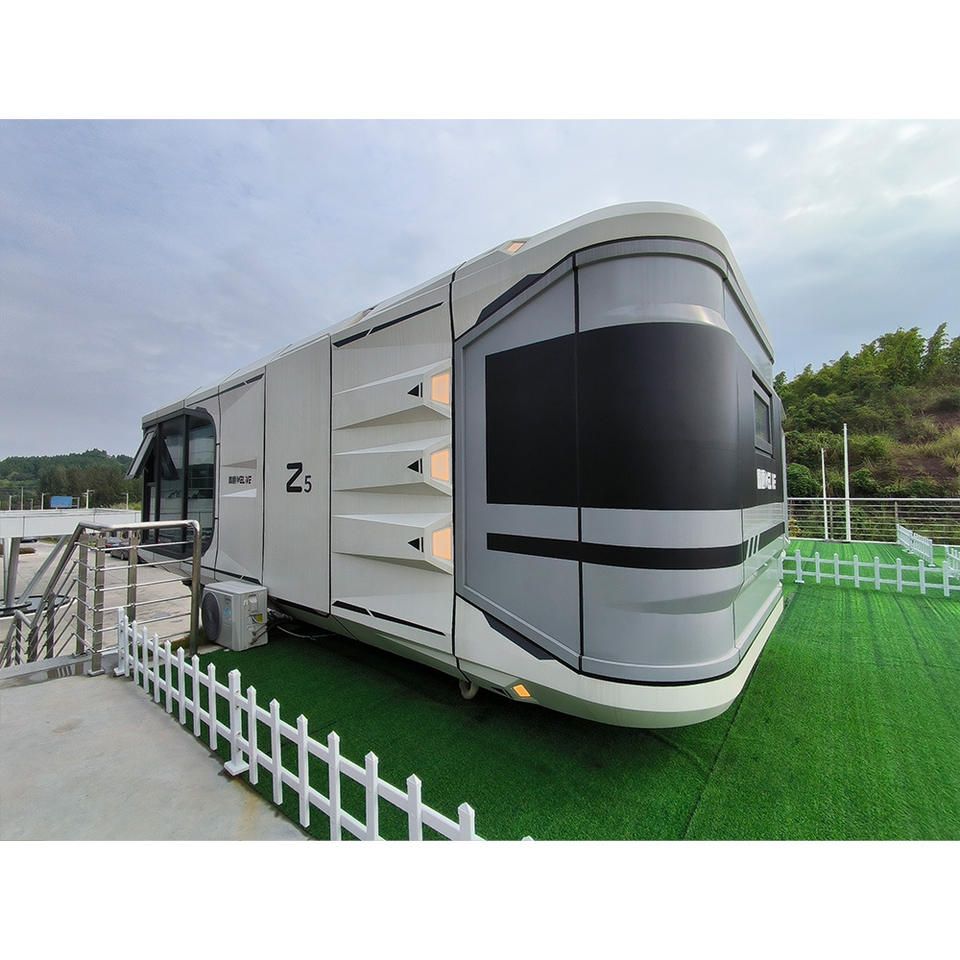
I. Adapting to the Needs of Public Facilities in Scenic Areas Customization should revolve around adapting to public facilities in scenic areas, covering core functional modules such as the number of toilet stalls, male-to-female ratio, accessible stalls, unisex toilets, baby changing stations, and management rooms. For example, scenic areas with a high proportion of family visitors require an increased number of unisex toilets and baby changing stations; scenic areas with many elderly visitors need to optimize the slope and handrail design of accessible facilities. At the same time, the characteristics of transportability, installability, adjustability, and reusability are emphasized to ensure that the facilities can adapt to the dynamic development needs of scenic areas.
II. Differentiated Customization Directions Different geographical environments determine the focus of customization:
- Mountainous Scenic Areas: Consider slope adaptation, safety of hoisting operations, and moisture-proof and anti-corrosion treatment. Lightweight structures are adopted to reduce transportation risks.
- Waterside Wetlands: Control the impact of sewage discharge on the ecosystem. Prioritize microbial degradation or packaged collection technologies to avoid water pollution.
- High-Altitude Areas: Address the issue of low-temperature freeze cracking. Use frost-resistant materials and optimize pipeline insulation design.
- Desert and Gobi Regions: Strengthen water-saving performance. Adopt vacuum negative pressure or foam sealing technologies, while improving wind and sand resistance and weather resistance.
- Temporary Routes for Festivals: Support rapid deployment and evacuation. Use modular design to shorten installation cycles.
III. Technical Characteristics and Configuration
- Modular Structure: The main body is made of light steel, anti-corrosion wood, or metal composite panels. It is assembled through a prefabricated structure for overall hoisting or on-site assembly. The chassis is compatible with trailers, skid-mounted units, or fixed foundations.
- Environmental Protection Treatment Technologies: Select fecal waste treatment methods according to regional conditions, such as microbial degradation in water-scarce areas, packaged collection in ecologically sensitive areas, and vacuum negative pressure for freeze prevention in cold areas.
- Intelligent Management System: Integrate visitor flow monitoring, overflow alarms, ammonia and temperature-humidity sensors, photovoltaic power supply, induction lighting, and remote operation and maintenance interfaces to improve management efficiency.
IV. Customization Process and Operational and Maintenance Professional customization starts with on-site surveys and demand calculations. A plan is formed by considering scenic area planning, geological conditions, water and electricity supply, sewage discharge directions, and transportation routes. After structural design, sample confirmation, manufacturing, transportation, installation, and commissioning and acceptance, the toilets are delivered. During the operational and maintenance phase, standards for freeze prevention, odor control, insect prevention, anti-corrosion, and cleaning are established. The processes for fecal waste removal or on-site treatment are clarified, and management personnel are trained. In visually sensitive areas of the scenic area, color, material, and shielding designs are also used to reduce visual incongrity and make the facilities harmonious with the surrounding environment.



