Sanshui Nanshan Town Housing Container
Currently, there is no specific information directly about housing containers in Sanshui Nanshan Town, but we can provide a general introduction based on the common knowledge of housing containers.

Definition and Characteristics of Housing Containers
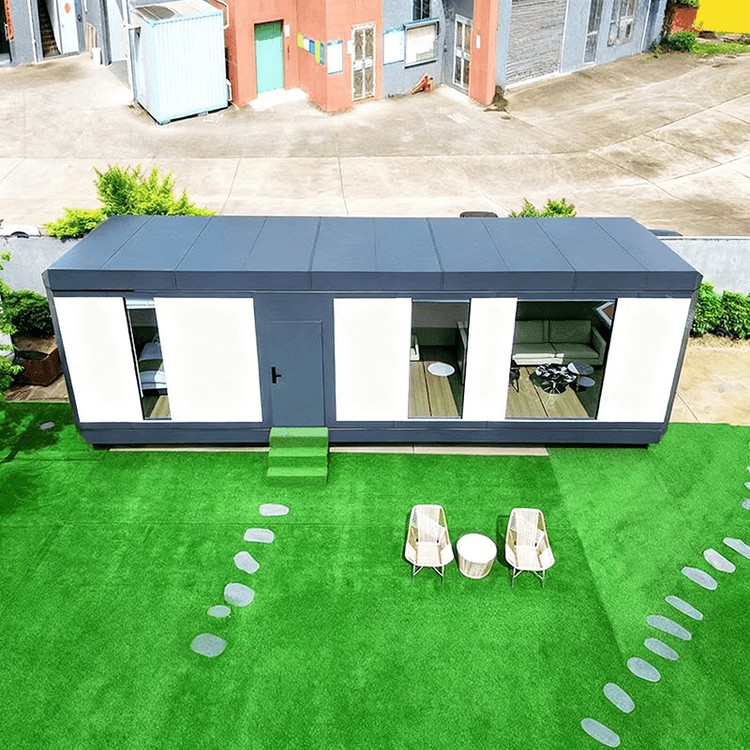
A housing container is a building form that uses containers as basic modules, which are then modified and designed for residential, office, or other functions. It has the characteristic of strong mobility, enabling convenient overall transportation and relocation. It is suitable for scenarios that require frequent changes of location, such as temporary construction site dormitories and wild scientific research stations. Meanwhile, the construction period of housing containers is short. Compared with traditional buildings, they can be prefabricated in factories and then quickly transported to the site for assembly, significantly reducing the construction time. In addition, housing containers have the advantage of sturdy structure. The containers themselves are made of high-strength steel, which can withstand relatively large external impacts and ensure the safety of residence or use.
Application Scenarios of Housing Containers
In tourist resorts, housing containers can be used as characteristic homestays, providing tourists with a novel accommodation experience due to their unique appearance and mobility. In the agricultural field, they can serve as management buildings or temporary warehouses on farms, facilitating agricultural activities. For some emergency rescue scenarios, such as temporary resettlement after natural disasters like earthquakes and floods, housing containers can quickly set up living places to provide basic living guarantees for the affected people.
Key Points for the Modification of Housing Containers
When modifying housing containers, it is necessary to consider the issue of thermal insulation. Due to the strong thermal conductivity of the metal material of containers, thermal insulation materials need to be added to improve indoor comfort. At the same time, it is essential to reasonably plan the internal space layout, divide different areas according to the usage functions, such as bedrooms, living rooms, and kitchens, and equip them with corresponding facilities and equipment. In addition, attention should be paid to the design of ventilation and lighting. By setting up windows and ventilation openings, ensure indoor air circulation and sufficient natural lighting.