Mobile House Container Advertising Paper
Information about mobile house container advertising paper needs to be customized in combination with design requirements and suppliers. Currently, there is no unified standard quotation, but the requirements can be met through the following directions:

I. Application Scenarios and Functions of Advertising Paper
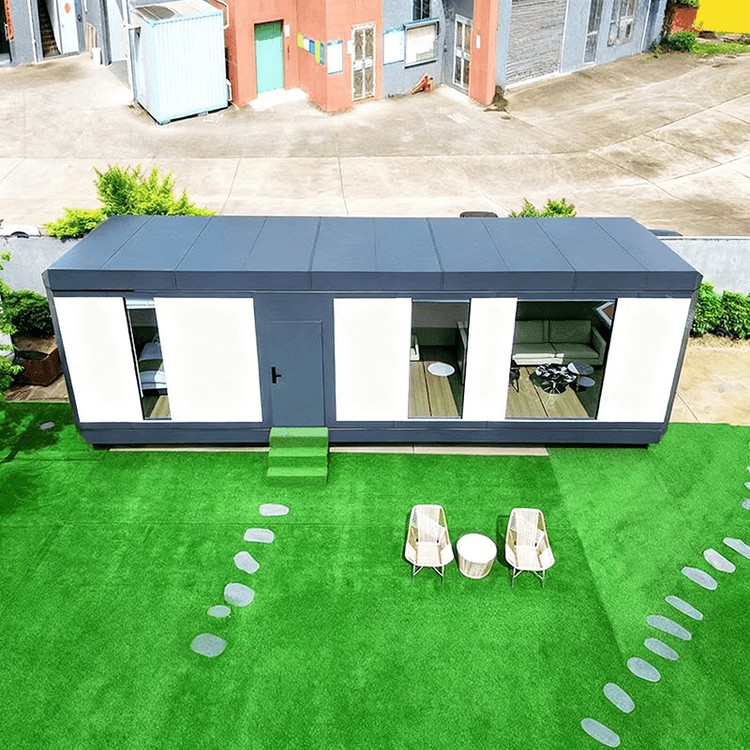
Mobile house container advertising paper is mainly used in scenarios such as temporary shops, mobile bed-and-breakfasts, and mall pop-up stores. Its core function is to convey brand information or event themes through visual design. For example, temporary shops transformed from containers can use advertising paper to display product types, promotional activities, or brand logos to attract target customer groups; mobile bed-and-breakfasts can highlight design features or service highlights through advertising paper to enhance the attractiveness of the scene. The design of advertising paper should take into account both visual impact and information clarity, usually using high-contrast colors, concise copywriting, and brand iconic elements to adapt to the three-dimensional structure and mobility of containers.
II. Design Material and Template References
Currently, there are some general-purpose advertising material templates on the market that can serve as references for basic design:
- Real estate and shop leasing templates: These templates often focus on project renderings, location advantages, and contact information, suitable for long-term leased shops transformed from containers or brand pop-up stores. The design style tends to be business-oriented and minimalist, with colors mainly in neutral tones or the brand's primary colors.
- Container-specific advertising copy image materials: These include various formats (such as PSD, AI) and color options, allowing direct replacement of copy or adjustment of color schemes, suitable for short-term events or temporary promotions. The materials often contain elements such as container outlines, arrows, and geometric shapes to reinforce concepts like "mobility" and "convenience".
III. Customization Process and Supplier Selection
For professional design or large-scale procurement, it is recommended to contact suppliers in the field of container mobile house transformation, such as Hangzhou Suge Construction Technology Co., Ltd. and Hangzhou Yucheng Construction Decoration Engineering Co., Ltd. The customization process typically includes:
- Requirement communication: Clarify the size of the advertising paper (which needs to match the surface size of the container), usage scenario (such as outdoor/indoor), design style (such as modern/retro), and core information (such as brand name, event theme);
- Initial design draft: The supplier provides a design draft, which needs to be carefully reviewed for copy accuracy, color scheme rationality, and compatibility with the container structure;
- Material selection: For outdoor use, choose waterproof, sun-resistant, and tear-resistant materials (such as PVC stickers), while for indoor use, ordinary adhesive paper can be selected to reduce costs;
- Installation and maintenance: The installation of advertising paper should be carried out by professionals to avoid bubbles or wrinkles; regularly check if the edges are lifting and repair them promptly to extend the service life.
IV. Cost and Timeframe References
The cost of advertising paper is influenced by size, material, and design complexity, with no unified quotation currently available. The customization timeframe is usually 3-7 working days, with time reserved for design revisions and production and transportation. It is advisable to confirm the delivery time with the supplier in advance to avoid affecting the progress of events or shop openings.