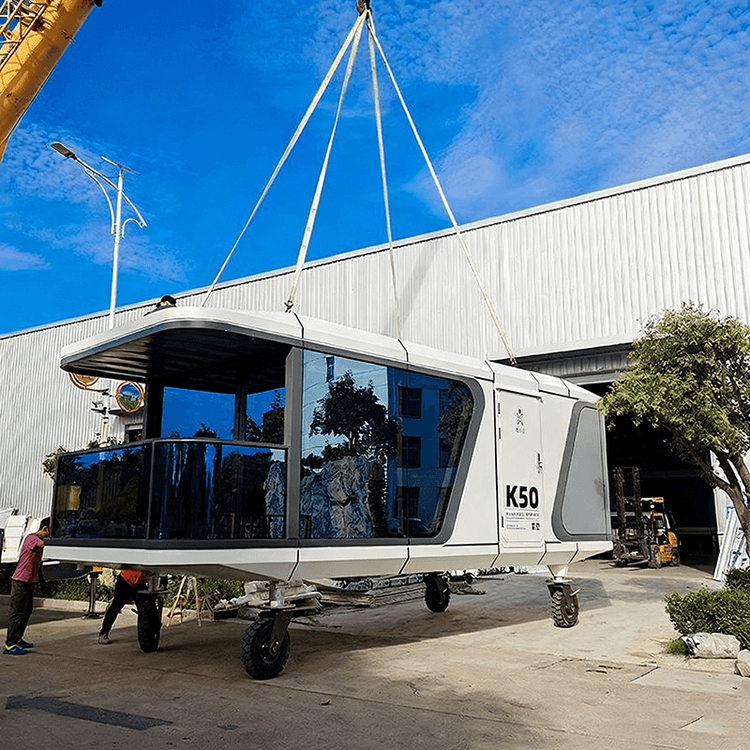
Rural Prefabricated Panel Houses
Rural prefabricated panel houses are buildings constructed primarily using prefabricated panels, which have both advantages and disadvantages and are facing trends of renovation or demolition.

Advantages
- Low cost: Prefabricated panels are cement components prefabricated in factories, with relatively low production costs. In rural self-built houses, using prefabricated panels can significantly reduce construction costs. For example, for a 40 - 50 square meter auxiliary building, the total cost of using prefabricated floor panels is around 800 yuan, and the seller of the panels is also responsible for the hoisting process, offering high overall cost-effectiveness.
- Fast construction speed: After being prefabricated in factories, prefabricated panels can be directly transported to the construction site for hoisting. In rural self-built houses, using prefabricated panels as the roof can be hoisted in just one day or half a day, greatly shortening the construction period and improving the efficiency of house building.
Disadvantages
- Poor sound insulation, heat insulation, and thermal insulation: The thin walls result in almost zero sound insulation, allowing you to hear your neighbors' conversations, cooking sounds, etc. In summer, the indoor temperature is high, and in winter, it is low, leading to high air conditioning electricity bills. Generally, secondary roofing materials need to be covered on the floor panels to make up for these shortcomings.
- Ground cracking and water leakage: The inherent gaps in prefabricated panels are a hidden danger. With a slight subsidence of the foundation, cracks will spread all over the walls and floors. On rainy days, water leakage from the upper floors will flow to the lower floors, causing disputes between neighbors. In rural areas, when using prefabricated panels as the roof, 8 out of 10 households experience water leakage, and waterproofing cannot guarantee 100% no leakage.
- Weak earthquake resistance: Prefabricated panels should not be used in earthquake-prone areas because their earthquake resistance coefficient is too low, making them prone to collapse. Existing prefabricated panel houses generally have weak earthquake resistance.
- Limited service life: The service life is about 30 - 50 years, which is relatively short compared to some other building structures.
Development Trends
With the development of construction technology, cast-in-place concrete and prefabricated buildings are gradually replacing traditional prefabricated panel houses. Since 2022, China has implemented the old housing renovation policy, focusing on the repair and renovation of prefabricated panel houses and only demolishing buildings that meet the criteria for dangerous houses. In 2025, influenced by factors such as the policy direction of the Ministry of Housing and Urban-Rural Development, the accelerated promotion of urban village renovation, and new safety regulations for rural self-built houses, prefabricated panel houses may face more renovation or demolition situations.