Rural Prefabricated House Assembly Video
Videos related to the assembly of rural prefabricated houses primarily showcase the rapid construction process of different types of prefabricated houses, covering multiple key steps from foundation construction to the completion of the main structure.
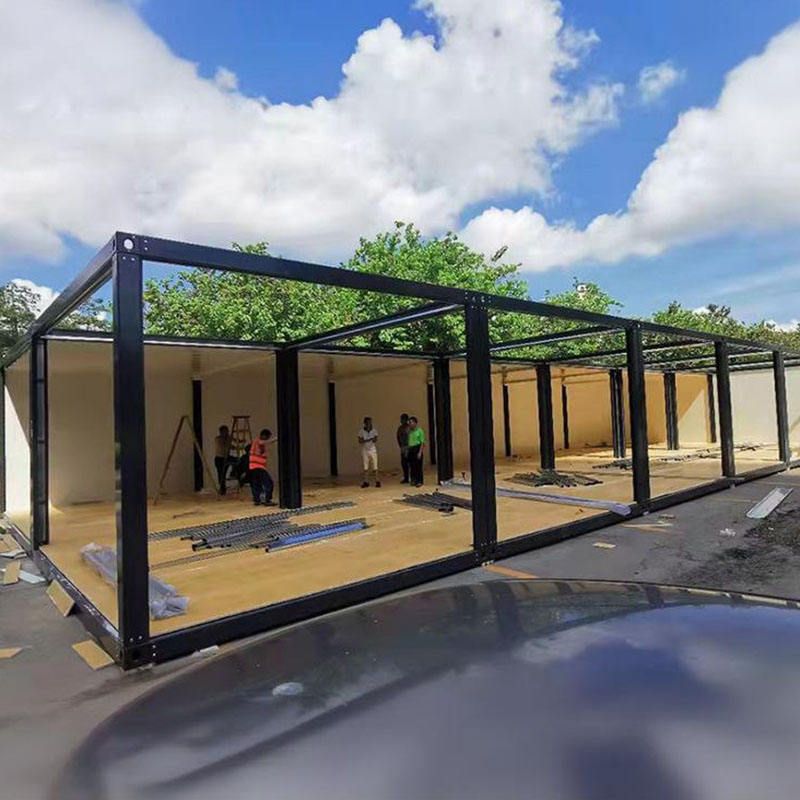
Some videos document the entire assembly process of prefabricated houses, with the main structure completed in 14 days. Such projects typically center around modular prefabricated components, with construction steps including:
- Foundation Treatment and Pile Foundation Fixation: Prefabricated concrete piles or steel piles are used as foundation supports, mechanically driven into the ground to ensure stability. Some designs incorporate strip foundations or raft foundations to enhance load-bearing capacity.
- Main Structure Assembly: Prefabricated wall panels, beams, and other components are connected using mortise-and-tenon joints or bolts. For example, beams and columns are interlocked through concave-convex slots and secured with high-strength bolts to form a stable framework.
- Stair and Floor Installation: Prefabricated stairs are precisely positioned using lifting equipment, while floors are constructed using hollow slabs or steel truss floor decking, requiring leveling after installation.
- Gap Treatment and Grouting: Special grouting materials are used to fill component joints, ensuring structural airtightness and enhancing overall seismic resistance.
Another category of videos focuses on the assembly of wooden prefabricated houses completed within a few days. These projects primarily feature lightweight wooden frames, with construction characteristics including:
- Modular Design: Wall panels, roofs, and other components are prefabricated in factories and simply assembled on-site, significantly shortening construction time.
- Rapid Connection Technology: Metal connectors or nail guns are used to secure wooden components, with some designs incorporating pre-installed electrical conduit channels to enable simultaneous structural and finishing work.
Additionally, some videos record the lifting operations of multiple prefabricated concrete houses. Such projects typically employ large cranes to directly lift entire houses or large components (such as bathroom modules) to designated locations, making them suitable for large-scale construction scenarios.
These videos collectively highlight the core advantages of prefabricated house assembly: standardized production enhances quality control, reduced on-site wet work lowers environmental pollution, short construction periods minimize reliance on skilled labor, and these benefits are particularly well-suited for rapidly improving living conditions in rural areas.