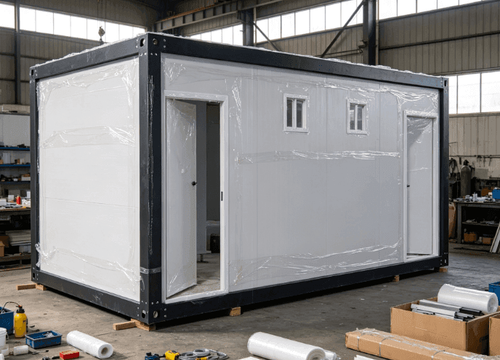
Rural Portable Mobile Toilet
Rural portable mobile toilets mainly have the following types and characteristics:
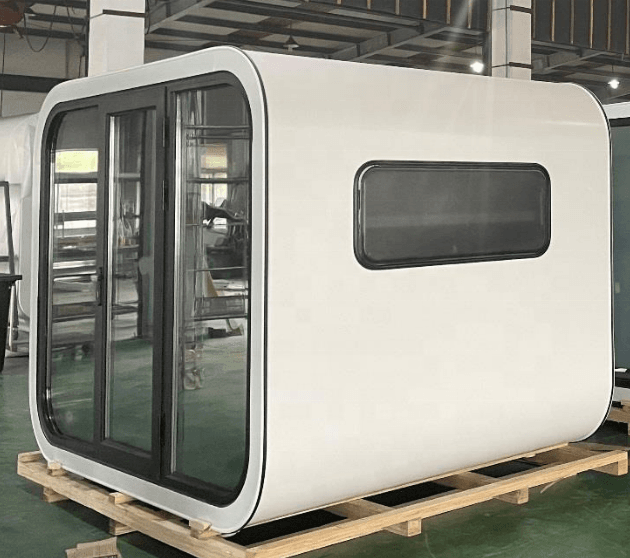
1. Simple bucket-type mobile toilet seats
These toilets are modified based on household idle containers. For example, a regular bucket can be paired with a toilet seat with fixed slots and placed directly on the bucket's mouth for use. Their core advantages lie in low cost and simple production. They require no professional installation and are suitable for temporary or emergency scenarios. However, their functions are relatively simple, lacking in sealing design, with weak odor control capabilities. They also require regular cleaning of the feces in the bucket and are suitable for short-term use scenarios with low hygiene requirements.
2. Color-steel waterless packing mobile toilets
Represented by the Hemai brand, these connected-type mobile toilets (such as 2-connected and 3-connected models) use color-steel as the main material. Their common specifications are 110011002300 millimeters and they possess characteristics such as environmental friendliness, customizability, and strong weather resistance. Their working principle is waterless packing technology, which isolates feces from the outside world through a sealing device to prevent sewage leakage. They are suitable for water-scarce or cold regions (usable from -35℃ to 100℃). In addition, these types of toilets support custom processing and can be adjusted in size and functional modules (such as adding washing equipment) according to needs. However, they require a connection to a 220V power supply to drive some equipment and are suitable for long-term fixed placement in rural public areas or concentrated residential areas.
3. Portable toilet seat rings
These products are characterized by lightness and strong versatility. They usually have a lid design and can be adapted to various bucket types or placed directly on the ground for use. Their materials are mostly plastic, making them lightweight and easy to clean. They are suitable for the transition period of rural house renovations or temporary living scenarios. Due to the lack of an independent feces treatment system, they need to be used in conjunction with external containers. Their sealing depends on the lid design, and long-term use may result in odor problems. However, their advantages lie in low price and high portability, and they can be used in both urban and rural areas.
4. Modular mobile toilets
According to the structural form and sewage treatment method, mobile toilets can be further classified into integrated, assembled, and trailer-mounted types, etc. Their core components include feces and sewage storage tanks (or disposal devices), floor slabs, sanitary ware, walls, water tanks, roofs, and mobile devices, etc. The advantages of these toilets lie in mobility, combinability, and convenient transportation. For example, they can be quickly relocated by trailers or have modules added or reduced according to the number of users (such as single rooms or multi-room connected units). Some high-end models are equipped with biodegradation or chemical treatment devices, which can reduce feces volume and lower pollution. However, their costs are relatively high, and they are suitable for tourist attractions, large-scale events, and other scenarios.