
Sanitation Facilities for Rural Mobile Toilets
The sanitation facilities for rural mobile toilets cover four major aspects: material and structure, basic equipment, environmental adaptability, and technological models, as detailed below:
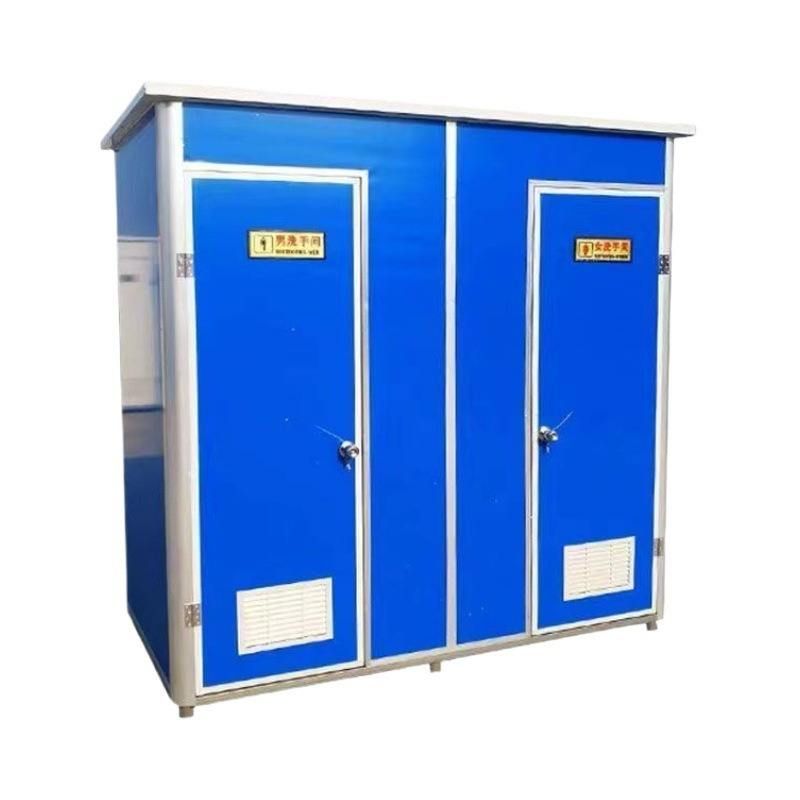
1. Material and Structure: Balancing Durability and Aesthetics
The exterior walls of rural mobile toilets typically use metal carved panels, which are corrosion-resistant and weather-resistant, suitable for complex outdoor environments. The interior walls are made of light-colored bamboo-wood fiber panels or redwood-patterned decorative panels, ensuring a bright interior space while enhancing aesthetics with wood-like textures. The floors are laid with waterproof and non-slip floor rubber or gray marble; the former is cost-effective and easy to clean, while the latter is more durable. Both effectively prevent water accumulation or slipping risks, ensuring safety during use.
2. Basic Sanitation Equipment: Meeting Basic Usage Needs
Standard sanitation equipment includes squat toilets, flush tanks, handwashing basins, exhaust fans, and lighting fixtures. Squat toilets align with usage habits in rural areas, with flush tanks operating via pressure or gravity, some models featuring water-saving designs to reduce water consumption. Handwashing basins are usually made of ceramic or stainless steel, paired with simple faucets to meet hand-cleaning needs. Exhaust fans reduce odor buildup through forced ventilation, while lighting fixtures use energy-efficient LED sources to ensure normal use at night or in low-light conditions.
3. Environmental Adaptability: Covering Extreme Climates and Power Supply Conditions
The design of mobile toilets must accommodate climate variations in rural areas, with an operating temperature range of -35°C to 50°C. Insulation materials or heating devices (such as freeze-proof flush tanks) are used to cope with low temperatures, while high-temperature-resistant materials prevent deformation from summer heat exposure. In terms of power supply, they support 220V standard voltage, requiring only simple water and electricity connections for operation. Some models are also equipped with solar panels or batteries to handle scenarios without stable power sources.
4. Technological Models: Emphasizing Eco-Friendliness and Ease of Maintenance
The adoption of eco-friendly technologies is encouraged, such as microbial degradation, foam sealing, and other waterless or water-saving toilet models to reduce sewage discharge. For material selection, priority is given to low-cost, easily replaceable components, such as detachable flush tanks or modular interior walls, to lower long-term maintenance costs. Additionally, the integration of new technologies like freeze-proofing and deodorization (e.g., electric heating deodorization devices) further enhances the user experience, ensuring the long-term applicability of mobile toilets in rural settings.



