
Rural Mobile Toilet and Bathroom
Rural mobile toilets or bathrooms are sanitary facilities that can be moved at any time. They are typically made of steel or plastic and are equipped with squat toilets and flush tanks. Some also have showering capabilities. Prices range from four to five hundred to five to six thousand yuan, depending on the configuration.
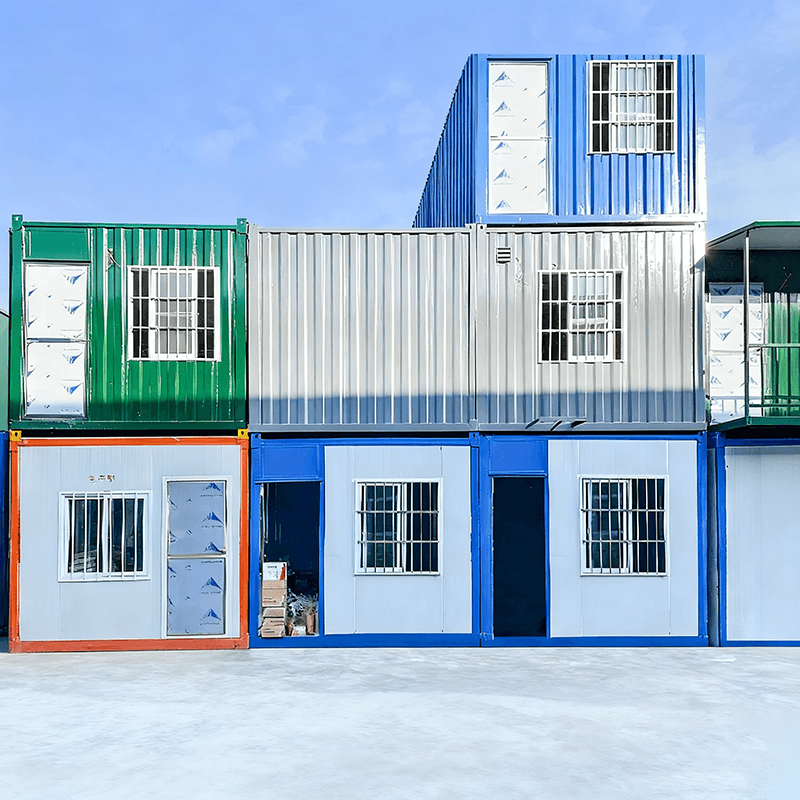
I. Structure and Classification
Mobile toilets are classified into single-unit and composite structures based on their form. Single-unit structures are mostly independent units suitable for small-scale use scenarios, while composite structures are composed of multiple modules and can be expanded into multi-toilet or integrated bathroom units. Based on mobility, they include lifting and handling types (relying on mechanical handling) and powered towing types (with built-in power or towable for movement), adapting to different terrains and transportation needs. According to sewage treatment methods, they can be categorized as water-flush, waterless suction, recirculating water-flush, and dry-pack types. Among them, the dry-pack type does not require a water source and collects waste in biodegradable bags, making it suitable for water-scarce areas. The recirculating water-flush type achieves water reuse through biological degradation or chemical treatment, reducing water costs.
II. Function and Design
Some rural mobile bathrooms adopt a wet-dry separation design. For example, a 2m × 3m integrated bathroom unit features an external sink and mirror, with an internal shower and toilet area, enhancing convenience. In terms of materials, waterless packing toilets often use color-coated steel plates or metal embossed panels, with specifications such as 1.3m × 1.3m × 2.35m or 1.1m × 1.1m × 2.35m, capable of withstanding extreme temperatures from -35°C to 100°C, and operating on a 220V voltage to meet rural power supply conditions. Additionally, some products are equipped with three-chamber septic tanks, achieving harmless treatment of feces through anaerobic fermentation and separating reclaimed water for irrigation, enabling resource recycling.
III. Application Value
Mobile toilets effectively address the sanitation issues of traditional dry latrines, such as mosquito breeding in summer, freezing cold in winter, and odor diffusion. For example, after renovation in Shitai County, Anhui Province, villagers no longer need to go outside to use the toilet at night, significantly improving safety. In Shuyang County, Jiangsu Province, the use of three-chamber septic tank technology has increased water resource utilization by over 40%. Their mobility also makes them suitable for temporary rural events, post-disaster reconstruction, and other scenarios, becoming an important tool for improving rural living environments.



