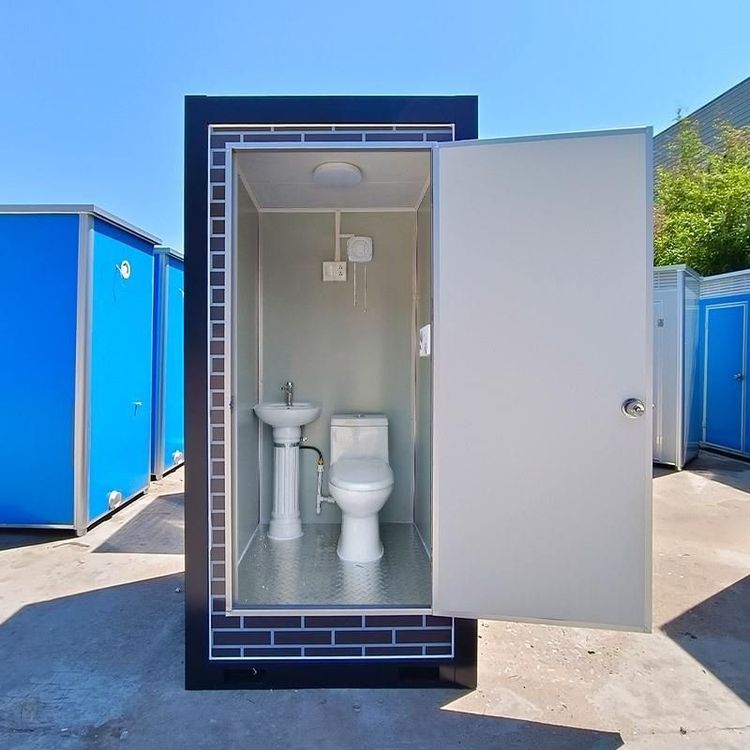
Rural Civilization Mobile Toilet
The construction and management of rural civilization mobile toilets should integrate appropriate technology selection, product adaptation, scientific planning, and long-term operational mechanisms to achieve the dual goals of sanitation improvement and resource recycling.

I. Technology Selection Should Be Adapted to Local Conditions
Rural areas have complex terrains, requiring technology selection based on geographical characteristics. For example, in karst landscapes or steep mountainous regions, the "toilet waste courtyard absorption model" can be adopted, converting waste into organic fertilizer on-site through small septic tanks for courtyard planting. In sparsely populated areas, the "toilet waste farmland utilization model" is suitable, transporting waste to farmland via pipelines or vehicles for resource utilization. For tourist areas like farm stays, the "ecological treatment model" can be used, combining constructed wetlands or biofilters to ensure wastewater meets discharge standards. Technology selection should balance environmental protection, cost-effectiveness, and maintainability, avoiding blind adoption of urban standards.
II. Mobile Toilet Products Should Be Diversified and Adapted
Mobile toilet products in rural markets should meet various scenario demands. Simple construction site mobile toilets are suitable for short-term construction or gathering scenarios, using fiberglass or color-coated steel materials for low cost and easy assembly/disassembly. Outdoor dry toilet renovations with temporary simple shower rooms can address temporary sanitation needs in remote areas, equipped with water-saving flushing devices. High-end products like light steel ecological toilets integrate solar power and microbial degradation technologies, suitable for tourist villages or demonstration villages. Product selection should balance budget and functionality, prioritizing corrosion-resistant and easy-to-clean materials in densely populated areas and focusing on water-saving designs in arid regions.
III. Construction and Management Should Be Scientifically Planned
Public toilet layout should consider village size, population distribution, and water availability. For example, central villages can have one public toilet per 500 people, while remote villages can adopt the "1+N" model (one fixed toilet + N mobile toilets). Before construction, opinions should be collected through village meetings or questionnaires to avoid a one-size-fits-all approach. Management should clarify responsibility entities, introducing third-party service companies for daily maintenance or regulating villager behavior through village rules, such as posting usage guides and regularly inspecting equipment status.
IV. Long-term Operation Should Focus on Resource Utilization
After toilet renovation, a "construction-use-management-maintenance" full-chain mechanism should be established. Through black and gray water协同处理 (co-treatment) technology, toilet wastewater and domestic wastewater are treated together and used for agricultural irrigation upon meeting standards (Class IB water standards meet non-food crop requirements). Fecal waste can be composted and used as organic fertilizer to replace chemical fertilizers, reducing agricultural non-point source pollution. The government should provide subsidies, such as rewarding farmers 10-20 yuan per cubic meter for fecal waste resource utilization, to stimulate participation.