Residential Mobile Toilet
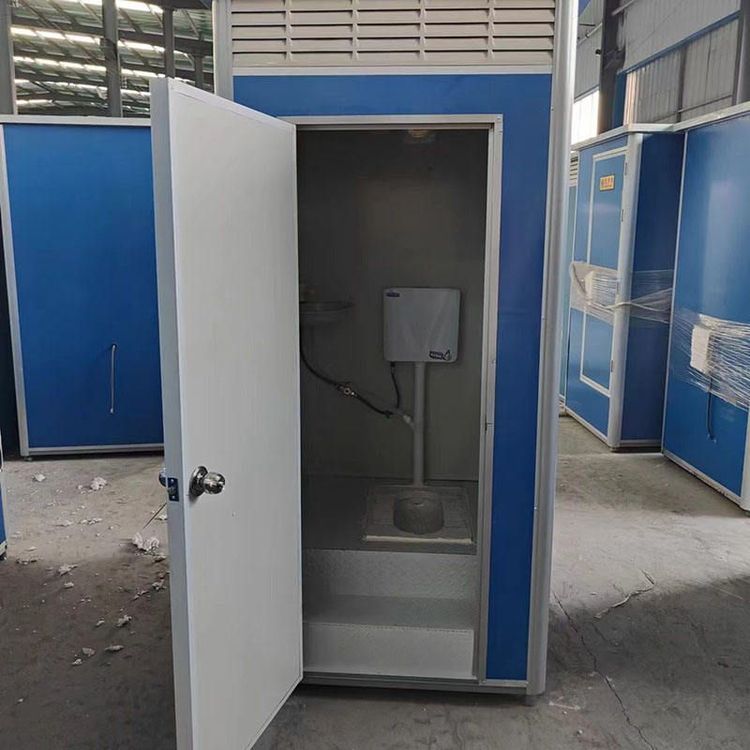
Residential mobile toilets are facilities that can be moved as a whole and placed in fixed or temporary locations to provide toilet services for the public and customers. They are suitable for scenarios such as newly built residential areas and densely populated public places.

I. Basic Components Residential mobile toilets typically consist of core components such as fecal sewage storage tanks (or disposal devices), floor slabs, sanitary ware, walls, washing equipment, water tanks, roofs, and mobile devices. Among them, the fecal treatment system is crucial. Water-flush toilets rely on water tanks and flushing devices for cleaning, while non-water-flush toilets collect waste through dry packing or suction methods. The walls and roofs are mostly made of lightweight materials (such as metal carved panels and plastics), balancing durability and portability. Mobile devices (such as wheels and lifting structures) ensure that the facilities can be quickly relocated.
II. Classification Methods
- By structural form: They are divided into single-unit structures (independent units suitable for small-scale use) and composite structures (modular combinations that can be expanded into multiple toilet stalls).
- By mobility method: They include lifting and handling types (requiring mechanical equipment for assistance) and powered and towed types (with their own power or connectable to vehicle traction).
- By sewage treatment: They cover water-flush and non-water-flush suction types (relying on external sewage pipes or regular pumping), circulating water-flush types (reusing water resources through filtration systems), and dry packing types (using biodegradable bags to collect feces without water).
III. Typical Application Scenarios
- Temporary events: Such as music festivals, sports events, and other short-term gathering places, where they can be quickly deployed and withdrawn after the event ends.
- Emergency rescue: After earthquakes, floods, and other disasters, they serve as temporary sanitation facilities to meet basic needs.
- Long-term public areas: In newly built residential areas before sewage pipes are installed and in remote sections of scenic spots, they make up for the insufficient coverage of fixed toilets.
IV. Advantages and Characteristics
- Flexibility: The number of toilet stalls can be increased or decreased, or their positions adjusted according to needs, adapting to different site conditions.
- Environmental friendliness: Dry packing and circulating water-flush types reduce water consumption, and some models are equipped with solar panels for power supply.
- Economy: Compared with traditional brick toilets, they have lower construction costs and simpler maintenance.
For example, the economical and practical mobile toilet features a gray and white metal carved panel exterior with 8 independent squatting stalls, balancing aesthetics and practicality. The 2026 new lightweight plastic toilet achieves a low-odor and easy-to-operate user experience through gravity flushing, foot-pump sewage discharge, and exhaust pipe design.