
Residential Container Prefabricated Housing
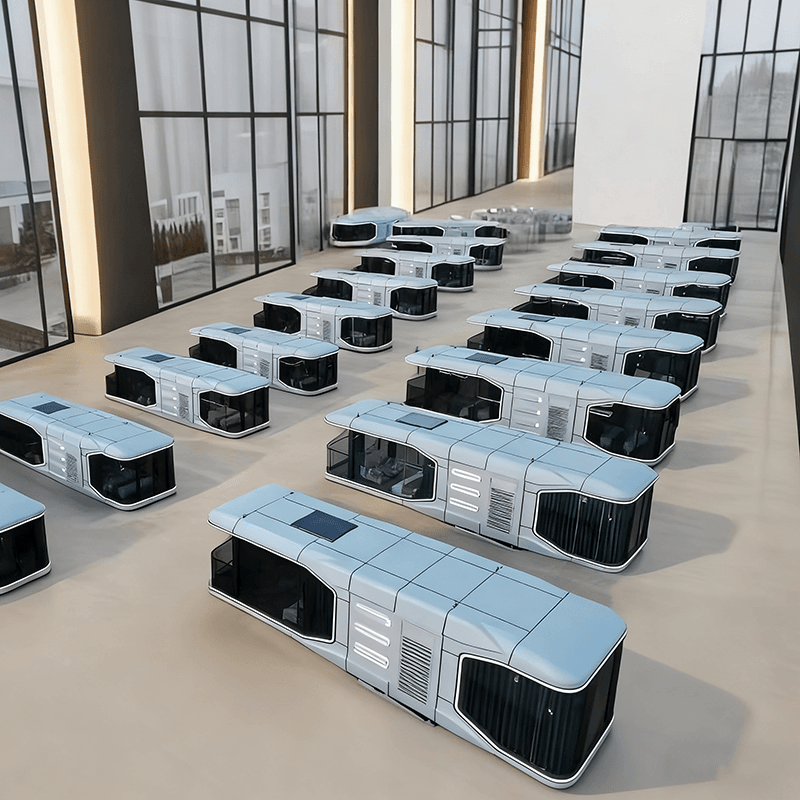
Residential container prefabricated housing is a form of architecture that uses containers as the basic structural modules, which are transformed into habitable or office spaces. It is characterized by being eco-friendly, flexible, and cost-effective, and is widely applied in areas such as temporary housing, creative spaces, and post-disaster emergency buildings.
Structural and Functional Characteristics
Residential container prefabricated housing uses standard containers as the framework, with internal spaces modified through cutting, welding, and reinforcement processes. It is equipped with doors, windows, water and electricity systems, and insulation materials to form independent living or office units. Its core advantage lies in modular design, allowing for rapid assembly and expansion to meet different scenario requirements. For example, a single container can be transformed into a single-person dormitory or a small office, while multiple containers can be combined to form multi-story buildings, such as those found in the Asian Games Village or homestay scenic areas. Additionally, its structure employs high-strength steel, providing wind and earthquake resistance, with a service life of up to 15-20 years.
Application Scenarios
- Temporary Housing: Worker dormitories at construction sites are a typical application scenario, valued for their short construction period (usually 1-3 days) and strong mobility, enabling relocation with the progress of the project.
- Emergency Buildings: After earthquakes, floods, and other disasters, container houses can be rapidly deployed as temporary medical stations and shelters. For instance, part of the Wuhan Huoshenshan Hospital adopted a modular container structure.
- Creative Spaces: Through exterior painting and interior decoration, container houses have been transformed into cafes, bookstores, art studios, etc., such as the container homestay scenic area in Zaozhuang, Shandong.
- Commercial Innovations: Some brands have converted them into 24-hour self-service fitness pods, smart parcel lockers, etc., integrating IoT technology for unmanned management.
Technological Optimization Directions
Current research focuses on improving thermal insulation performance (e.g., using polyurethane foam sandwich panels), energy efficiency (integrating solar panels and ground-source heat pumps), and smart management (installing environmental monitoring sensors and remote control systems). For example, a housing technology company in Guangzhou has developed a light-steel villa product by combining light-steel structures with containers, offering warmth in winter and coolness in summer; Tianjin Falila has introduced foldable container houses to further reduce transportation costs.
Leading Industry Enterprises
Several domestic companies specialize in this field: A housing technology company in Guangzhou focuses on light-steel villas and mobile container houses, while Tianjin Falila Prefabricated Construction Co., Ltd. provides solutions such as packing boxes and modular houses, covering a wide range of applications in engineering, commercial, and civilian sectors.



