
Residential Container Mobile Home Integrated Housing
Residential container mobile homes and integrated housing are a form of architecture with modular assembly, mobility, and detachability, and have a wide range of application scenarios.
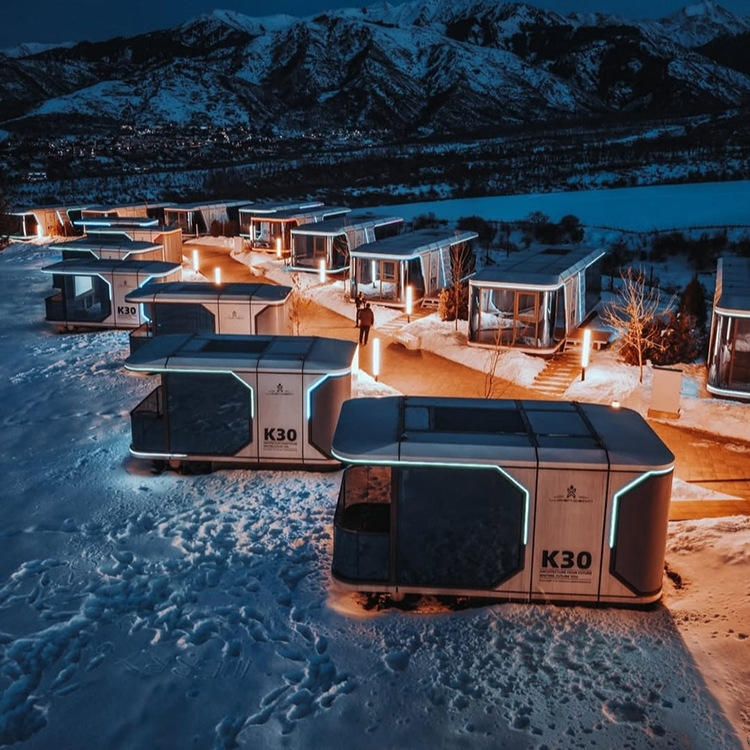
Structural Features: Its frame is typically composed of 8 corner posts, 4 columns, and 8 crossbeams, using channel steel with specifications of 16*16 cm and a thickness of 2.3 mm. The surface is coated with high-temperature baking paint to achieve rust prevention. This structure ensures overall stability while facilitating quick assembly, disassembly, and transportation. For example, a common specification of 3 meters wide, 6 meters long, and 2.8 meters high has a frame price of only 1800 yuan, and the installation process is simple, suitable for short-term or temporary use needs.
Application Scenarios: With its modular design, residential container mobile homes can be flexibly combined into different functional spaces and are widely used in scenarios such as offices, residential dormitories, warehouses, and rest areas. Their mobility allows them to quickly adapt to changes in the site, such as temporary office spaces on construction sites, post-disaster reconstruction shelters, or temporary exhibition halls for commercial events.
Price Range: Prices vary significantly depending on the manufacturer, specifications, and configuration. Market prices range from a few dozen yuan to tens of thousands of yuan. For example, the unit price of products from Foshan Xiangyu Housing Construction Co., Ltd. is 78.3 yuan, while the high-end products from Foshan Jiuma Zhonghui Integrated Housing Technology Co., Ltd. can reach 64,000 yuan. Low-priced products may be simple frames or made from second-hand materials, while high-priced products may include complete decoration, thermal insulation layers, or intelligent systems.
Core Advantages:
- Environmental Protection and Economy: Uses recyclable materials to reduce construction waste; lower cost and simpler maintenance compared to traditional buildings.
- Durability: Rainproof and corrosion-resistant design extends service life, suitable for various climatic conditions.
- Aesthetics: Unique appearance design, customizable colors and patterns, easily blending into urban or natural landscapes.
- Flexibility: Supports quick assembly, disassembly, and relocation, meeting dynamic usage needs.
Target Users: Suitable for users with limited budgets, short-term usage needs, or frequent site changes, such as construction sites, agricultural planting bases, and tourist attractions. At the same time, its green and environmentally friendly characteristics also align with modern sustainable building trends.



