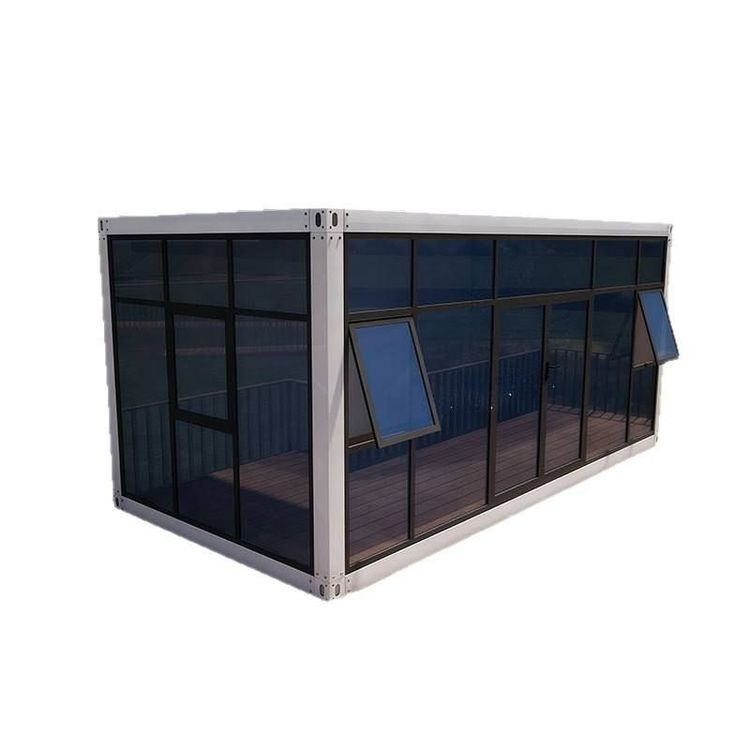
Renze District Container Renovated Housing
Currently, no direct information about container-renovated housing in Renze District has been found, but a general introduction based on the common characteristics of container houses can be provided.

Container-renovated housing is a form of architecture that uses containers as the basic structural modules and is transformed through processes such as cutting, welding, reinforcement, and decoration to create habitable or office spaces. Its core features include modularity, mobility, and rapid construction. Typically, it is renovated from standard containers (such as 20-foot or 40-foot units), with internal spaces that can be flexibly divided according to needs, for example, to create functional areas like bedrooms, kitchens, and bathrooms.
In terms of application scenarios, container-renovated housing is highly adaptable. On construction sites, it is often used as workers' dormitories due to its fast construction speed, low cost, and ability to be relocated along with the progress of the project. In the field of temporary housing, such as for post-disaster reconstruction or as temporary office spaces for large-scale events (e.g., music festivals, exhibitions), container houses can quickly provide safe and comfortable living spaces. Additionally, some creative spaces (e.g., cafes, bookstores) or personal residences also adopt container renovation designs, achieving unique styles through personalized decoration. For instance, there is a case where a couple transformed a 15-square-meter container into a cozy home, with a total cost of less than 110,000 yuan, demonstrating its cost-effectiveness and operability.
The advantages and limitations of container-renovated housing should be viewed rationally. The advantages include: lower cost (compared to traditional buildings, material and construction costs are more controllable); environmental friendliness (waste containers can be recycled, reducing construction waste); and flexibility (they can be stacked, combined, or moved to adapt to different terrains and needs). The limitations lie in: space constraints (standard container sizes are fixed, requiring careful design of internal layouts); thermal insulation and sound insulation (additional insulation layers and soundproofing materials are needed; otherwise, comfort may be compromised); and regulatory restrictions (some regions have strict approval requirements for temporary buildings, necessitating prior confirmation of policy compliance).
If you plan to implement a container-renovated housing project in Renze District, it is advisable to consult the local housing and urban-rural development department or planning bureau first to clarify land properties, building codes, and approval processes to ensure the project's legality and compliance.