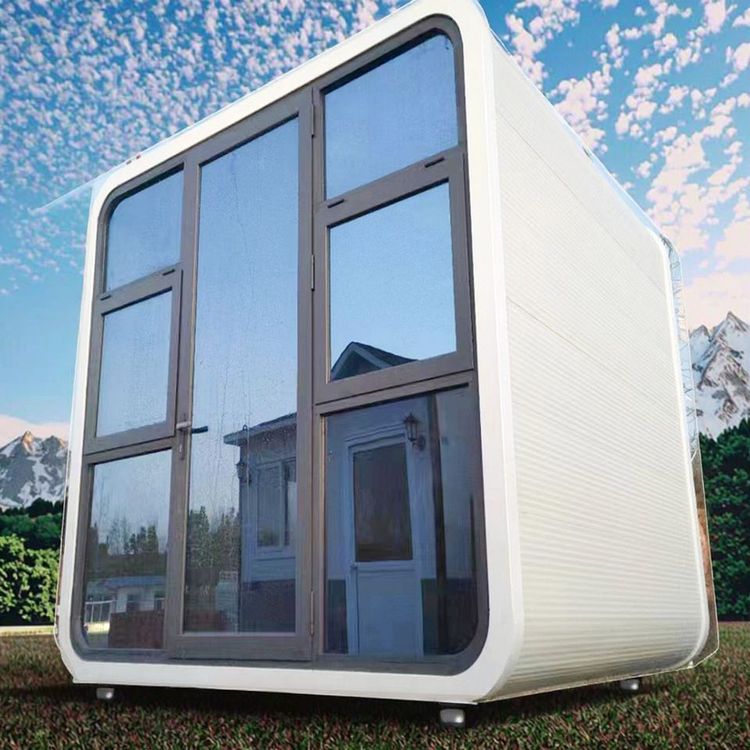
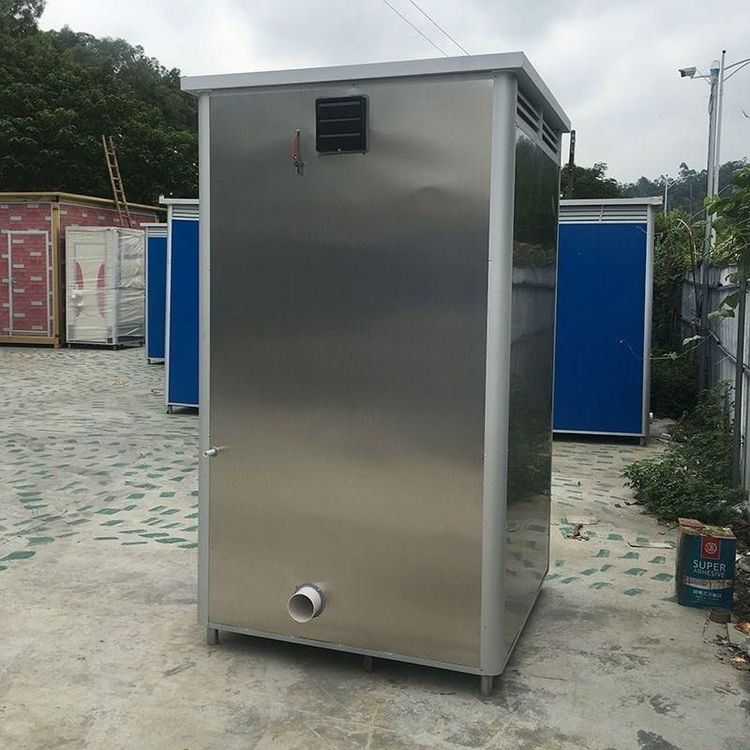
Customization of Refrigerated Container Houses
When customizing refrigerated container houses, it is essential to focus on five core elements: structural stability, thermal insulation performance, installation efficiency, customization flexibility, and after-sales service. The following analysis is conducted from a professional perspective:

1. Structural Stability: The Foundation of Safety
Refrigerated container houses must possess wind, earthquake, and deformation resistance capabilities. According to industry practical test data, fully steel structural frames (such as those from Suzhou Zhongnan Steel Structure) exhibit a deformation of only 2mm under 12-level strong winds, significantly outperforming the national standard limit of 10mm. In contrast, semi-welded and semi-bolted structures (such as those from CIMC Modular Building Systems) carry a higher risk of bolt loosening over long-term use. When customizing, prioritize fully steel structures and request suppliers to provide welding process certifications (such as the GB/T 19001-2016 standard) and third-party wind resistance test reports to ensure safety under extreme weather conditions.
2. Thermal Insulation Performance: The Core Indicator of Temperature Control
Refrigeration scenarios impose strict requirements on the thickness of the insulation layer, the thermal conductivity coefficient of the material, and sealing performance. Products from Qingdao Jiecheng Hongye utilize marine-standard insulation layers, supporting low-temperature storage at -30°C and undergoing rigorous technical testing before factory dispatch (such as 380-volt three-phase power adaptability testing), reducing on-site failure rates. When customizing, specify the insulation layer material (such as fire-resistant rock wool boards), thickness, and sealing process, and request suppliers to provide temperature stability test data to avoid temperature fluctuations during cold chain transportation or storage.
3. Installation Efficiency: The Key to Influencing Project Timelines
Modular design can significantly shorten construction time. Container houses from Xi'an Tengdaxing adopt a factory-prefabricated, on-site rapid assembly model, featuring short production cycles and no construction waste, making them suitable for projects with high time efficiency requirements. When customizing, confirm whether the supplier offers standardized modular designs and on-site assembly services, and clarify the assembly time for a single house (such as the industry benchmark of completing a single assembly in one day) to evaluate the overall project schedule controllability.
4. Customization Flexibility: Adapting to Diverse Scenarios
Refrigerated container houses must meet the size, functional, and styling requirements of different scenarios. Dongguan Zhuohan Containers offers various specifications such as 20GP/40GP/40HQ and supports customization of internal insulation materials (such as fire-resistant rock wool boards); although Hainan Jingyang Containers does not support processing customization, it provides fiberglass-reinforced plastic refrigerated containers suitable for storing specific chemical reagents. When customizing, clarify the usage scenario (such as cold chain logistics, pharmaceutical transit stations, or temporary warehousing) and request suppliers to provide material, size, and functional customization plans to avoid additional costs from later modifications.
5. After-Sales Service: The Guarantee for Long-Term Use
Qingdao Jiecheng Hongye promises lifelong after-sales service, distinguishing itself from most manufacturers' limited warranties and reducing maintenance risks during operation. When customizing, require suppliers to specify the warranty period (such as lifelong service or 5-10 years of limited warranty), fault response time (such as on-site repair within 24 hours), and spare parts supply capabilities to ensure stability throughout the house's lifecycle.