
Quzhou Modular Mobile Toilet
The Quzhou modular mobile toilet is a temporary supplementary and flexible adjustment solution for the allocation of sanitation facilities in public spaces, featuring modularity, leasing services, efficient waste treatment, strong environmental adaptability, and clear cost-effectiveness.
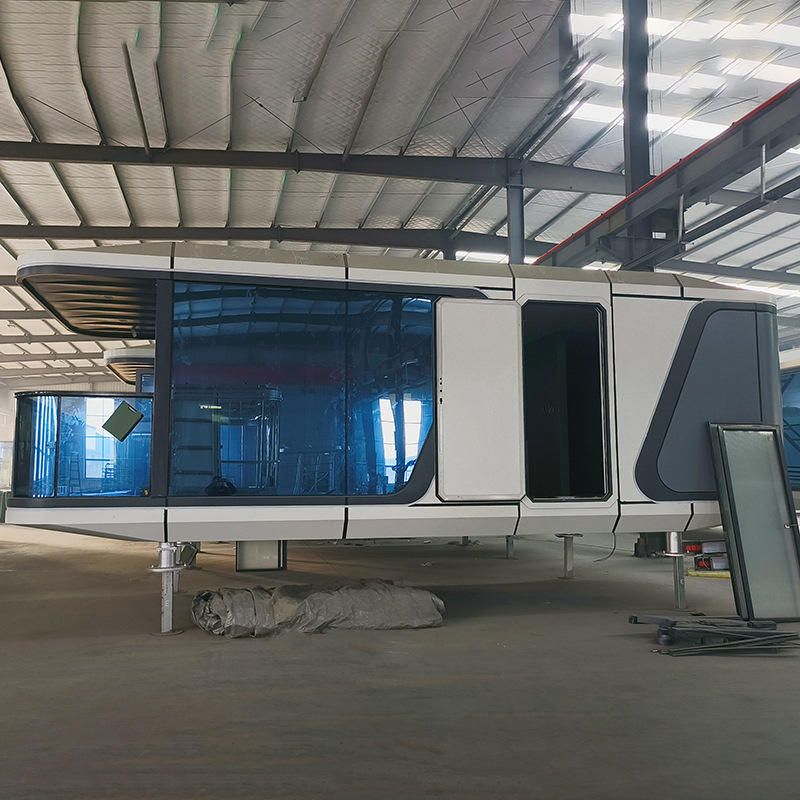
Modular Composition of Functional Units: The Quzhou modular mobile toilet is integrated from multiple independent functional modules. The standard unit typically includes a toilet module, a water circulation treatment module, an energy supply module, and a structural framework module. Each module is prefabricated in the factory and can be quickly assembled on-site through standardized interfaces, facilitating later maintenance and component replacement. This design ensures functional integrity while enhancing deployment efficiency, making it particularly suitable for temporary scenarios requiring rapid response.
Decoupling and Integration of the Service Chain: By adopting a leasing model, the toilet's 'ownership', 'usage rights', and 'operation and maintenance responsibilities' are separated. The service provider is responsible for equipment production, transportation, installation, regular cleaning, waste removal, and final recycling, while the user only needs to pay leasing fees to obtain facility usage rights. This model reduces the user's management costs while ensuring the continuous operational quality of the toilet.
Efficient Waste Treatment Methods: The toilet is equipped with an integrated treatment system internally. Solid waste is collected after biological degradation or chemical treatment, while liquids are filtered and disinfected using miniaturized sewage treatment technology. Some models can achieve greywater reuse, using treated water for flushing toilets, forming a closed-loop resource recycling system and reducing reliance on external water resources.
Deployment Logic and Environmental Adaptability: The deployment location requires a comprehensive assessment of factors such as the temporary gathering patterns of the crowd, on-site conditions (e.g., vehicle access routes, ground bearing capacity, distance from existing water supply and drainage and power grids), and climate changes. For example, at large events or construction sites, priority should be given to selecting areas with convenient transportation and flat ground, while reserving space for equipment maintenance to ensure long-term stable operation.
Clear Cost-Effectiveness Boundaries: Compared to fixed public toilets, leasing mobile toilets does not require long-term land occupation approval and avoids high civil construction costs, making them suitable for short-term (several days to several months) scenarios with clear needs. However, if the demand persists for more than a year, the cumulative cost of repeated leasing may exceed the cost of constructing fixed facilities at once, necessitating adjustments to the plan based on actual needs.



